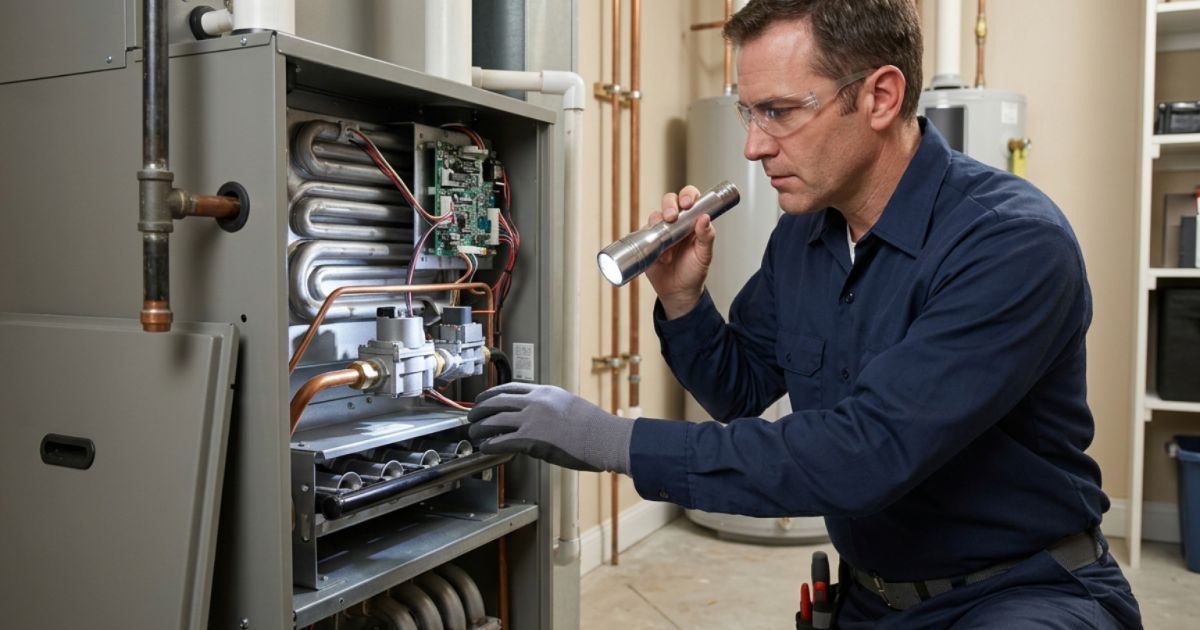


What Heat Pump Emergency Heat Means for Your Home
Heat pump emergency heat is a backup setting that uses indoor heat strips when the outdoor unit cannot operate safely. Use it when the outdoor unit has failed or should remain off while service is arranged. During routine cold snaps, leave the thermostat in normal Heat mode and let auxiliary heat engage automatically when needed.
I’m Dustin Caison, a Florida Certified Air Conditioning Contractor (CAC1816263) and a third-generation member of the family that founded Southern Air Cooling & Heating in Palatka in 1980. This guide to heat pump emergency heat explains when emergency mode makes sense for local homeowners. It also clarifies safe checks and situations where our technician does the work.
Emergency Heat vs. Auxiliary Heat: What Is the Difference?
Understanding how heat pumps work helps explain why normal Heat mode is usually the best choice. A heat pump does not create heat from scratch during normal operation. Instead, it transfers thermal energy from outdoor air into your living spaces through refrigerant cycles.
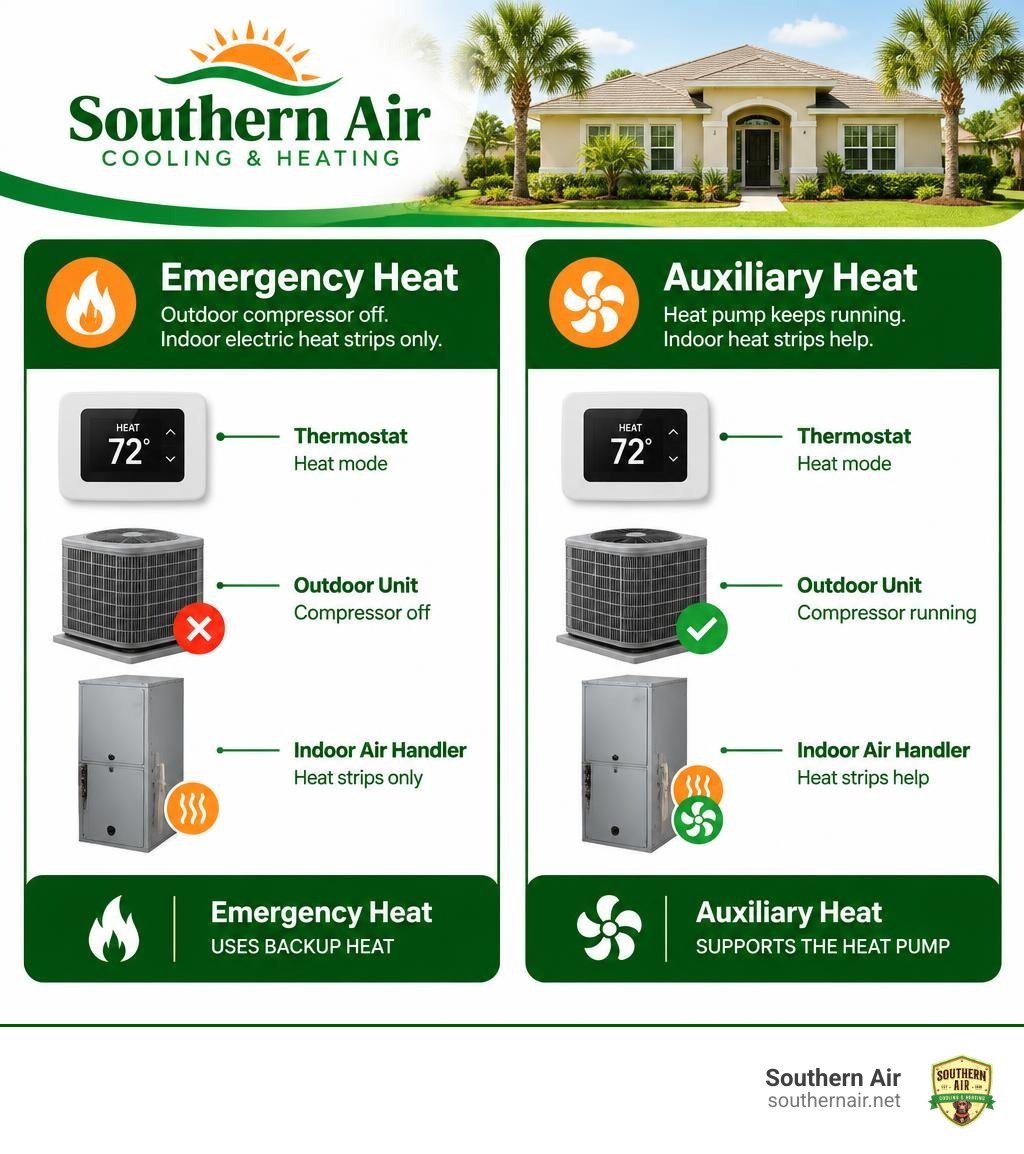
During a cold snap, homeowners may notice the thermostat display changing and confuse auxiliary heat with emergency heat. Both modes use secondary heating equipment, but their operation and intended purpose are different. Palatka has a short, mild heating season, so this distinction matters most on the coldest mornings of the year.
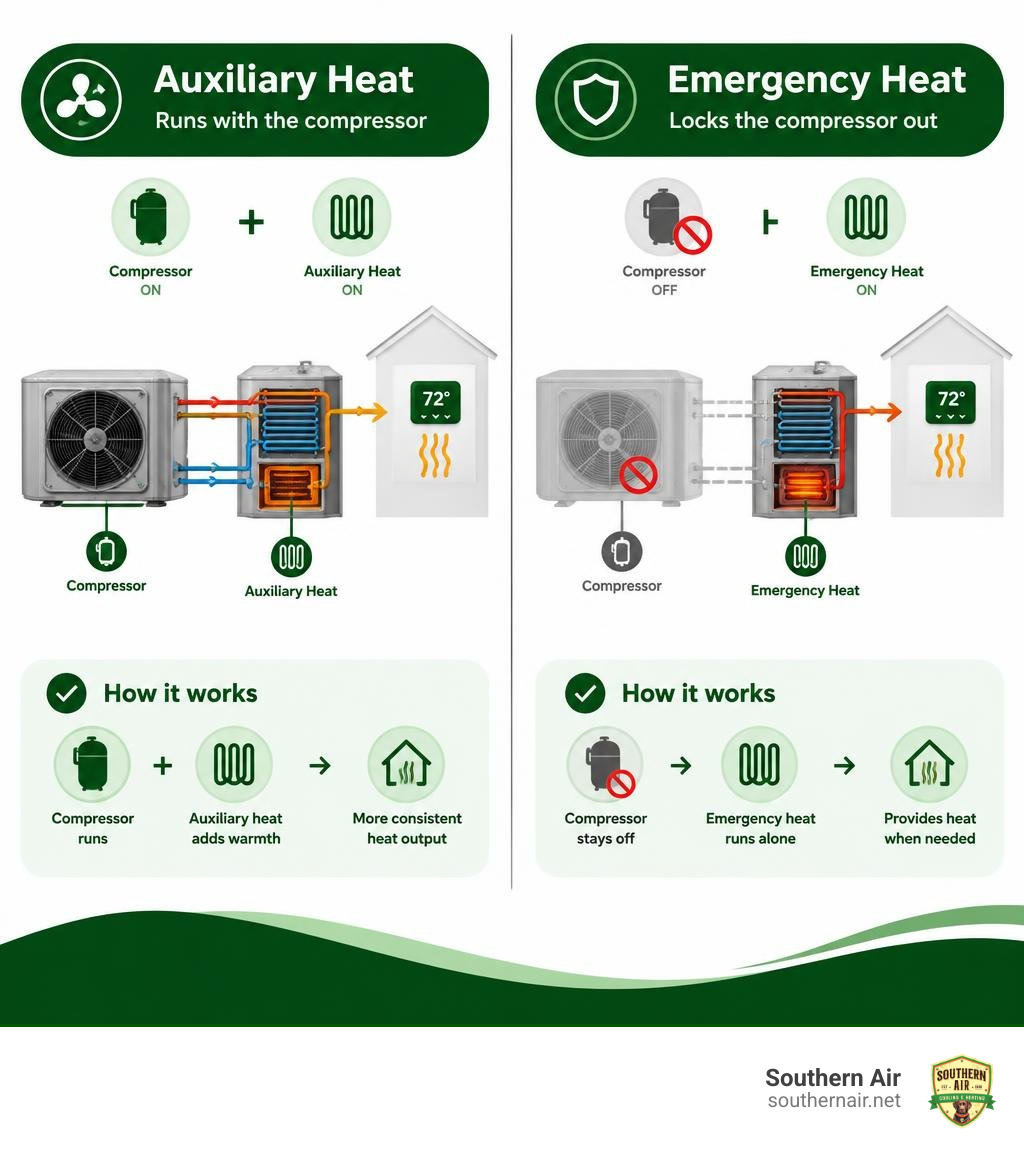
| Feature | Auxiliary Heat (AUX) | Emergency Heat (EM Heat) |
|---|---|---|
| Activation Method | Automatic staging by thermostat | Manual user switch or hard lockout |
| Outdoor Compressor | Runs continuously alongside backup | Completely powered off and bypassed |
| Primary Purpose | Supplemental boost during high heating loads | Temporary heating during equipment failure |
| Energy Efficiency | Moderate (blended with heat pump efficiency) | Pure resistance heating |
| Homeowner Action | None required (let the system manage itself) | Manual switch back once repairs are made |
Auxiliary heat serves as a helpful assistant. When outdoor air turns cold and your outdoor compressor cannot absorb enough heat alone, the thermostat automatically energizes internal electric heating strips to bridge the gap. Once the indoor temperature reaches your target setpoint, the auxiliary stage turns off while the heat pump continues its steady work.
Emergency heat, by contrast, is a manual override. Engaging this setting tells your thermostat that the outdoor unit is out of commission. The thermostat cuts all power to the outdoor compressor and forces your indoor air handler to generate all of the heating demand through electric resistance elements.
How Emergency Heat Works Mechanically
When you switch your thermostat to emergency mode, the control board initiates an immediate outdoor lockout. The reversing valve and outdoor fan motor shut down completely, isolating the exterior system from the heating cycle.
Inside your home, the air handler engages high-voltage electric resistance heating coils, often referred to as heat strips. Air pulled through your return ducts blows directly across these red-hot coils, heating the air instantly before distributing it through your duct network.
During normal cold-weather operation, a heat pump periodically enters a defrost cycle to melt frost off the outdoor coils. While defrosting, the outdoor unit temporarily switches to cooling mode to warm the exterior coil, and the system automatically engages indoor heat strips to keep the air coming out of your vents comfortable. This automated process is normal and does not require manual intervention.
Efficiency and Energy Consumption Comparison
The difference between normal heat pump operation and backup heating comes down to the Coefficient of Performance, or COP. According to ENERGY STAR heat pumps, an air-source heat pump can deliver up to three times more heat energy to a home than the electrical energy it consumes. Moving heat generally requires less electricity than creating heat with electric resistance.
A heat pump operating in moderate conditions can deliver two to three units of heat for each electricity unit consumed. That performance corresponds to a COP between 2.0 and 3.0. Electric resistance coils convert electricity directly into heat with a baseline COP of 1.0.
Because resistance heating requires significantly more electricity to produce the same volume of warm air, running your system in manual emergency mode causes rapid spikes in daily power consumption. Practical steps for lower electric bills start with keeping the heat pump in its primary stage whenever possible. Emergency mode should be reserved for an outdoor-unit failure or another safety concern.
When to Manually Turn On Emergency Heat (and When Not To)
Because emergency mode bypasses the efficient compressor, it should not become a routine heating setting. Knowing when to select it protects the system and helps control household energy use. In Palatka, occasional cold snaps do not usually require a manual switch to emergency mode.
Situations Requiring Manual Activation
Manual activation should be reserved for scenarios where the outdoor compressor cannot run safely or has suffered a mechanical breakdown:
- Complete Compressor Failure: If the outdoor unit will not start, trips a breaker, or makes loud screeching noises, select emergency heat while arranging service.
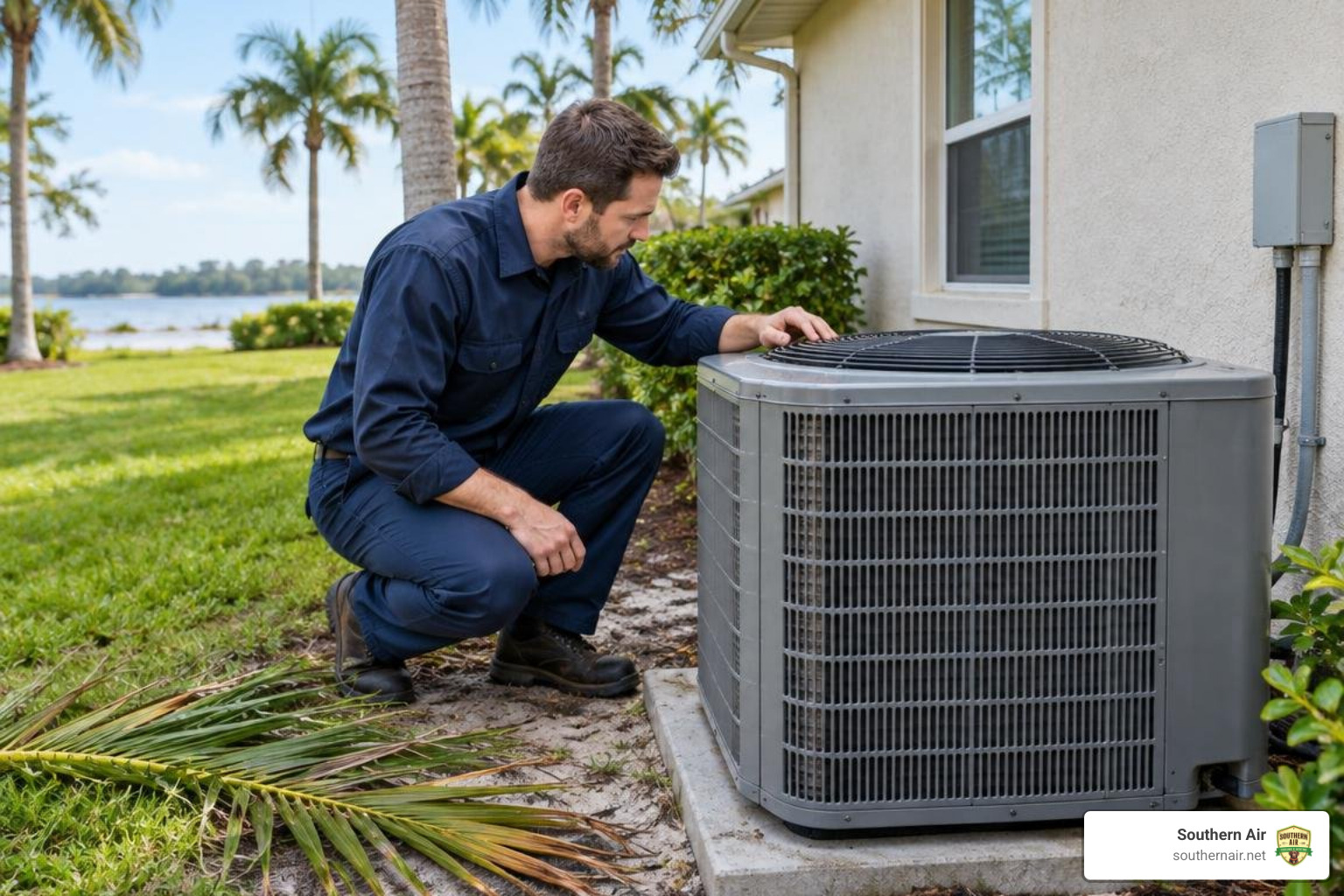
- Physical Exterior Damage: If a fallen tree limb or storm damages the outdoor cabinet, fan assembly, or refrigerant lines, leave the outdoor unit off.
- Awaiting Professional Service: During a cold snap, emergency heat can provide temporary indoor comfort while waiting for a technician.
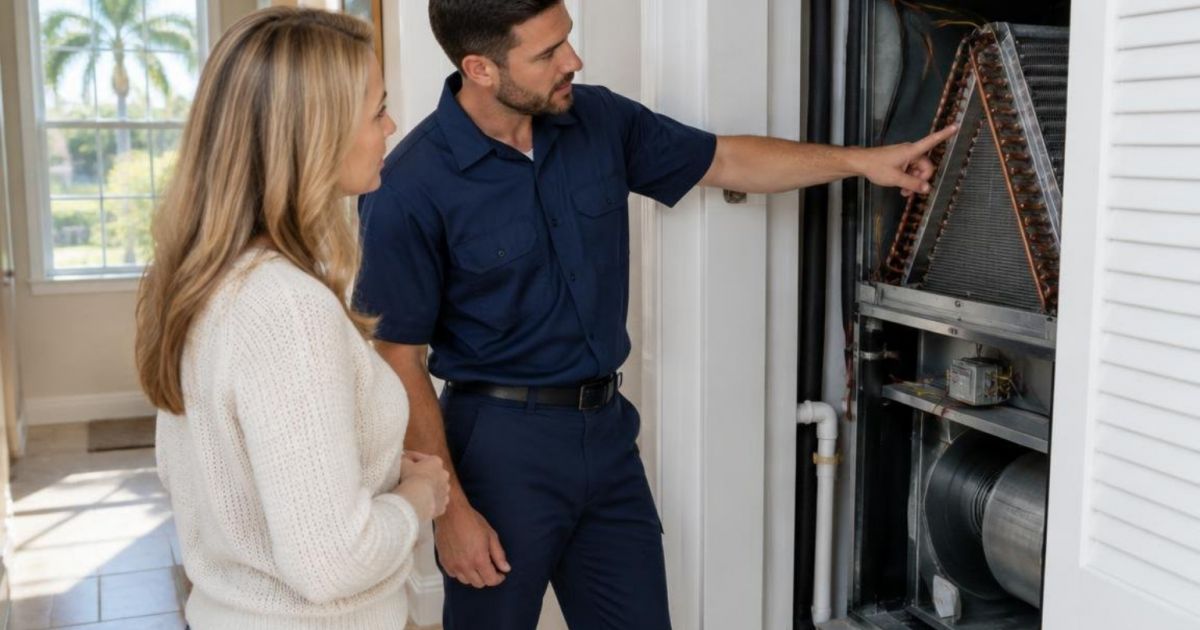
If the outdoor unit has a mechanical or electrical problem, arrange a heating repair service promptly. Homeowners can check thermostat settings, filters, breakers, vents, and outdoor debris. Our technician does work involving electrical components, refrigerant, or sealed parts.
A Recent Service Call in Interlachen
At a lake cottage in Interlachen, a heat pump was short cycling when our technician arrived to evaluate the system and identify the cause. The inspection found low refrigerant caused by a small leak, and the leak was repaired to correct the problem at the cottage. After the repair, the system was recharged with refrigerant to restore the proper charge and return the heat pump to normal operation.
When to Avoid Using Emergency Mode
Many homeowners select emergency heat because they believe it will warm the house faster. In normal operation, it should be avoided during everyday cold snaps. The system usually warms the home best when it manages auxiliary heat automatically:
- Routine Cold Temperatures: On the coldest mornings of the year, let the thermostat engage auxiliary heat automatically when needed.
- Active Defrost Cycles: If steam rises from the outdoor unit or you hear a soft whooshing sound, the system is clearing light frost. Switching to emergency heat interrupts this automated cycle.
- Large Thermostat Adjustments: Raising the thermostat by several degrees may activate auxiliary heat temporarily. Raise temperatures in small, two-degree increments to limit unnecessary strip heating.
If your home feels chilly despite normal operation, check the air filter and vents first, then call us if the problem continues.
Operating and Troubleshooting Your System Safely
Managing emergency heat safely requires clear boundaries between homeowner checks and professional technical service. Start with the thermostat, filter, breakers, vents, and debris around the outdoor unit. For electrical, refrigerant, or sealed components, our technician does this work.
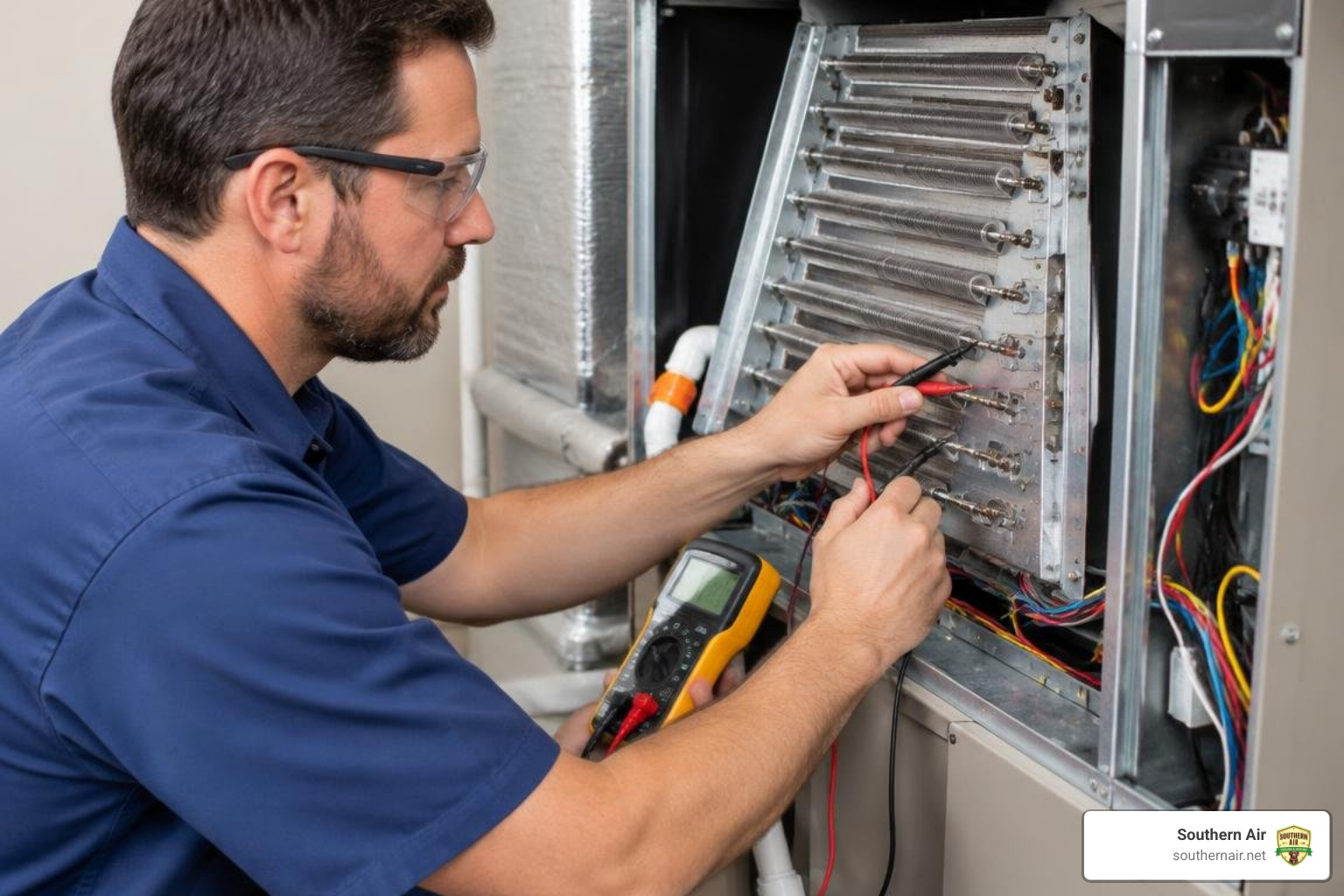
Homeowners should restrict DIY troubleshooting to safe, non-invasive tasks: checking thermostat settings, replacing dirty air filters, confirming that circuit breakers are in the “on” position, and ensuring supply registers and outdoor units are clear of debris. Any diagnostic work involving high-voltage electrical panels, refrigerant circuits, or internal control boards must be handled by a licensed HVAC technician.
When electric heat strips turn on for the first time each heating season, you may notice a slight burning dust smell coming from your vents. This occurs as thin layers of dust that settled on the coils over the summer burn off. The odor should dissipate within twenty minutes. If you notice a persistent acrid electrical smell, visible smoke, or buzzing sounds from the indoor cabinet, turn the system off at the thermostat and switch off its breaker.
Managing Emergency Heat on Modern Thermostats
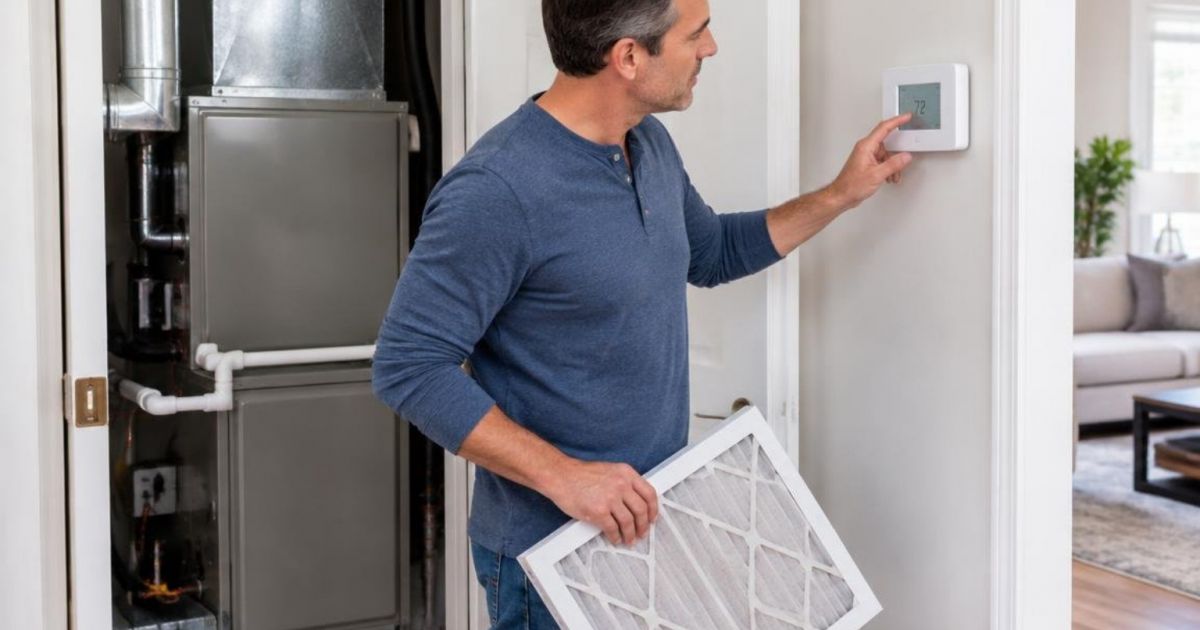
Modern digital and smart controls make identifying and toggling your heating stages straightforward. Properly configured controls prevent unnecessary backup heating and provide clear alerts when a hardware fault occurs.
- Digital Interface Controls: Most digital controls feature a dedicated menu option labeled “EM Heat,” “Emergency Heat,” or an icon showing a heat flame alongside an “E.”
- Smart Staging and Lockouts: Advanced connected controls can balance heating stages automatically, setting outdoor temperature lockouts so heat strips engage only below a programmed threshold.
Professional thermostat installation can provide clearer visibility into system staging and backup heat use. Homeowners should not adjust thermostat wiring or internal electrical components. A licensed technician can address control concerns without asking homeowners to handle wiring.
After a Power Outage
Storms can interrupt power and leave a home without central heating. If the system loses power, turn the thermostat to the off position before electricity returns. Ready.gov outage tips advise turning off or disconnecting equipment because returning power can bring momentary surges or spikes that cause damage.
Once power is restored, wait a few minutes before switching the thermostat back to Heat mode. If the outdoor unit does not start or an error remains, check breakers and contact our team for professional diagnosis. Do not open equipment panels or attempt electrical, refrigerant, or sealed-system repairs.
How to Reduce Reliance on Emergency Heat and Prevent Breakdowns
The best way to avoid using emergency heating is keeping your primary heat pump in peak mechanical condition throughout the year.
- Maintain Consistent Airflow: Inspect and change your return air filters every 30 to 90 days. A clogged filter restricts indoor airflow, causing heat strips to overheat and triggering high-limit safety cutoffs.
- Maintain Outdoor Clearances: Keep a clear perimeter of at least 18 to 24 inches around your exterior unit. Remove fallen leaves, overgrown shrubs, and debris that restrict outdoor coil airflow.
- Seal Living Space Leaks: Weatherstrip drafty windows and exterior doors to reduce your home’s overall heating load, allowing the heat pump to maintain setpoints without needing auxiliary assistance.
- Keep Thermostat Settings Steady: Avoid aggressive temperature swings. Setting your heating-season thermostat to a steady, comfortable temperature prevents sudden calls for supplemental heating.
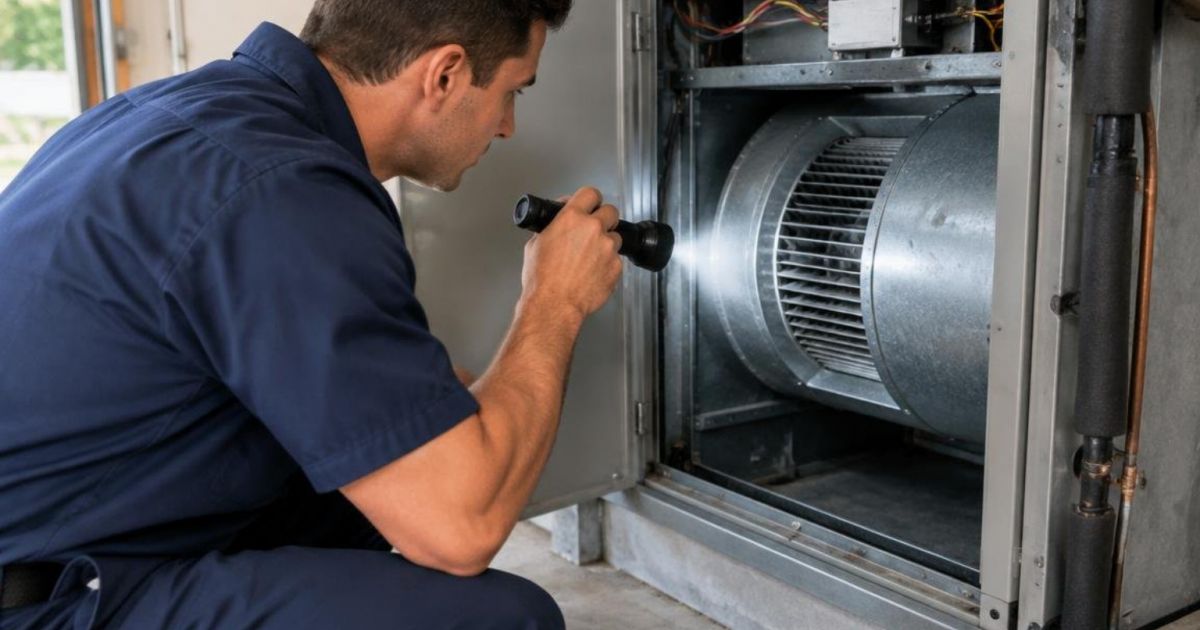
Scheduling a fall heat pump tune-up helps identify concerns before the heating season. Our technician can test defrost controls, electrical relays, and heating elements safely. This helps the system operate more reliably during occasional local cold snaps.
Preventive Maintenance and System Longevity
A comprehensive heating inspection uncovers hidden mechanical problems that would otherwise cause an unexpected breakdown during cold weather.
During professional maintenance, technicians test the exact refrigerant charge, clean indoor and outdoor coils, verify that reversing valves actuate smoothly, and inspect electrical contacts for pitting or wear. Routine maintenance directly improves operational reliability, and regular heat pump servicing protects your compressor against premature failure.
When Frequent Backup Heating Signals System Replacement
If your heat pump constantly kicks into emergency or auxiliary mode during mild cold weather, your equipment may be nearing the end of its useful lifespan. Older systems lose heating capacity as internal compressor components wear out and outdoor coils deteriorate over decades of use.
When heating repairs become frequent or your system can no longer maintain indoor comfort without relying heavily on resistance heat, our technician can explain your replacement options.
Frequently Asked Questions About Emergency Heat
Can running emergency heat for too long damage my heat pump?
Running emergency heat will not directly damage your outdoor compressor because the outdoor unit is completely disconnected while the mode is active. However, running high-draw electric resistance coils continuously puts heavy thermal strain on indoor air handler elements, increasing the risk of element burnout and component wear. It should only be used as a short-term solution while awaiting repair.
What should I do if my thermostat shows EM Heat unexpectedly?
First, check your thermostat settings to confirm the mode was not switched on accidentally by an occupant or an automated scheduling rule. If the setting is in normal Heat mode but the screen indicates emergency heat, inspect your outdoor disconnect switch and circuit breakers to ensure power has not been interrupted to the outdoor unit. If breakers are set and the alert persists, call a professional technician to diagnose potential sensor or compressor faults.
Why does emergency heat cost significantly more to run?
Electric resistance strips draw considerably more power than the heat pump when both provide similar indoor comfort. Treat emergency heat as temporary backup while service is arranged for the outdoor unit.
Does emergency heat warm the house faster than normal mode?
The air coming out of your supply vents may feel slightly hotter to the touch when resistance heat strips are glowing, but it does not warm the overall home significantly faster. The volume of air moving through your ductwork remains identical because the blower fan operates at its standard speed. Relying on emergency heat to quickly raise the temperature wastes substantial energy without providing a meaningful heating advantage over a properly working heat pump.
How do I know if my heat pump needs repair instead of just emergency heat?
If the outdoor unit repeatedly stops, makes unusual noises, or cannot maintain comfort, it may need repair. A thermostat setting change will not correct a mechanical, electrical, refrigerant, or sealed-system problem. Check the filter, thermostat, breakers, vents, and outdoor debris, then arrange service if the concern continues.
Conclusion
Emergency heat is a valuable safety net designed to keep your family warm during an unexpected equipment breakdown, but it should never replace the efficient, everyday operation of your primary system. Keeping filters clean, monitoring thermostat settings, and scheduling routine seasonal maintenance supports reliable, cost-effective comfort. This approach helps homeowners stay comfortable during Palatka’s short, mild heating season.
When you need trusted assistance with your heating system, Southern Air Cooling & Heating is here to help. Serving Palatka and Northeast Florida since 1980, our team has earned 4.9 stars on Google by delivering prompt, professional service. Whether you need a seasonal safety inspection, troubleshooting, or heat pump services, our licensed technicians are ready to help keep your home comfortable.
Written by Dustin Caison, Florida Certified Air Conditioning Contractor (CAC1816263), Southern Air Cooling & Heating. Southern Air Cooling & Heating · 3849 Reid St, Palatka, FL 32177 · (386) 222-1342
Request Service
Please fill out the form below to request an estimate or schedule service.
"*" indicates required fields