The Top 7 Hidden Ductwork Problems Hurting Your Home
When an HVAC system struggles, the outdoor compressor or indoor air handler usually takes the blame. In reality, the network of supply and return passages hidden behind drywall and ceiling insulation is often the true source of trouble. Finding and fixing air duct noise, leaks, and airflow restrictions early protects your equipment and helps keep energy bills predictable.
The seven most common signs of failing ducts include:
- Uneven room temperatures and weak airflow at distant registers
- Whistling, rattling, or loud popping noises during system startup
- Sweating ductwork, dripping moisture, or damp insulation in attics
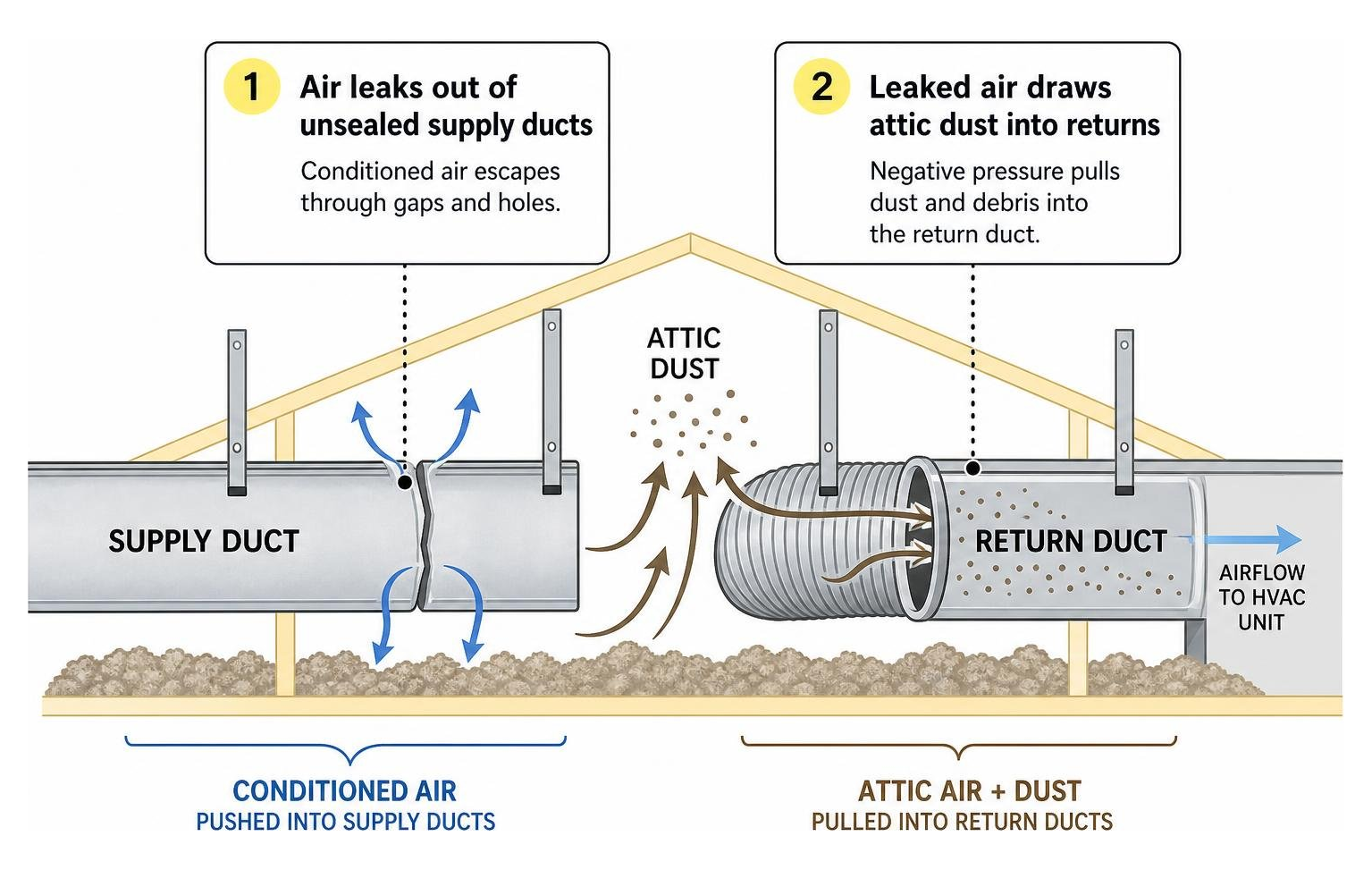
- Excessive indoor dust accumulating quickly on furniture
- Persistent musty or chemical odors coming from vents
- Spikes in monthly energy bills without changes in weather
- AC run cycles that stretch out or never seem to satisfy the thermostat
Uneven Room Temperatures and Weak Airflow
If your living room feels comfortable while a back bedroom remains stifling hot, your duct distribution network may be out of balance. Consistent airflow across living areas is important for reliable comfort.
When flexible ducts sag over ceiling joists, get pinched around tight corners, or suffer punctures from pests, airflow can drop dramatically. A restricted run cannot deliver the required cubic feet per minute of conditioned air, forcing the room to rely on passive convection while your cooling system runs longer.
Whistling, Rattling, and Popping Sounds
Your duct system can act like a giant musical instrument when air encounters unexpected restrictions or pressure differences. High-pitched whistling can indicate conditioned air escaping through a tight seam, while an undersized return grille can starve the blower motor of air.
Rattling can occur when loose sheet-metal brackets vibrate against framing, while loud popping or banging can happen when metal ducts expand and contract during sudden changes in static pressure. Vibration isolation and properly supported duct runs can reduce these noises.
Ductwork Sweating and Condensation
In hot, humid climates such as North Florida, attic temperatures can exceed 120°F. When cold air travels through uninsulated or poorly sealed metal ductwork, the exterior surface can fall below the local dew point.
Water vapor then condenses into liquid, leading to rusted joints, damaged ceiling drywall, and waterlogged insulation that loses thermal resistance.
How to Diagnose Common Ductwork Issues vs. HVAC Filter Clogs
Before climbing into an attic or scheduling extensive repairs, determine whether comfort problems stem from a basic airflow restriction or structural duct damage. A clean filter is a sensible first check, but room-specific airflow issues often point to the duct system itself.
| Symptom / Test | Dirty Air Filter | Damaged or Leaking Ductwork |
|---|---|---|
| Airflow at Registers | Weak across every register in the entire house | Weak only in specific rooms or localized zones |
| System Static Pressure | High across the entire air handler unit | High on supply or negative on return near tears |
| Visual Inspection | Filter surface coated with thick dust or lint | Kinked flex ducts, disconnected joints, torn wrap |
| Indoor Dust Levels | Normal to moderate throughout the home | Sudden increase in attic insulation dust or fibers |
| Sound Profile | Low humming or a strained blower motor | Whistling, rattling, or localized air hissing |
| Resolution Method | Replace the filter with the correct MERV rating | Seal joints with mastic and realign duct runs |
Pinpointing Airflow Restrictions and Ductwork Problems
Start by walking your floor plan while the system runs. Check every supply register with an open hand or a lightweight tissue to gauge relative airflow strength. If weak output is isolated to one branch line, inspect the attic or crawlspace directly above or below that room. Look for flexible ducts with pinched bends, crushed sections, or joints that have separated from the distribution plenum.
For persistent room-to-room comfort issues, Southern Air Cooling & Heating can evaluate the duct layout, connections, and airflow as part of its ductwork repair and replacement services. A professional assessment is especially helpful when the ductwork is difficult to access or damage may be hidden.
If you also notice poor cooling, short cycling, or a system that cannot maintain the thermostat setting, AC repair services can identify whether the underlying problem is duct-related or within the equipment itself.
Step-by-Step Filter Check and Leakage Testing
A dirty air filter can restrict airflow after several months of neglect, mimicking duct failure. Pull the filter and inspect it against a bright light. If light cannot pass through the media, replace it with a fresh filter rated between MERV 8 and MERV 11.
If overall airflow remains sluggish after installing a fresh filter, professional diagnostic testing is the next logical step. Technicians can use a duct blaster system to temporarily seal registers, pressurize the duct network, measure leakage, and locate hidden breaks inside finished walls.
When an AC system runs constantly without delivering even comfort, the warning signs in why an AC may be running constantly in Florida homes can help homeowners recognize when it is time to schedule a diagnostic visit.
For more troubleshooting context, AC running but not cooling explains several equipment and airflow problems that can create similar symptoms.
Proven Fixes for Damaged, Sweating, and Leaking Air Ducts
Fixing ductwork requires materials engineered to withstand continuous thermal expansion, static pressure, and elevated attic humidity over many years.
Repairing Tears and Gaps with Compliant Materials
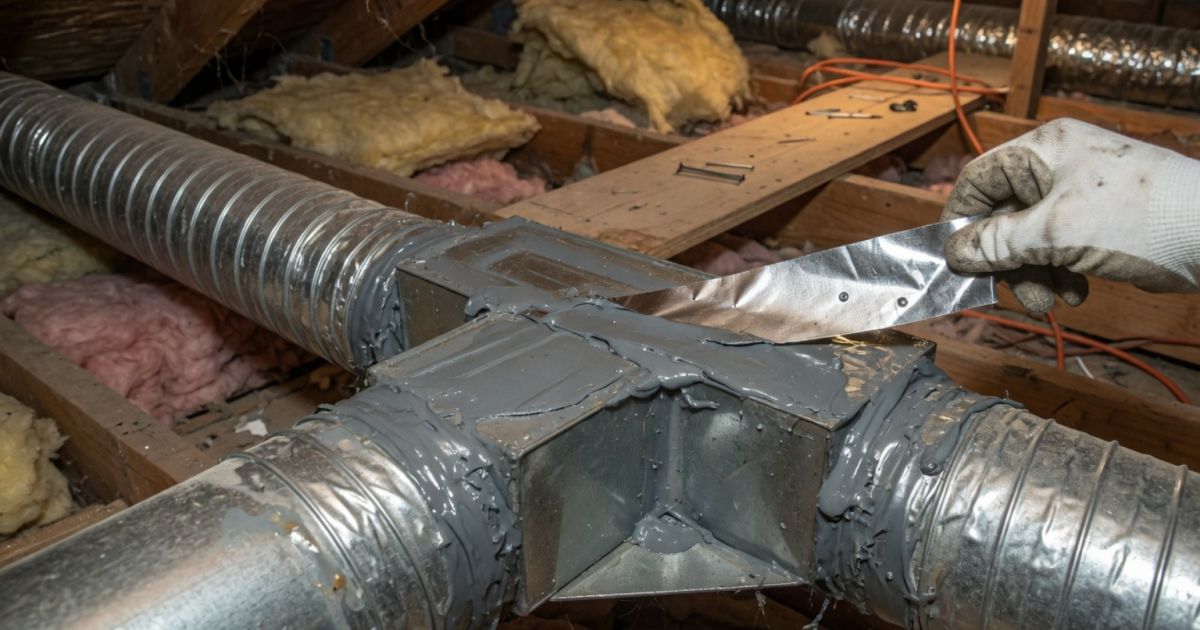
Standard cloth duct tape should not be used on HVAC ducts. Its rubber-based adhesive can dry out, become brittle, and fail under attic heat cycles. For accessible repairs, use code-compliant sealing materials:
- UL 181-rated foil tape: Designed for rigid metal joints and outer vapor-barrier patches.
- Mastic paste sealant: A thick, flexible compound that cures into an airtight gasket.
- Fiberglass mesh tape: Embedded into wet mastic over wider gaps or seams to provide bridging strength.
- Heavy-duty tension straps: Used to support flexible ducts without compressing the inner core.
To create a lasting seal, clean dust and grease from the metal surface, apply an even coat of mastic, bed fiberglass mesh over the seam, and finish with a second mastic layer that extends beyond the damage on all sides.
Resolving Condensation and Sweating Ductwork Problems
Stopping condensation requires controlling surface temperatures and surrounding moisture. These steps help keep moisture from degrading ductwork and nearby building materials:
- Install continuous thermal wrap: Ensure attic supply ducts are wrapped in foil-faced fiberglass insulation rated at R-6 to R-8, with no bare metal exposed.
- Seal the outer vapor barrier: Tape insulation seams with UL 181 aluminum tape so warm, humid attic air cannot reach the cold metal underneath.
- Avoid compression: Do not cinch support straps tightly enough to compress insulation, since compressed fiberglass loses insulating value.
- Improve attic ventilation and dehumidification: Proper ventilation or whole-home dehumidification can lower the dew point around duct runs.
When to DIY vs. Calling a Licensed Professional
Minor tears and accessible joint seals on straight, exposed metal runs in open garages or basements may be manageable DIY projects when completed with quality mastic and foil tape.
Professional help is appropriate when ducts run through tight crawlspaces, flexible duct cores have degraded with age, or whole-home pressure balancing is needed. Advanced sealing methods can address inaccessible leaks inside finished walls without unnecessary drywall removal.
Light Commercial Ductwork Warning Signs Facility Managers Should Watch
In light commercial settings, duct failures can affect employee comfort, equipment performance, and operating costs. Facility managers should watch for these warning signs:
- Visible corrosion: Rust or pitting along exposed ductwork can signal moisture problems or material deterioration.
- Sagging or damaged duct runs: Unsupported flexible ducts and loose connections can restrict airflow and increase leakage.
- Repeated leaks at transitions: Connections between duct sections can loosen as materials expand and contract over time.
- Uneven temperatures or poor capture performance: Airflow losses can make certain work areas uncomfortable and reduce the effectiveness of ventilation equipment.
- Damaged dampers: Faulty fire, smoke, or balancing dampers should be inspected promptly by qualified professionals.
Addressing these problems early helps protect comfort, improve HVAC efficiency, and reduce the risk of more disruptive repairs.
Frequently Asked Questions About Ductwork Problems
How much energy do leaky air ducts actually waste?
The U.S. Department of Energy and the EPA estimate that the typical American home loses 20% to 30% of its conditioned air through leaks, gaps, and disconnected fittings. A DOE-reviewed field study of 40 HVAC systems across newly built homes revealed that duct leakage and low insulation levels generate an average 37% loss in overall cooling efficiency. Sealing these leaks immediately reduces electrical consumption, shortens system run times, and extends equipment lifespan.
What is the typical cost to repair or replace ductwork?
Costs vary based on accessibility, system size, and whether you need targeted sealing or a complete duct replacement. Minor DIY repairs using professional-grade mastic and mesh cost very little in materials, while comprehensive professional diagnostic testing, manual sealing of accessible joints, Aeroseal application, or rebuilding crushed trunk lines require a larger investment. A complete redesign and installation for severely deteriorated flex ducting throughout an attic represents a major project, but it permanently restores airflow and lowers monthly utility expenses.
Can damaged ductwork cause indoor air quality and mold issues?
Yes. When return air ducts develop cracks or tears in unconditioned attics or crawlspaces, the HVAC blower creates strong negative pressure that pulls dusty, unconditioned air directly into the system. This pulls in fiberglass insulation fibers, outdoor pollen, mold spores, and pest droppings, distributing them into your living spaces. In humid climates, moisture pulled into return leaks condenses on cold evaporator coils and interior duct linings, creating ideal conditions for biological growth.
Keep Your Home Comfortable and Efficient
Your ductwork serves as the respiratory system of your living space. When ducts are torn, poorly insulated, or improperly balanced, your AC system must work harder to keep your family comfortable. Investing in proper duct maintenance restores airflow balance, reduces hot spots, protects indoor air quality, and can help lower utility bills season after season.
For more than 43 years, the team at Southern Air Cooling & Heating has helped homeowners identify heating, airflow, and AC comfort concerns across Palatka, St. Augustine, Green Cove Springs, and surrounding communities. Our approach starts with a practical evaluation of airflow, duct connections, insulation, and system performance so homeowners can understand whether the problem is isolated duct damage or part of a broader HVAC issue.
At Southern Air Cooling & Heating, we provide ductwork diagnostics, pressure testing, and system redesign recommendations when needed. If your vents whistle, your energy bills keep climbing, or your rooms never seem to reach the right temperature, contact our professional ductwork technicians to schedule an inspection today.
Request Service
Please fill out the form below to request an estimate or schedule service.
"*" indicates required fields