What Is an AC Capacitor and How Does It Function?
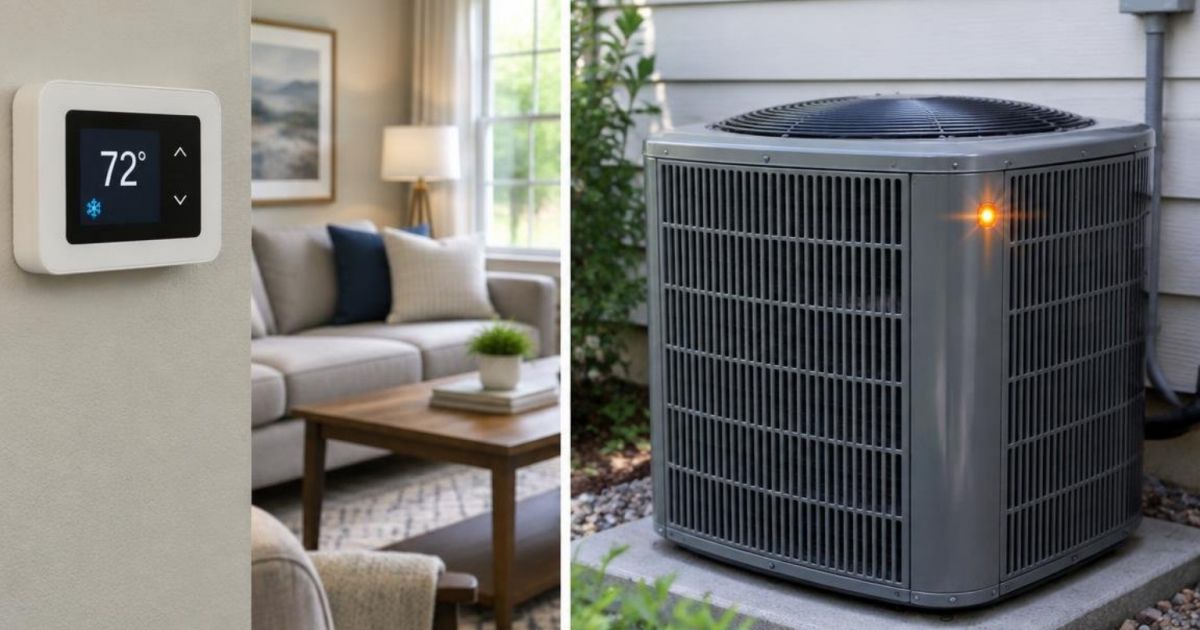
AC capacitor failure often starts with a humming outdoor unit, delayed startup, warm air from the vents, or a breaker that trips when the system tries to turn on. These symptoms can signal that the capacitor is no longer giving the compressor or fan motor the electrical support it needs, so prompt professional testing can help prevent a larger AC repair.
Guidance From an Experienced Local HVAC Team
This article was prepared with input from the service team at Southern Air Cooling & Heating, a family-owned HVAC company with more than 43 years of experience serving Palatka-area homeowners. In day-to-day diagnostic work, the team evaluates startup behavior, electrical readings, wiring condition, and motor load before recommending a capacitor repair or replacement.
An AC capacitor functions much like a temporary, high-output battery. Instead of storing energy chemically over long periods, it stores electrostatic potential and discharges it instantly when your cooling system calls for operation.
Residential air conditioners require a massive surge of torque to get heavy mechanical components moving. Standard household current alone cannot provide the initial punch required to overcome the resting inertia of a stationary compressor rotor or a condenser fan motor. A capacitor solves this challenge by supplying an initial burst of stored voltage, creating a phase shift in the electrical current that produces rotational force.
Once those motors are spinning, capacitors continue to provide continuous phase-shifted electrical energy. This smooths out incoming alternating current, stabilizes operational voltage, and maintains high motor efficiency.
Capacitors are measured by two primary technical specifications:
- Microfarads (µF or MFD): This rating indicates the electrical storage capacity of the component. Residential units typically utilize ratings ranging from 5 MFD for smaller fan motors up to 80 MFD for heavy-duty compressor circuits.
- Voltage Rating: Most residential units use capacitors rated at 370V or 440V AC. The voltage rating indicates the maximum electrical stress the component can safely handle without breaking down. A replacement capacitor can safely have a higher voltage rating than the original, but it must never have a lower rating.
| Feature | Start Capacitor | Run Capacitor | Dual-Run Capacitor |
|---|---|---|---|
| Primary Function | Provides high starting torque | Maintains smooth, efficient motor rotation | Combines compressor and fan functions |
| Operating Duration | Momentary (seconds during startup) | Continuous (runs whole cooling cycle) | Continuous (runs whole cooling cycle) |
| Typical Capacitance | High (50 to 300+ MFD) | Moderate (5 to 80 MFD) | Split rating (e.g., 45/5 MFD) |
| Terminal Count | 2 terminals | 2 terminals | 3 terminals (HERM, FAN, COM) |
| Common Application | Hard-start kits, heavy compressors | Dedicated fan or blower motors | Standard residential outdoor condensers |
Start Capacitors vs. Run Capacitors vs. Dual-Run Units
While all capacitors store electrical charge, their operational roles differ significantly inside your outdoor condensing unit.
A start capacitor is wired in series with a relay switch. It delivers an intense, short burst of capacitance to overcome mechanical resistance at startup. Once the motor reaches approximately 75% of its operating speed, the potential relay opens and takes the start capacitor out of the electrical circuit within a fraction of a second.
A run capacitor remains active throughout the entire cooling cycle. It continuously optimizes the magnetic field within the motor windings, keeping the motor running cool and drawing minimal electrical current.
A dual-run capacitor is the most common design found in modern residential outdoor condensers. Instead of using two separate cylindrical metal canisters, manufacturers house two independent capacitors inside a single aluminum casing. A dual-run unit features three distinct terminal posts on top:
- HERM (Hermetic Compressor): Connects directly to the compressor start winding, typically requiring 30 to 70 MFD.
- FAN: Connects to the outdoor condenser fan motor, typically requiring 3 to 10 MFD.
- COM (Common): Serves as the shared ground return terminal connected to incoming power from the contactor.
If either the HERM or FAN internal section degrades, the entire dual-run canister must be replaced to restore balanced electrical operation.
7 Critical Symptoms of AC Capacitor Failure
A failing capacitor rarely quits without dropping subtle operational clues first. Recognizing these indicators lets you address weak components before your air conditioner shuts down entirely.
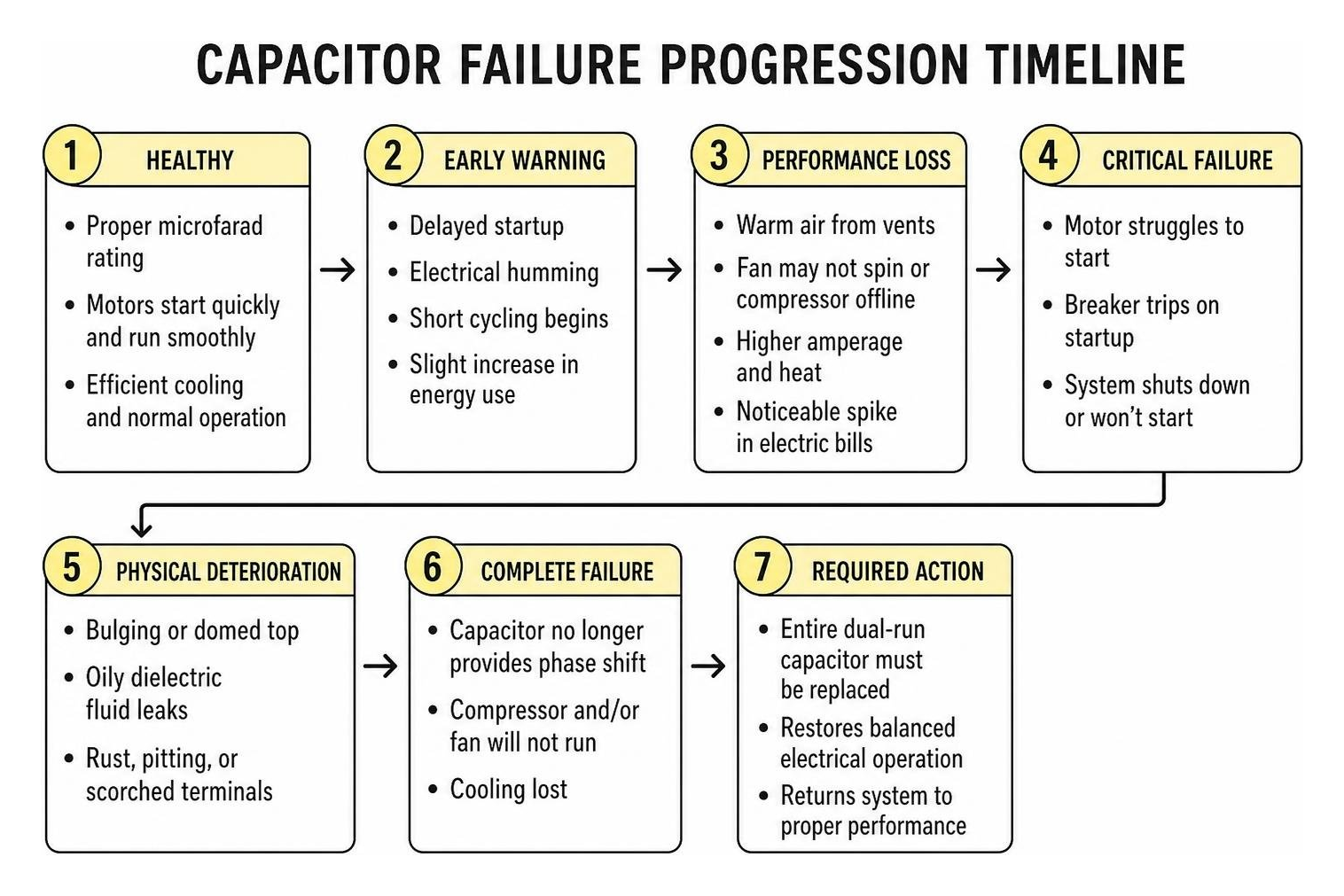
- Delayed Cooling Startup: When the thermostat clicks on, the outdoor unit should respond almost immediately. If you notice an extended lag or hear the electrical contactor snap shut while the motors hesitate for several seconds before slowly winding up, the start capacitance has dropped.
- Humming Sound from the Outdoor Condenser: A steady, loud electrical hum or buzz coming from the outdoor unit without airflow is a classic warning sign. This noise happens when incoming voltage reaches the compressor or fan motor, but the capacitor fails to deliver the phase shift required to turn the rotor.
- Stationary Fan Blades with a Running Compressor: If you feel the outdoor unit vibrating and generating heat, yet the top fan blades remain motionless, the fan side of your dual-run capacitor has likely failed. Without fan operation, heat cannot leave the condenser coils.
- Air Conditioner Blowing Warm Air: When the HERM side of a dual-run capacitor fails, the outdoor fan might still spin normally, creating the illusion that the system is functioning. However, inside the condenser, the compressor remains offline, leaving indoor blowers circulating uncooled room-temperature air.
- System Short-Cycling: A weak capacitor causes electrical motors to draw excessive amperage. This extra current generates high heat inside the motor housing, tripping internal thermal overload switches and causing the system to shut off after running for only a few minutes.
- Unexplained Spikes in Electric Bills: A capacitor with declining microfarads forces compressor and fan motors to operate out of phase, increasing electricity use while producing the same cooling capacity. Reviewing common AC capacitor failure symptoms can help you pinpoint this hidden source of energy waste.
- Tripped Circuit Breakers on Startup: When a motor struggles to overcome resting inertia without adequate starting capacitance, it draws locked rotor amperage (LRA). This massive electrical draw instantly trips the main electrical breaker in your home panel.
Beyond operational issues, physical visual indicators on the capacitor itself confirm internal damage:
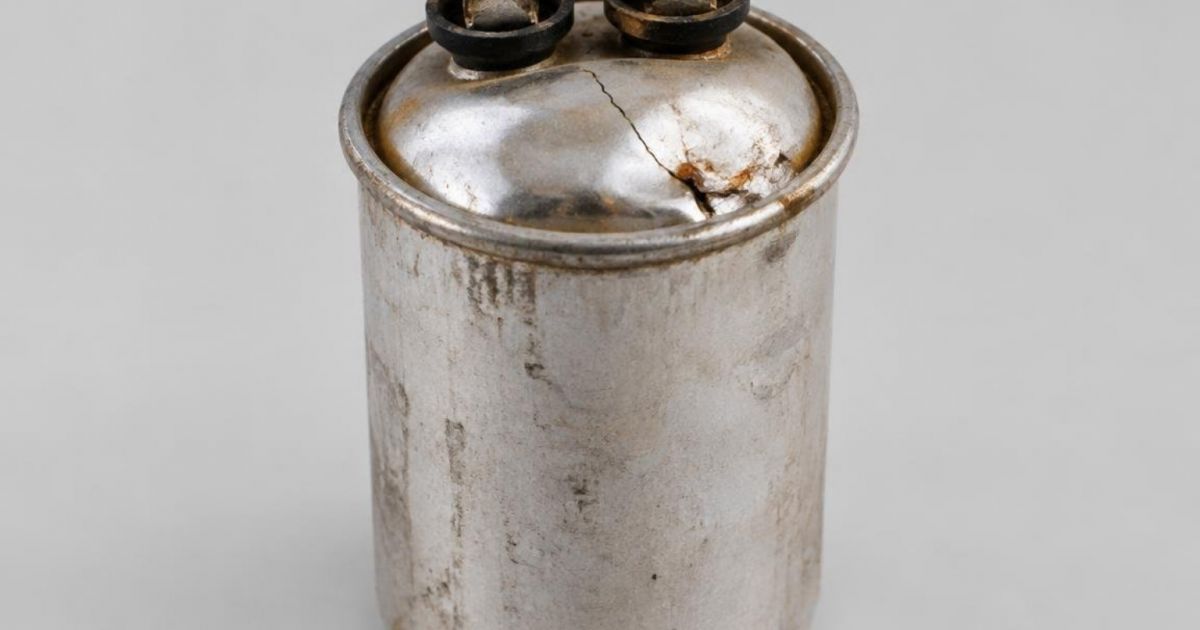
- Bulging or Domed Top: Internal pressure from boiling dielectric fluid causes the flat top terminal plate to balloon upward like an unopened soda can left in the sun.
- Oily Dielectric Fluid Leaks: Overheating ruptures internal safety seals, allowing clear or amber dielectric oil to weep down the canister walls or pool inside the control box.
- Rust, Pitting, or Scorched Terminals: Corrosion, brown burn marks, or melted spade connectors indicate severe electrical arcing and high operating temperatures.
How to Prevent AC Capacitor Failure in High-Heat Climates
Capacitors are rated to withstand maximum internal temperatures of approximately 158°F (70°C). While that threshold sounds high, outdoor conditions can quickly push electrical components past their limits.
On a 95°F afternoon in Florida, direct sunlight beating down on the metal access panel can easily drive internal cabinet temperatures above 150°F. When combined with long cooling run times, internal heat degrades the dielectric fluid and thin insulating film inside the capacitor, reducing component life from the standard 10 to 15 years down to 5 to 8 years.
To protect your system and extend capacitor life:
- Maintain Outdoor Clearances: Ensure at least two feet of unobstructed clearance around the entire outdoor unit and five feet above it. Cut back shrubs, ornamental grasses, and overhanging tree branches to maximize airflow across the cabinet.
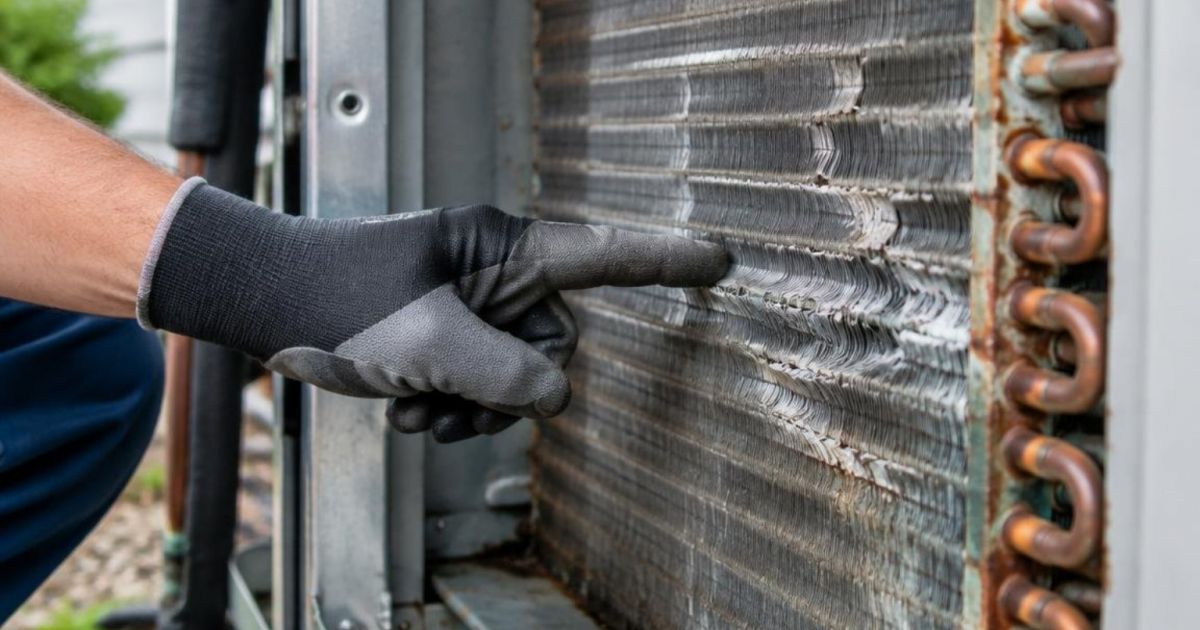
- Keep Condenser Coils Clean: Dirty, clogged exterior aluminum fins restrict airflow, driving up compressor head pressure. This increased load forces the electrical system to run hotter and pull more current through the capacitor.
- Install Whole-Home or HVAC Surge Protection: Electrical grid fluctuations, lightning strikes, and utility brownouts generate massive voltage spikes that puncture the thin insulation inside capacitors. A dedicated HVAC surge protector absorbs these line spikes before they reach delicate electrical controls.
- Schedule Annual Maintenance: Professional inspections include microfarad testing under load, catching degrading capacitors before they cause unexpected system shutdowns.
If your AC is slow to start, makes a persistent humming sound, or repeatedly trips a breaker, timely AC repair in Palatka, FL can help protect the compressor and restore dependable cooling before a minor electrical issue causes a larger breakdown.
Routine AC maintenance in Palatka, FL gives the Southern Air Cooling & Heating team an opportunity to test capacitance, inspect connections, and identify heat-related wear before a capacitor fails during peak cooling season.
Homeowners who want a clearer picture of what technicians inspect during seasonal service can use this annual AC maintenance checklist to understand why airflow, electrical components, and operating readings all matter to reliable cooling.
When an outdoor unit will not start, the steps in what to do when your AC will not turn on can help distinguish a likely capacitor issue from other common electrical or thermostat problems before scheduling service.
Understanding the Domino Effect of AC Capacitor Failure on the Compressor
A weak capacitor is a relatively inexpensive component, but ignoring it can trigger catastrophic damage to your system’s most expensive part: the compressor.
When a capacitor’s microfarad rating drops 10% below its factory specification, the compressor motor struggles to maintain rotational sync. This creates high electrical resistance, forcing the motor windings to draw excessive current.
This sustained thermal stress gradually breaks down the chemical properties of the refrigeration oil circulating through the system. Acid forms, winding insulation dissolves, and the compressor eventually suffers electrical burnout or mechanical seizure. Replacing a destroyed compressor often costs thousands of dollars and may require a complete system replacement, all stemming from an unaddressed, failing capacitor.
Diagnosing, Testing, and Safe Replacement Options
Diagnosing a weak capacitor requires specialized tools and strict adherence to safety protocols.
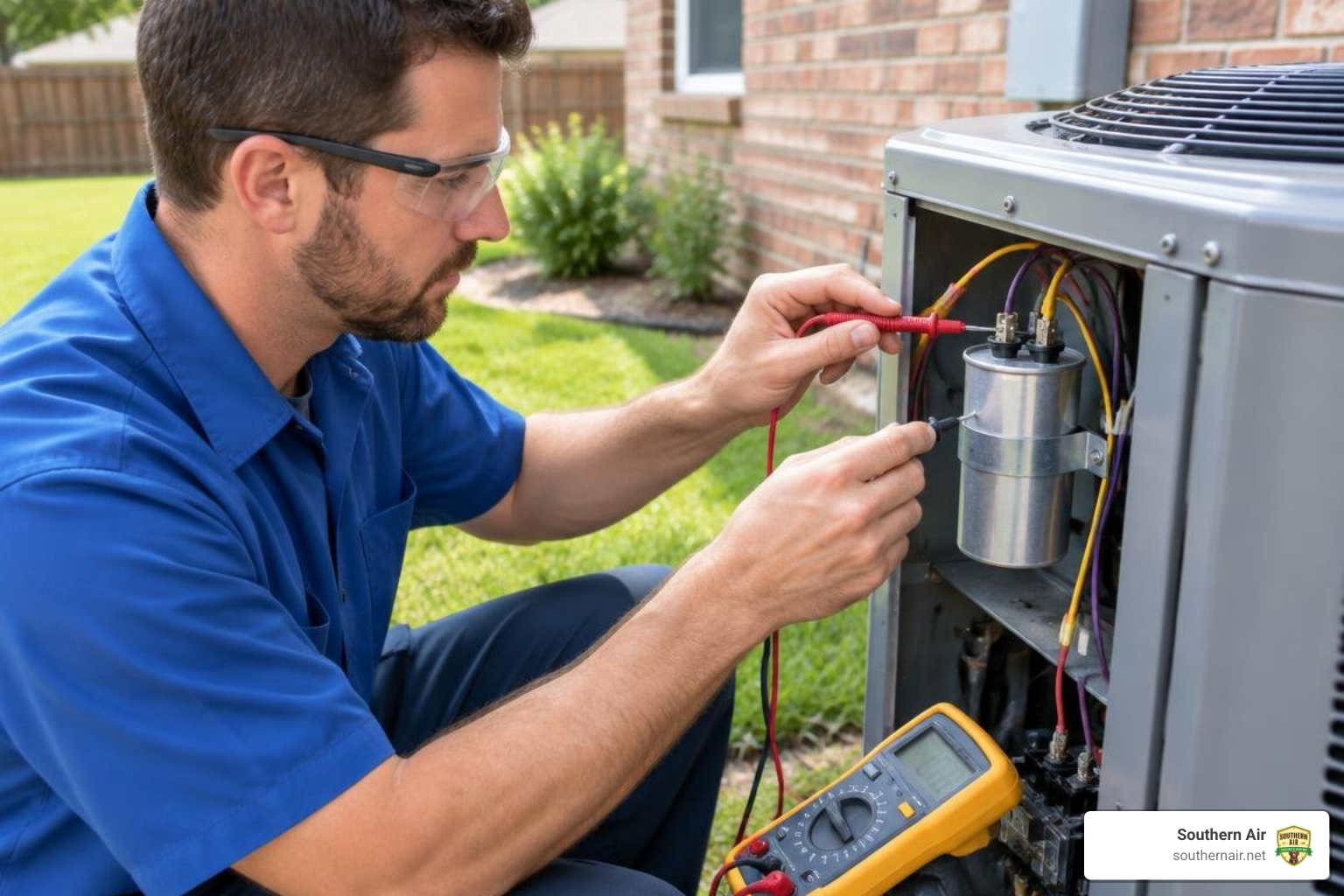
During a professional tune-up, an HVAC technician uses a digital multimeter equipped with a capacitance setting (MFD/µF). Testing involves checking capacitance between the Common (COM) terminal and both the Hermetic (HERM) and Fan (FAN) terminals. Technicians compare measured values against the tolerance rating printed on the label, typically ±5% or ±6%.
If a capacitor labeled 45/5 MFD tests at 39 MFD on the HERM terminal, it has fallen outside the manufacturer’s acceptable tolerance and should be replaced, even if the system still runs on cooler mornings. Matching the replacement capacitor’s microfarad rating and voltage rating to the unit’s specifications is essential for dependable operation and long-term motor protection.
A Field-Based Diagnostic Example
A common service-call pattern starts when a homeowner hears the outdoor unit hum after the thermostat calls for cooling, but the fan does not begin turning and indoor air stays warm. The Southern Air Cooling & Heating team first confirms that the unit has a proper power supply, then checks the contactor, capacitor readings, terminal condition, and motor amperage. If the capacitor is out of tolerance, the technician replaces it with a correctly matched component and verifies normal startup and operating readings before closing the service call. This step-by-step approach helps rule out wiring, contactor, and motor problems that can produce similar symptoms.
The Hidden Hazards of DIY Replacement
While changing a capacitor may look straightforward in online tutorials, it presents significant electrical hazards:
- Lethal Stored Voltage: Capacitors store high-voltage electrical charges long after the main breaker or disconnect handle is pulled. Touching the terminal posts of an undischarged 440V capacitor can deliver a dangerous or fatal electrical shock.
- Explosion and Chemical Risks: Puncturing a swollen capacitor or shorting terminals improperly can cause the component to vent boiling dielectric fluid, resulting in severe burns.
- Incorrect Wiring or Mismatched Ratings: Connecting the HERM wire to the FAN terminal will quickly destroy the condenser fan motor. Installing an incorrect microfarad rating creates permanent phase imbalances that ruin compressor motor windings within weeks.
Professional technicians use insulated discharge resistors to safely bleed off residual energy, verify zero potential with calibrated meters, and install exact OEM-rated replacements.
Replacement Cost and Proactive vs. Reactive Timing
Replacing an AC capacitor is one of the most cost-effective repairs in the HVAC industry. The investment covers diagnostic testing, safe high-voltage discharge, exact part matching, and comprehensive verification of system operating amperages.
HVAC technicians often recommend proactive replacement rather than waiting for total component failure. If seasonal maintenance reveals that capacitance has drifted into the 80% to 90% range of its rated specification, replacing it immediately prevents an inconvenient emergency during a summer heatwave. Proactive replacement also protects expensive motor windings from heat damage, saves on elevated utility costs, and ensures uninterrupted comfort throughout the hottest months of the year.
Frequently Asked Questions About AC Capacitors
Can an air conditioner run with a bad capacitor?
An air conditioner cannot run safely or reliably with a bad capacitor. While a system with a marginally weak capacitor might occasionally start during cooler morning hours, the motor will pull excessive current, overheat, and trip internal safety switches. Operating an AC unit with a failing capacitor risks burning out the compressor motor windings, turning a quick electrical fix into an expensive compressor replacement.
How long should an AC capacitor typically last?
In moderate northern climates, a high-quality AC capacitor can last anywhere from 10 to 15 years. However, in southern coastal areas with long, humid cooling seasons, intense summer heatwaves, and thousands of annual operating hours, the realistic lifespan drops to 5 to 8 years. In systems with dirty condenser coils or unshaded outdoor units, capacitors can degrade in as little as 3 to 4 years.
Why do capacitors fail so frequently during heatwaves?
Capacitors fail frequently during heatwaves because extreme ambient temperatures combine with solar radiation to drive internal electrical cabinet temperatures beyond the capacitor’s 158°F maximum rating. During peak heat, air conditioners run almost continuously, creating steady electrical load that boils the internal dielectric fluid. Power grid fluctuations and voltage drops during neighborhood peak-demand hours further accelerate electrical wear.
Conclusion
A failing AC capacitor gives subtle warning signs, including humming outdoor cabinets, delayed motor starts, warm airflow, and rising electric bills, well before total cooling loss occurs. Addressing these early indicators protects your compressor from expensive thermal damage and keeps your cooling system operating at peak electrical efficiency.
Regular maintenance remains the best way to catch declining microfarads before summer heat arrives. If your air conditioner shows any symptoms of electrical wear or refuses to start, contact our professional AC capacitor technicians at Southern Air Cooling & Heating for fast, dependable help across Palatka and surrounding Florida communities.
Request Service
Please fill out the form below to request an estimate or schedule service.
"*" indicates required fields