How Much Does Gas Furnace Installation Really Cost in 2026?
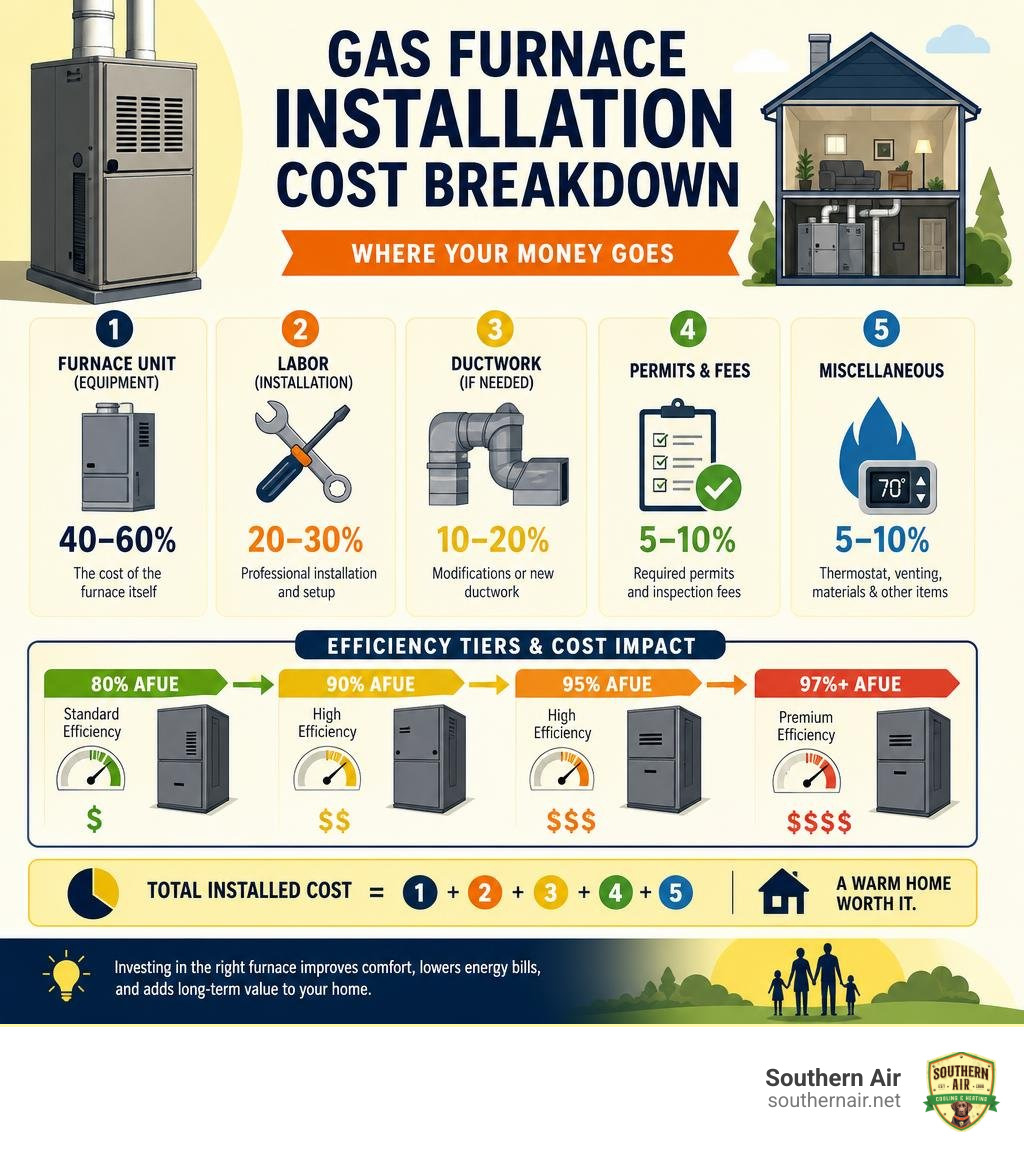
Gas furnace installation cost is one of the biggest heating expenses a homeowner will face, and prices vary more than most people expect. Here’s a quick snapshot so you can budget before reading further:
| Cost Category | Typical Range |
|---|---|
| Furnace unit only | $700 – $6,200 |
| Labor (installation) | $1,000 – $3,000 |
| Total installed cost | $3,800 – $12,000 |
| National average (all-in) | ~$4,500 – $7,000 |
| With new ductwork added | Up to $12,000+ |
Prices above reflect 2026 national averages for a typical single-family home.
Replacing a furnace isn’t a one-size-fits-all project. Your final number depends on your home’s size, your existing ductwork, the efficiency rating you choose, and where you live. A basic swap in a small home can run under $4,000, while a large home needing new venting and ductwork can push past $12,000.
In North Florida, most homeowners don’t think much about their furnace until a cold snap hits and it stops working. That’s exactly the wrong time to be comparing prices under pressure.
I’m Dustin Caison, President of Southern Air Cooling & Heating, a State Certified Air Conditioning Contractor with over two decades of hands-on experience in HVAC, including countless gas furnace installation cost evaluations across North Florida. In this guide, I’ll walk you through everything that affects your final price so you can make a confident, informed decision.
What Is the Average Gas Furnace Installation Cost?
When you begin researching the cost of a new heating system, the numbers can feel a bit overwhelming. Nationally, the average price to replace a gas furnace ranges between $3,800 and $10,000, with many standard suburban installations landing right around the $5,200 mark.
However, because we enjoy a milder climate here in North Florida, our heating requirements look a bit different than those in the freezing Midwest or Northeast. A home in Palatka or Saint Augustine does not require the same massive heating capacity as a home in Chicago.
To help you understand how fuel types and systems compare, it is helpful to look at the broader market. According to the latest data on furnace replacement cost: gas, electric, and oil prices in 2026, gas remains the most popular and cost-effective heating option for homes with existing gas lines, balancing reasonable upfront equipment pricing with highly competitive monthly operating bills. While electric furnaces are cheaper to buy upfront, their monthly operating costs can be double those of gas. Oil furnaces are rarely seen in our region and carry much higher installation and fuel expenses.
To give you a realistic idea of what to budget based on your specific property, we have compiled a cost breakdown based on home square footage and heating capacity, measured in British Thermal Units, or BTUs.
| Home Size (Sq. Ft.) | Required Heating Capacity (BTUs) | Average Installed Cost Range |
|---|---|---|
| 1,000 – 1,200 | 40,000 – 60,000 BTUs | $3,500 – $5,500 |
| 1,500 – 2,000 | 60,000 – 80,000 BTUs | $5,000 – $7,500 |
| 2,000 – 2,500 | 80,000 – 100,000 BTUs | $6,000 – $9,000 |
| 2,500+ | 100,000 – 120,000+ BTUs | $8,500 – $12,000+ |
These ranges cover the complete project, which includes the physical gas furnace unit, professional labor, basic installation supplies, and standard code-compliant venting.
Key Factors That Drive Your Heating System Pricing
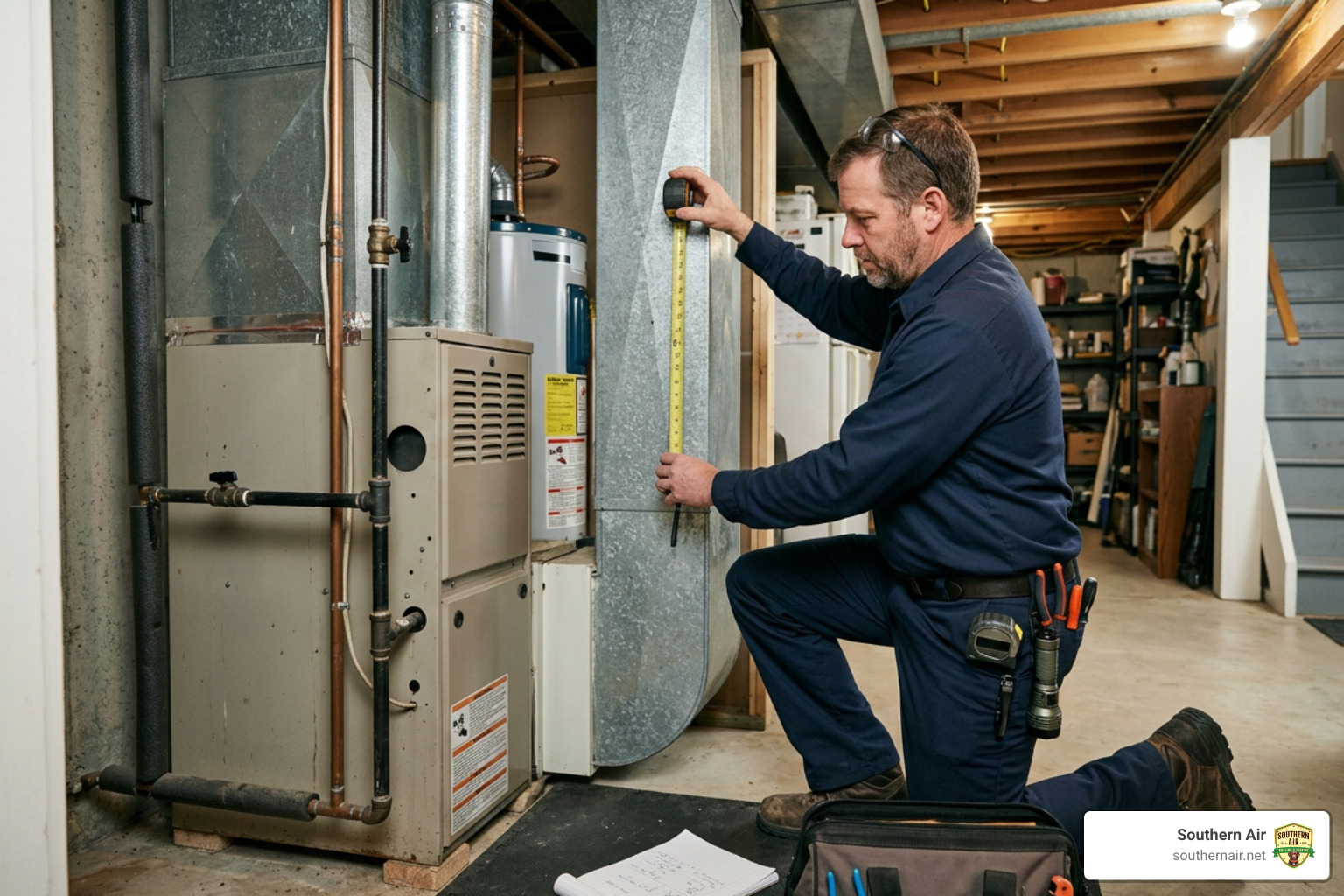
If you gather three different quotes for a new gas furnace, you might notice they do not match. That is because physical equipment is only one part of the equation. Several key factors drive the final price of your heating system up or down.
First is installation complexity. A straightforward swap in an easily accessible utility closet or garage will always cost less in labor than a complex installation in a tight attic, crawlspace, or historic home. Second is our unique climate zone. In Florida, we fall into a milder climate zone where heating systems run for fewer hours out of the year compared to our cooling systems. This means we can often design a system configuration that prioritizes affordability without sacrificing comfort during our sudden winter cold snaps.
Sizing, BTUs, and Gas Furnace Installation Cost
One of the most common mistakes homeowners make is assuming that a bigger furnace is always better. In the HVAC world, an oversized furnace is actually a major liability. If your system is too large for your home, it will heat the space too quickly and shut down, a process called short-cycling. This constant starting and stopping places immense wear and tear on the components, spikes your energy bills, and fails to distribute heat evenly, leaving you with cold spots.
To avoid this, a professional contractor must perform a Manual J load calculation. This calculation takes into account your home’s total square footage, ceiling heights, insulation levels, window types, and local climate to determine the exact heating capacity your home needs.
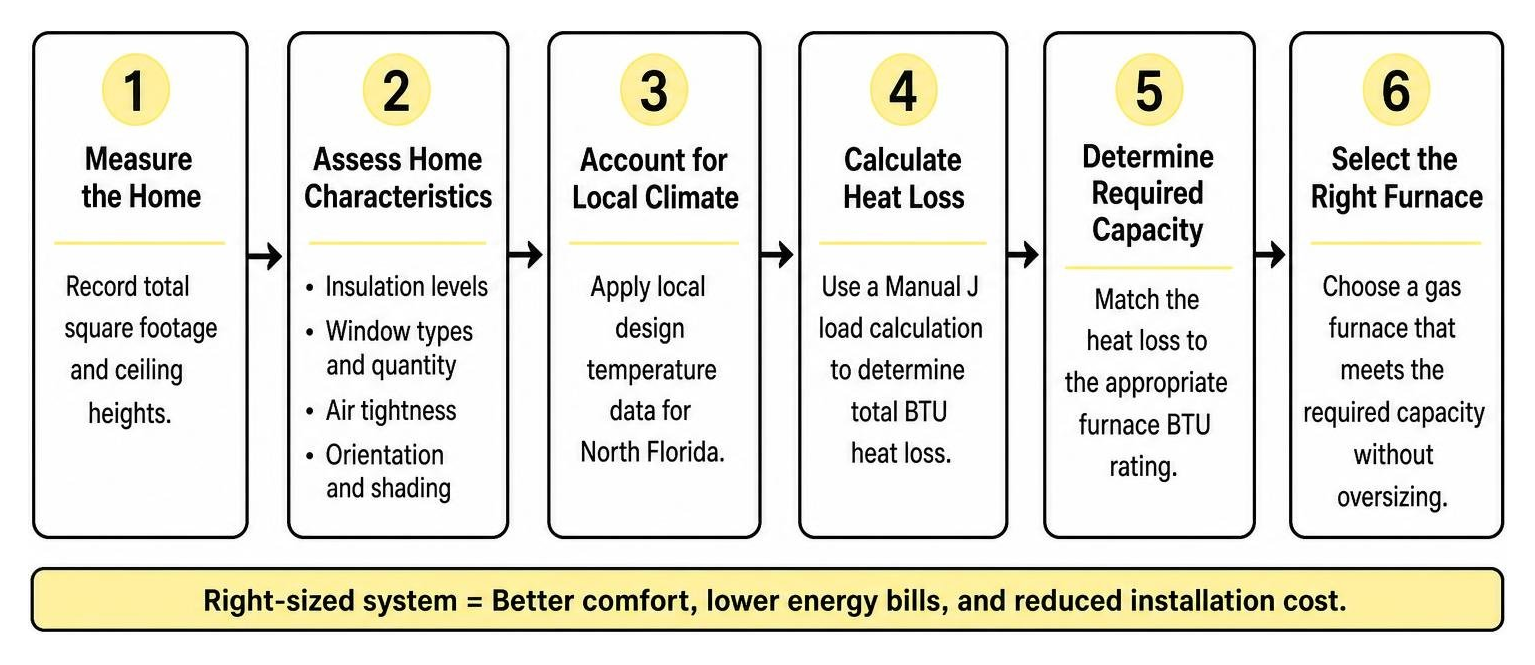
By right-sizing your system, you avoid paying for excess heating capacity you do not need, which directly lowers your upfront gas furnace installation cost.
How AFUE Ratings Impact Gas Furnace Installation Cost
A furnace’s efficiency is measured by its Annual Fuel Utilization Efficiency, or AFUE, rating. This percentage tells you how much of the gas consumed by the system is converted directly into usable heat for your home, versus how much is lost up the exhaust flue.
Standard-efficiency furnaces operate at 80% AFUE, meaning 80% of the gas becomes heat while 20% is vented away. High-efficiency condensing furnaces operate at 90% to 98% AFUE. According to the detailed breakdown in the guide on how much does a gas furnace cost? (2026), upgrading from an 80% AFUE model to a 96% AFUE model can reduce your annual heating bills significantly.
However, high-efficiency models carry an upfront premium of $1,000 to $3,000. In colder climates where furnaces run for six months a year, the payback period through lower operating costs is very short, often just three to six years. In North Florida, where our winters are brief and mild, it takes much longer to recoup that extra upfront cost. For many local families, a reliable 80% AFUE system represents the most sensible financial investment.
Furnace Brand and System Stages
The technology inside the cabinet also plays a major role in pricing. Gas furnaces are divided into three performance tiers:
- Single-Stage Furnaces: These systems operate like a light switch, they are either 100% on or completely off. They are the most affordable option upfront but can create slight temperature swings.
- Two-Stage Furnaces: These units can run on a low setting, roughly 65% capacity, for milder days, and switch to high capacity when a true cold front rolls through. This provides quieter operation and more even heat.
- Modulating Furnaces: The gold standard of comfort, these units adjust their heating output in tiny 1% increments to maintain a perfectly consistent indoor temperature.
Brand tiers also influence the price. Premium brands offer advanced comfort features and robust builder warranties, while budget-friendly brands focus on simple, reliable performance. Whichever brand you choose, registering your new furnace with the manufacturer within 60 days of installation is crucial to secure the maximum warranty coverage, which typically extends the parts warranty from 5 years to 10 years.
Hidden Expenses Beyond the Gas Furnace Unit
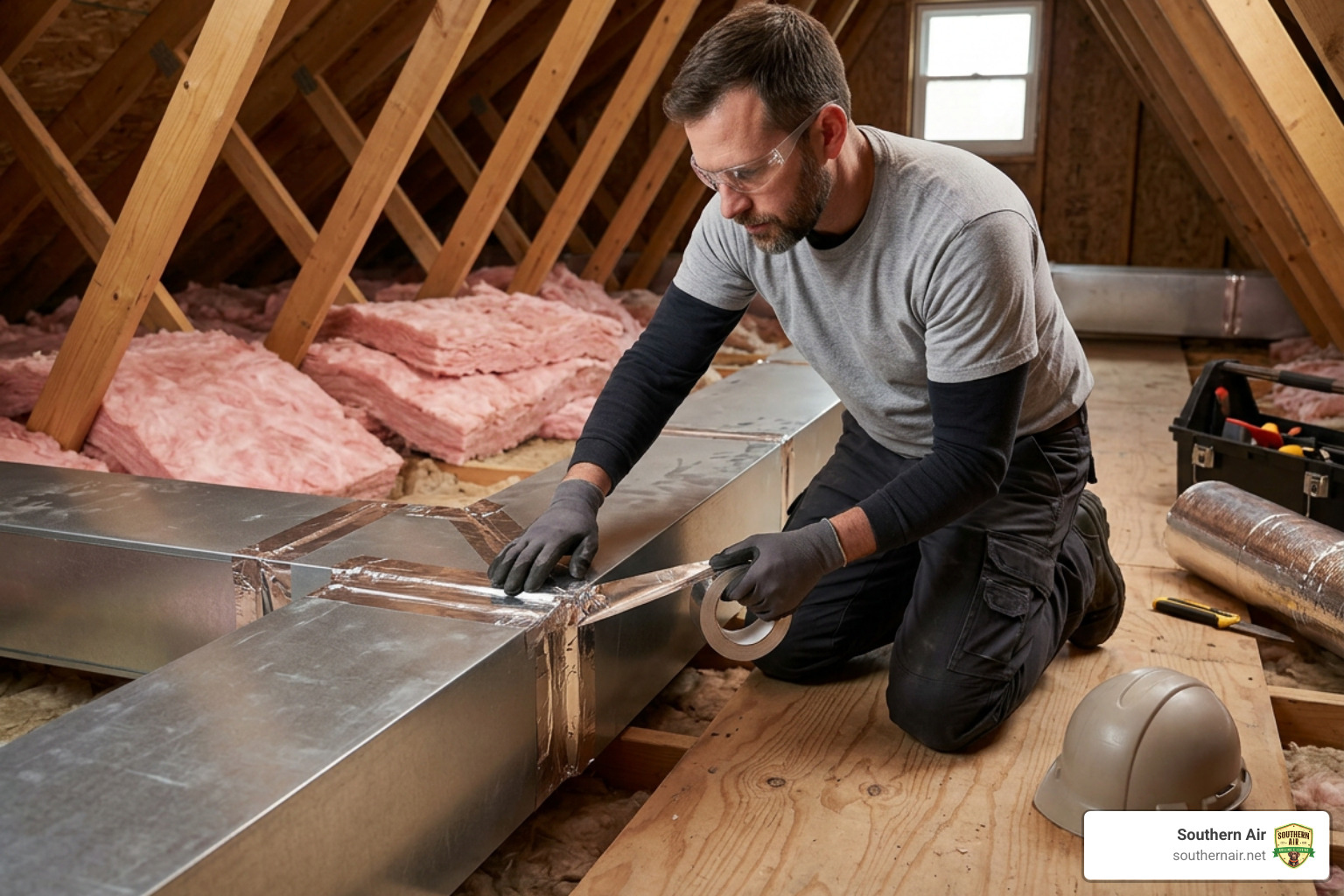
When budgeting for your project, it is important to look beyond the price tag of the furnace cabinet itself. There are several associated costs that can impact your final quote depending on the condition of your home’s infrastructure.
Ductwork Modifications and Repairs
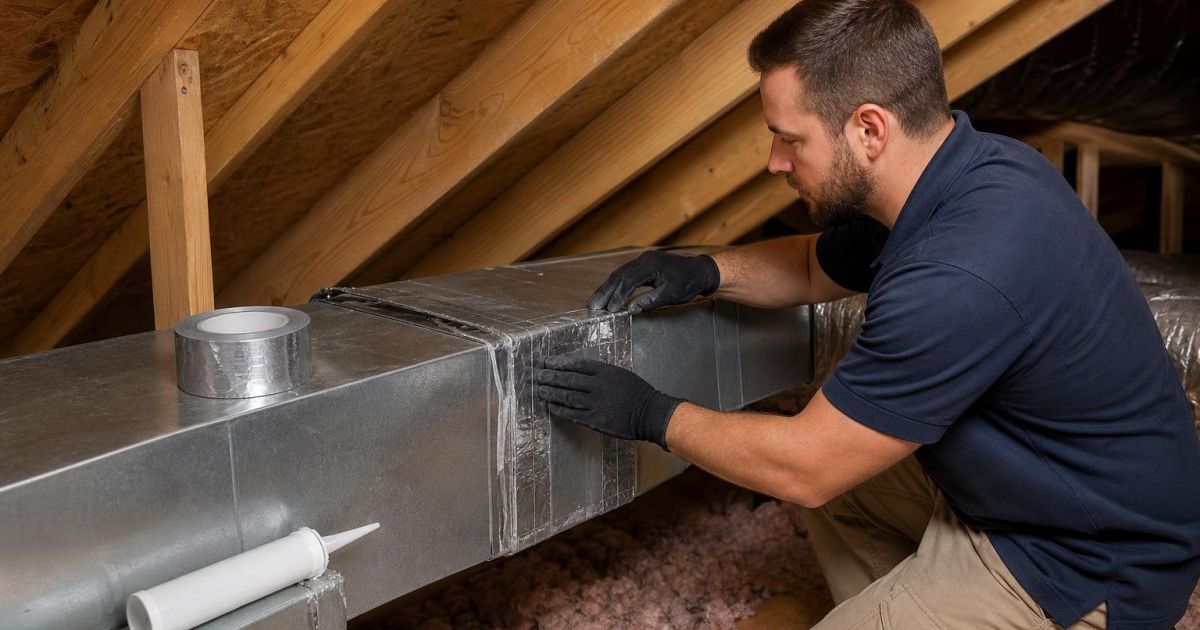
Your furnace can only deliver warm air if your ductwork is in good condition. If your existing ducts are leaking, collapsed, or improperly sized, your brand-new furnace will have to work twice as hard, wasting energy and shortening its lifespan.
During an installation, we inspect the entire duct system. Sometimes, simple duct sealing and plenum transitions are required to connect the new furnace to the old ductwork safely. If your ducts require extensive repairs or a complete redesign to optimize airflow, this can add anywhere from $500 to $3,000 to the project. If you are experiencing uneven temperatures, it might be the perfect time to discuss a comprehensive furnace replacement that addresses both the heating unit and the air distribution system.
Gas Line and Venting Requirements
If you are replacing an older 80% AFUE furnace with a similar model, we can usually connect the system to your existing metal flue and gas lines with minimal modifications.
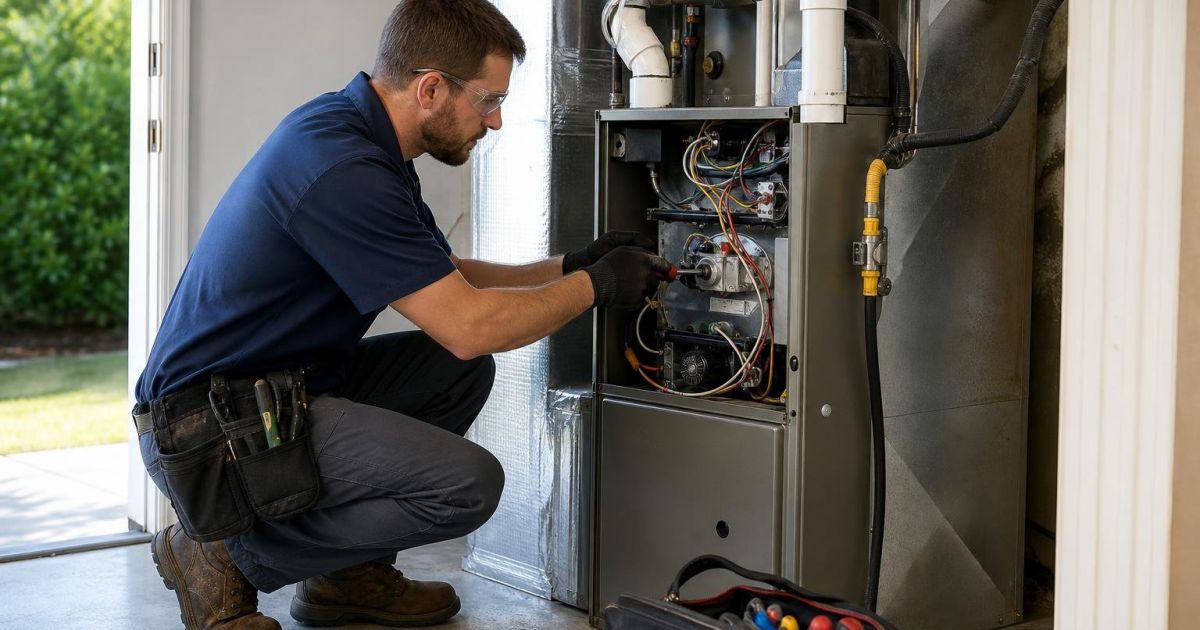
However, if you upgrade to a high-efficiency condensing furnace, the installation process changes. These systems produce an acidic liquid condensate during operation, meaning they require a dedicated drain line. They also vent through plastic PVC pipes instead of traditional metal chimneys. Running these new PVC vent lines through an exterior wall and modifying gas lines to meet modern safety codes can add $500 to $1,500 to your overall installation costs.
Repair vs. Replace: Making the Right Financial Decision
When your heating system starts acting up on a chilly night in Crescent City or Florahome, you face a tough choice, do you patch it up with another repair, or is it time to invest in a brand-new system?
Evaluating Furnace Lifespan and Age
The typical lifespan of a well-maintained gas furnace is 15 to 20 years. As a furnace crosses the 12 to 15-year threshold, its internal components begin to wear down, its heating performance drops, and its operating expenses begin to climb.
If you find yourself calling for service multiple times a season or noticing that your utility bills are creeping upward for no clear reason, your system is likely reaching the end of its reliable service life. To better understand how our local climate impacts the wear and tear on your system, take a look at our guide on why heating services are essential even in north florida.
The 50% Rule and the $5,000 Rule for Gas Furnace Installation Cost
To take the guesswork out of the repair versus replacement decision, HVAC professionals use two simple guidelines:
- The 50% Rule: If the cost of a single repair bill is equal to or greater than 50% of the cost of a brand-new furnace, replacement is almost always the smarter financial move.
- The $5,000 Rule: Multiply the age of your furnace by the cost of the repair. If the result is over $5,000, you should replace the unit. For example, if a 12-year-old furnace needs a $450 draft inducer motor repair, the calculation is 12 multiplied by 450, which equals $5,400. Because this exceeds $5,000, investing that money into a new, warrantied system is a more secure long-term decision.
This is especially true if your technician discovers major safety hazards, such as a cracked heat exchanger. A cracked heat exchanger can leak deadly carbon monoxide gas into your home’s airflow. Because replacing a heat exchanger is an incredibly expensive and labor-intensive job, it almost always warrants a prompt furnace repair assessment or a complete system replacement to keep your family safe.
Frequently Asked Questions About Heating Systems
How long does a gas furnace installation take?
For a standard, like-for-like replacement where the new furnace connects directly to your existing ductwork, gas lines, and venting, a two-person professional crew can typically complete the job in 4 to 8 hours. If your project requires complex retrofits, such as running new PVC venting for a high-efficiency unit, modifying gas lines, or repairing damaged ductwork, the installation can take 10 to 18 labor hours and may span across two days.
Can I install a gas furnace myself to save money?
No. Gas furnace installation is not a do-it-yourself project. Working with natural gas or propane lines, high-voltage electrical circuits, and combustion venting presents severe safety hazards, including carbon monoxide poisoning, gas leaks, and fire risks. Additionally, local building codes in Florida require a licensed professional to pull permits and perform the installation. Attempting a DIY installation will also void the manufacturer’s equipment warranty.
Are there rebates or tax credits available for high-efficiency gas furnaces?
Yes. While federal tax credits under Section 25C have shifted, many state-level programs, local utility incentives, and manufacturer promotions offer significant financial savings for homeowners who upgrade to high-efficiency systems. Additionally, we offer flexible financing options to help you break the upfront cost of your new heating system into manageable monthly payments.
Conclusion
Investing in a new gas furnace is a major decision, but it does not have to burn a hole in your pocket. By understanding the key factors that drive gas furnace installation cost, from proper sizing and efficiency ratings to regional labor trends, you can make an informed choice that keeps your home warm and your budget intact.
At Southern Air Cooling & Heating, we have spent over 43 years delivering family-owned excellence and 5-star service to our neighbors in Palatka, FL, and the surrounding communities, including Crescent City, East Palatka, Elkton, Florahome, Fleming Island, and Green Cove Springs. We believe in transparent, upfront pricing with no hidden surprises.
Whether you need a quick repair, a seasonal tune-up to keep your system running safely, or a complete system upgrade, our team is here to help. To keep your new investment running efficiently for decades to come, we invite you to explore our priority Comfort Club plans for regular furnace maintenance.
Ready to find the perfect heating solution for your home? Contact us today to learn more about our professional gas furnace installation services and get a personalized, honest quote tailored to your budget.
Request Service
Please fill out the form below to request an estimate or schedule service.
"*" indicates required fields