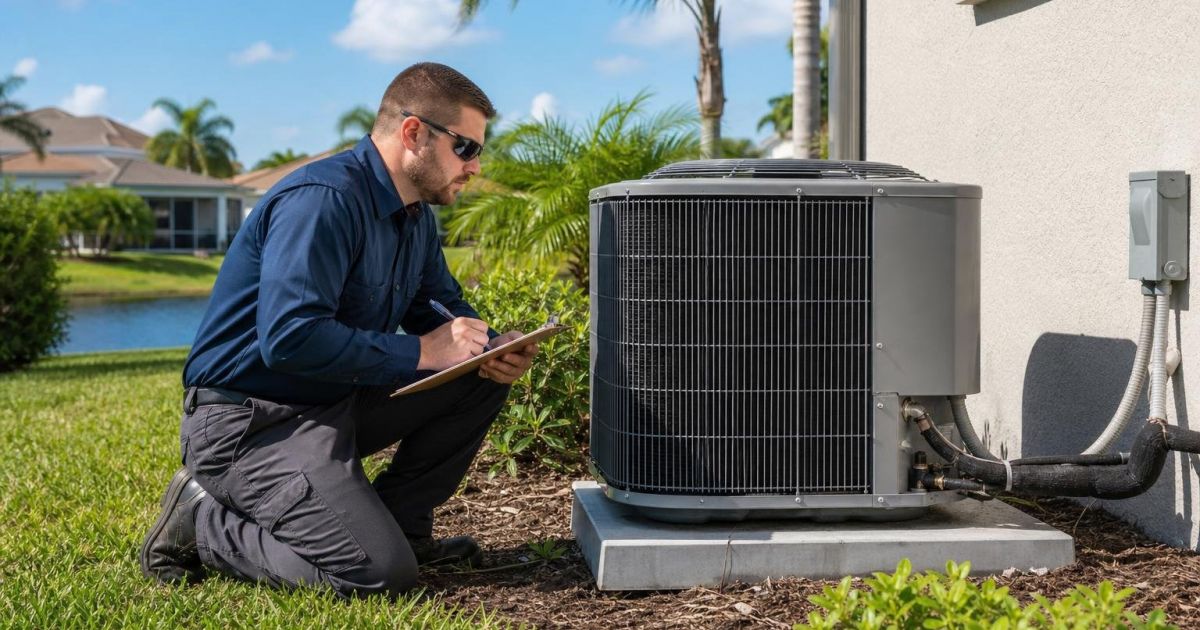
When Your AC Stops Cooling, Here’s What It’ll Cost to Fix It
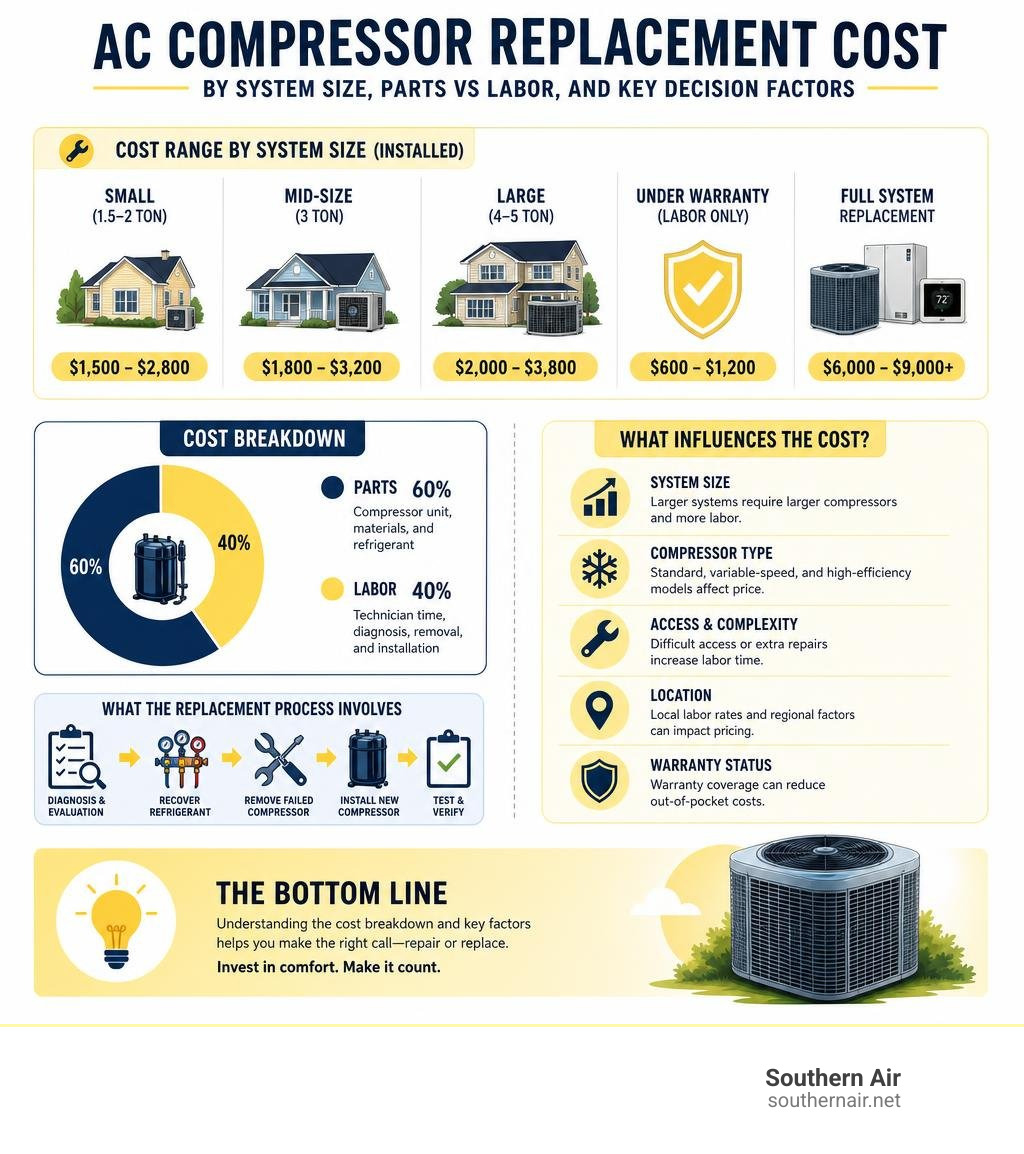
AC compressor install cost typically runs between $1,500 and $3,000 for most Florida homeowners, parts and labor combined. Here’s a quick look at what to expect:
| Scenario | Estimated Cost |
|---|---|
| Compressor under warranty (labor only) | $600 – $1,200 |
| Small system (1.5–2 ton) replacement | $1,500 – $2,800 |
| Mid-size system (3 ton) replacement | $1,800 – $3,200 |
| Large system (4–5 ton) replacement | $2,000 – $3,800 |
| Full system replacement (if needed) | $6,000 – $9,000+ |
The compressor is the heart of your AC system. When it fails, your home stops cooling, fast. And in a Florida summer, that’s not just uncomfortable. It’s a genuine problem.
The bad news: compressor replacement is one of the most expensive AC repairs you’ll face. The good news: knowing what drives the cost helps you avoid overpaying and make a smarter decision about whether to repair or replace.
I’m Dustin Caison, President of Southern Air Cooling & Heating and a State Certified Air Conditioning Contractor with over two decades of hands-on experience in AC compressor install cost decisions across North Florida. In this guide, I’ll walk you through everything you need to know, from what the job actually involves to when it makes more financial sense to replace the whole system.
Understanding the AC Compressor Install Cost in 2026
In 2026, the average residential AC compressor replacement usually falls between $1,500 and $3,000 installed, though some jobs land closer to $800 to $2,300 nationally depending on system size, warranty status, access, and compressor type.
For homeowners in Palatka, Crescent City, East Palatka, Fleming Island, Green Cove Springs, Saint Augustine, Keystone Heights, Interlachen, Welaka, and nearby North Florida communities, pricing often depends on three big things:
- The size of your AC system
- Whether the compressor is under manufacturer warranty
- Whether your system is worth repairing at all
A helpful national reference point is this AC compressor replacement cost (2026 prices), which places many residential compressor jobs in the same general range: roughly $1,500 to $3,000 when parts and labor are included.
Here is a practical 2026 cost table by system size:
| AC System Size | Typical Installed Compressor Cost | Notes |
|---|---|---|
| 1.5-ton | $1,500 – $2,600 | Smaller homes, condos, additions |
| 2-ton | $1,600 – $2,800 | Common for smaller Florida homes |
| 3-ton | $1,800 – $3,200 | Very common residential size |
| 4-ton | $2,000 – $3,500 | Larger homes, higher refrigerant volume |
| 5-ton | $2,300 – $3,800+ | Large homes, higher-capacity equipment |
These numbers are estimates, not guarantees. A 3-ton system with an in-warranty compressor may cost less than a 2-ton system that needs an out-of-warranty OEM compressor, extra refrigerant, and cleanup after a burnout.
How System Size Impacts Your AC Compressor Install Cost
System size matters because larger AC units require larger compressors, more refrigerant, heavier components, and sometimes more labor.
In HVAC, cooling size is measured in tons. One ton equals 12,000 BTUs of cooling capacity per hour. If you want a deeper explanation, we have a full guide here: what is HVAC tonnage and why does it matter?.
As a general rule:
- Smaller systems cost less to repair.
- Larger systems cost more because the compressor itself is more expensive.
- Bigger systems may require more refrigerant, which adds material cost.
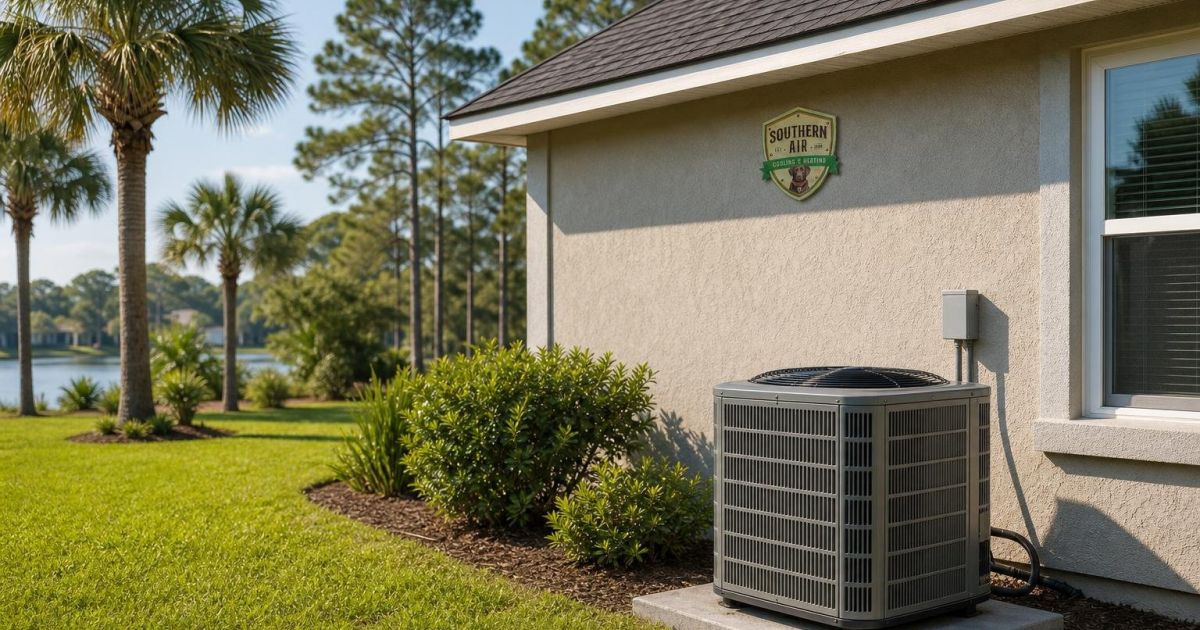
- Access matters too. A clean, open condenser pad is faster to work on than a tight, overgrown, hard-to-reach unit.
And yes, we have seen alligator-adjacent access situations in Florida. HVAC work is never boring.
Parts vs. Labor Breakdown for Compressor Jobs
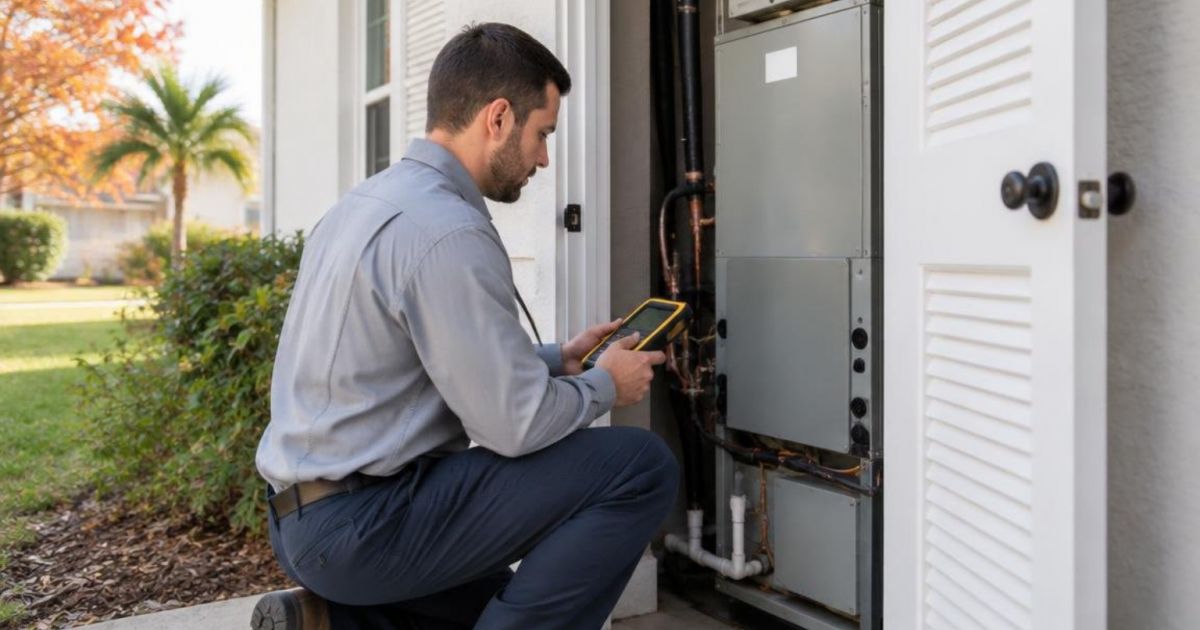
A compressor replacement is not just “swap the part and go.” It is a technical refrigeration job that requires proper tools, EPA-compliant refrigerant handling, electrical testing, brazing, evacuation, charging, and performance verification.
Typical cost breakdown:
| Cost Category | Typical Range |
|---|---|
| Compressor part | $500 – $1,500+ |
| Labor | $600 – $1,500 |
| Refrigerant and supplies | $150 – $500 |
| Filter drier and related parts | $75 – $300 |
| Total typical job | $1,500 – $3,000 |
Labor usually reflects 4 to 8 hours of work, depending on the system, accessibility, diagnosis, refrigerant type, and whether contamination is present.
Licensed HVAC labor rates often fall in the $75 to $150 per hour range, but compressor jobs are often priced as a flat repair because the technician needs specialized equipment, recovery tanks, a vacuum pump, gauges, brazing equipment, nitrogen, and EPA certification.
Key Factors That Drive Compressor Replacement Expenses
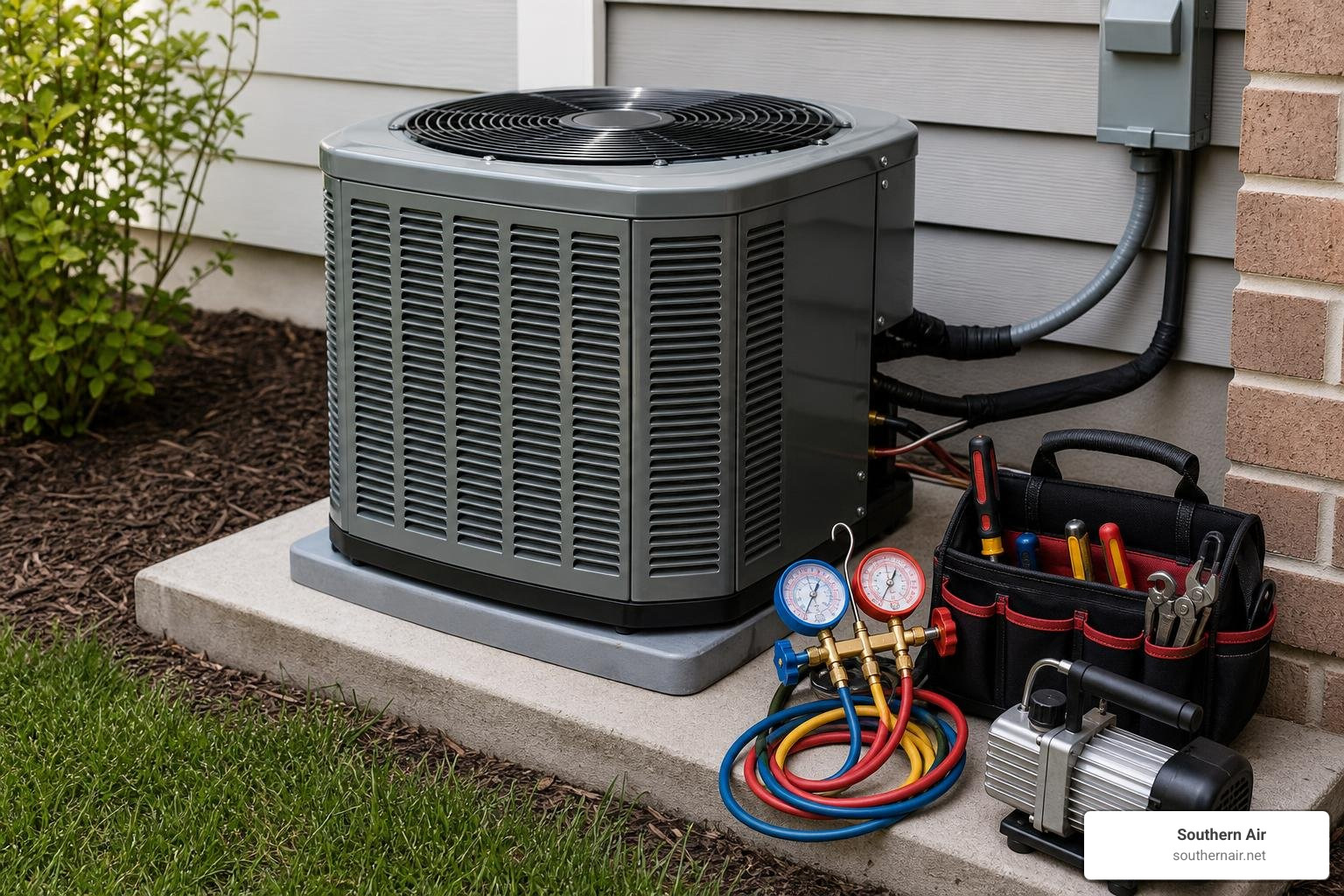
Your AC compressor install cost can move up or down based on what is actually wrong with the system. A failed compressor caused by a simple electrical issue is different from a failed compressor that burned out and contaminated the refrigerant circuit.
In North Florida, we also have local conditions that make compressors work hard:
- Long cooling seasons
- High humidity
- Heavy summer runtime
- Frequent thunderstorms and power surges
- Coastal air exposure near areas like Saint Augustine
- Debris, grass clippings, and clogged condenser coils
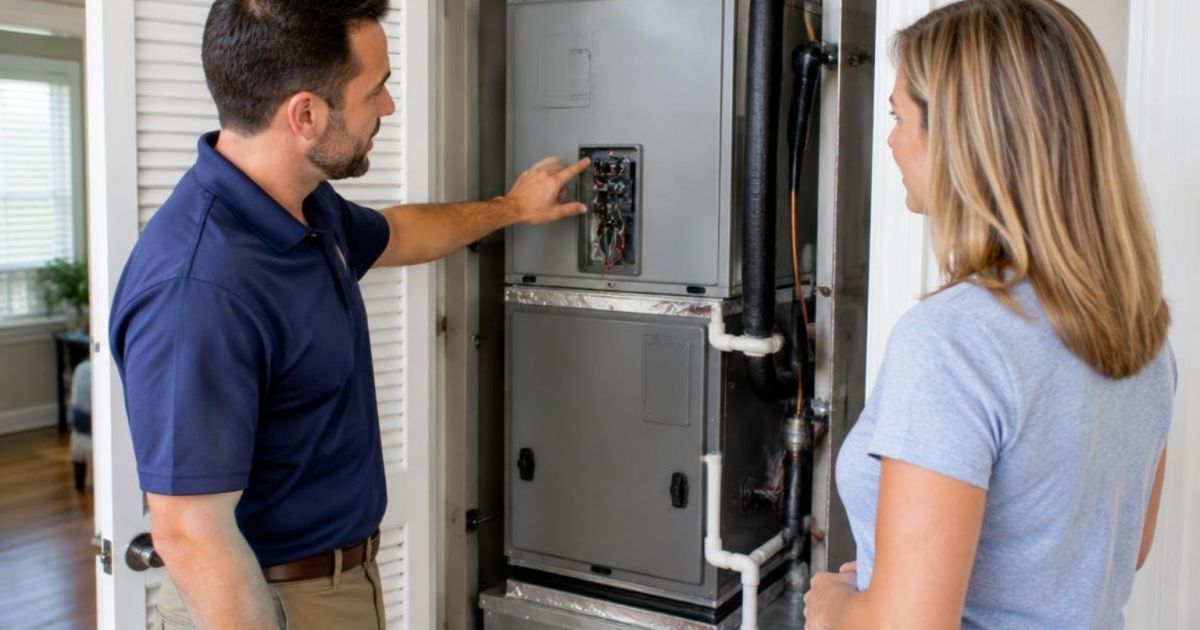
That is why accurate diagnosis matters. Before replacing a compressor, a technician should confirm that the issue is not a capacitor, contactor, low-voltage problem, refrigerant leak, or control board issue.
For repair support, our team offers AC repair throughout our service area.
How Compressor Type Affects Your AC Compressor Install Cost
Different compressors cost different amounts. The type must match your system design, refrigerant, voltage, capacity, and manufacturer specifications.
| Compressor Type | Typical Installed Cost Impact | What to Know |
|---|---|---|
| Single-stage | Lower | Most common and usually most affordable |
| Two-stage | Moderate to high | Better comfort and humidity control |
| Variable-speed/inverter | Highest | Most efficient, most complex, higher part cost |
Single-stage compressors run at one output level: on or off. They are common, reliable, and usually less expensive to replace.
Two-stage compressors can run at a lower or higher output. They improve comfort and humidity control, which matters a lot in Florida.
Variable-speed or inverter compressors adjust output more precisely. They can be very efficient and quiet, but replacement costs are higher because the compressor and control electronics are more advanced.
If you are comparing repair with upgrading to a newer system, modern features may be worth considering. We explain more here: thinking about getting a new air conditioner? Top features of modern systems.
Additional Parts and Materials Required
A proper compressor replacement often includes more than the compressor itself.
Common related parts and materials include:
| Item | Why It Matters |
|---|---|
| Filter drier | Removes moisture, acid, and debris from the refrigerant circuit |
| Refrigerant | Needed to recharge the system to manufacturer specifications |
| Capacitor | Helps start and run the compressor motor |
| Contactor | Controls high-voltage power to the outdoor unit |
| Electrical terminals/wiring | May be replaced if overheated or damaged |
| Refrigerant oil | May be required depending on compressor and system conditions |
| Acid neutralizer or cleanup kit | Used after some burnout failures |
| Nitrogen | Used during brazing and pressure testing |
| Vacuum pump and micron gauge | Used to remove air and moisture before charging |
The filter drier should almost always be replaced during compressor replacement. A failed compressor can leave behind acid, moisture, or metal debris. Skipping this step is like changing your car engine and leaving dirty oil in it. Technically possible? Sure. Smart? Not even a little.
Manufacturer Warranty and Ways to Save
Many AC systems include a manufacturer parts warranty. Standard warranties are often 5 years, while registered systems may have 10-year parts coverage. Compressor warranty coverage usually means the part is covered, not the labor.
That is why an under-warranty compressor job may still cost $600 to $1,200 for labor, refrigerant, and materials.
Ways homeowners can save:
Check warranty status first
- Use the model and serial number on the outdoor unit.
- Ask your HVAC company to verify coverage before approving the job.
Get a clear written estimate
- Make sure it includes labor, refrigerant, filter drier, electrical parts, and cleanup if needed.
Ask whether aftermarket compressors are appropriate
- Aftermarket compressors may cost 20% to 30% less than OEM options in some cases.
- They must be properly matched to the system.
Do not skip maintenance
- Dirty coils, weak capacitors, low refrigerant, and loose electrical connections can shorten compressor life.
- Our AC maintenance service helps catch small problems before they become wallet-sized events.
Join a maintenance plan
- Southern Air Cooling & Heating offers priority Comfort Club plans to help homeowners stay ahead of breakdowns.
The Step-by-Step Replacement Process: What Your Technician Does
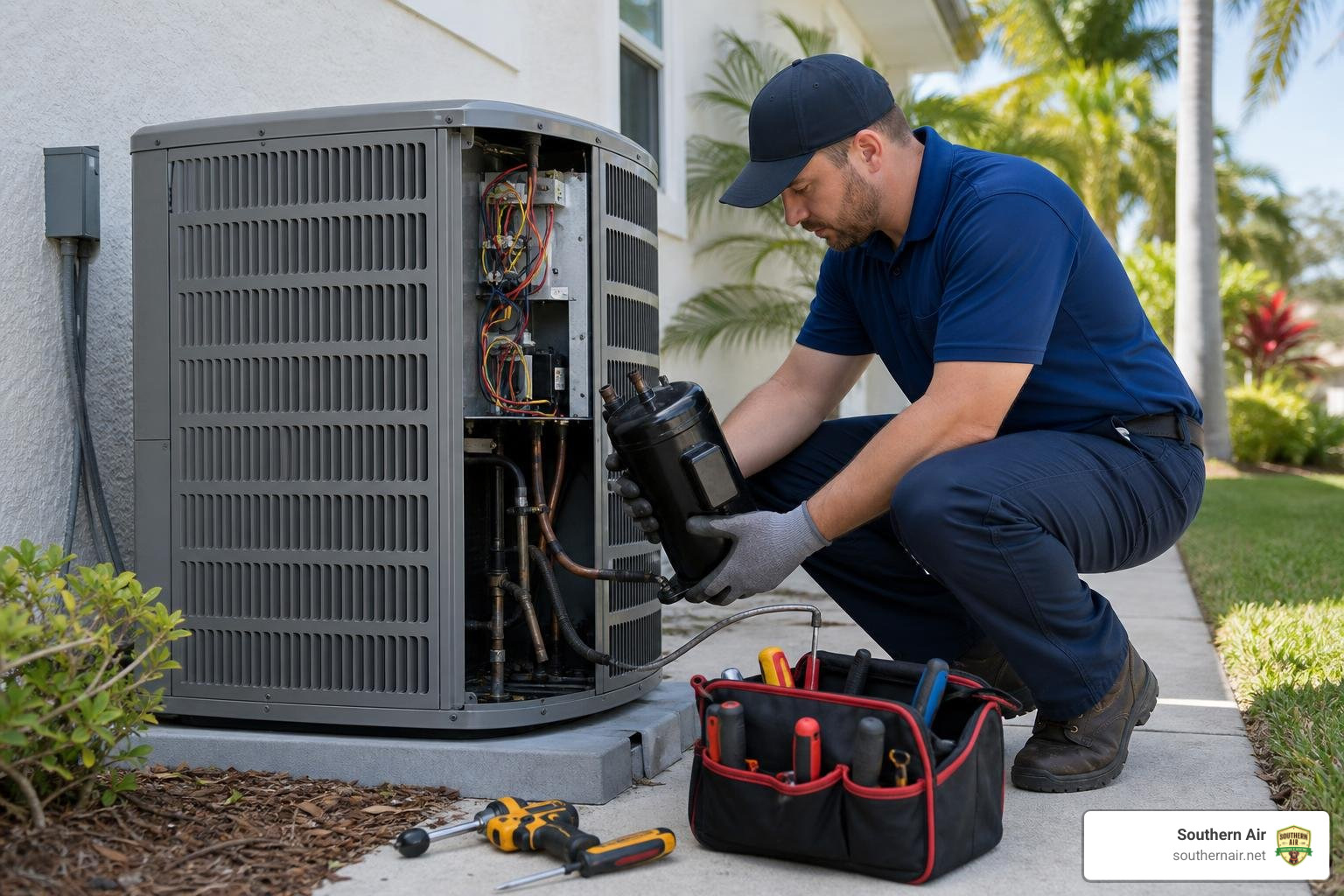
Compressor replacement is one of the more involved AC repairs. A typical job takes 4 to 8 hours, depending on system condition, refrigerant recovery time, access, and testing.
Here is what happens behind the scenes.
Step 1: Refrigerant Recovery and System Prep
Before any refrigerant lines are opened, the existing refrigerant must be recovered using EPA-approved equipment. Refrigerant cannot be vented into the atmosphere.
The technician will usually:
- Confirm the diagnosis with pressure, electrical, and temperature readings
- Turn off high-voltage power
- Recover the refrigerant into a recovery cylinder
- Inspect wiring, capacitor, contactor, and safety controls
- Prepare the work area for brazing and component removal
This step protects the environment, the technician, and your system.
Step 2: Removing the Failed Compressor
Once refrigerant is recovered and power is safely disconnected, the technician removes the failed compressor.
This may involve:
- Disconnecting electrical leads
- Unbrazing or cutting suction and discharge lines
- Removing mounting bolts
- Lifting out the failed compressor
- Inspecting oil condition for acid, burn marks, or metal debris
If the compressor failed internally, the technician may recommend additional cleanup steps. That is especially important if the old compressor burned out electrically or sent metal through the refrigerant circuit.
Step 3: Installing the New Compressor and Filter Drier
Next, the new compressor is set in place and connected.
A proper installation usually includes:
- Replacing the filter drier
- Brazing copper connections
- Flowing nitrogen while brazing to reduce internal oxidation
- Replacing damaged wiring or terminals
- Confirming the compressor matches the system specifications
- Pressure testing for leaks
The nitrogen purge matters. Without it, scale can form inside the copper lines during brazing. That scale can circulate through the system and harm the new compressor.
Step 4: Evacuation, Charging, and System Testing
After the system is sealed, the technician evacuates the refrigerant circuit with a vacuum pump. This removes air and moisture.
Then they:
- Pull the system into a deep vacuum
- Verify vacuum level with a micron gauge
- Recharge with the correct refrigerant amount
- Start the system
- Check amperage, pressures, superheat/subcooling, and temperature split
- Confirm proper cooling performance
This final testing is where good work separates itself from rushed work. Incorrect refrigerant charge can reduce efficiency, cause poor cooling, and damage the new compressor.
Repair vs. Replace: Deciding Between a New Compressor and a Full System
Replacing only the compressor can be the right move. But sometimes it is putting a new heart into a system whose knees, lungs, and elbows are also giving up.
A good decision depends on:
- System age
- Warranty status
- Refrigerant type
- Repair history
- Efficiency level
- Overall condition
- Cost difference between compressor replacement and full AC replacement
If you are weighing this decision now, we recommend reading should I repair or replace my AC unit?.
The Impact of System Age and Refrigerant Type
Most AC compressors last around 10 to 15 years with proper maintenance. In Florida, where systems run hard for much of the year, lifespan may be closer to the lower end if maintenance has been inconsistent.
Here is a simple decision guide:
| System Situation | Better Option |
|---|---|
| Under 8 years old, R-410A, under warranty | Replace compressor |
| 8-12 years old, good condition | Compare repair vs replacement |
| 12+ years old, multiple repairs | Consider full replacement |
| R-22 system | Usually consider full replacement |
| Major refrigerant leak plus failed compressor | Often full replacement |
| Poor efficiency and high utility bills | Full replacement may offer better value |
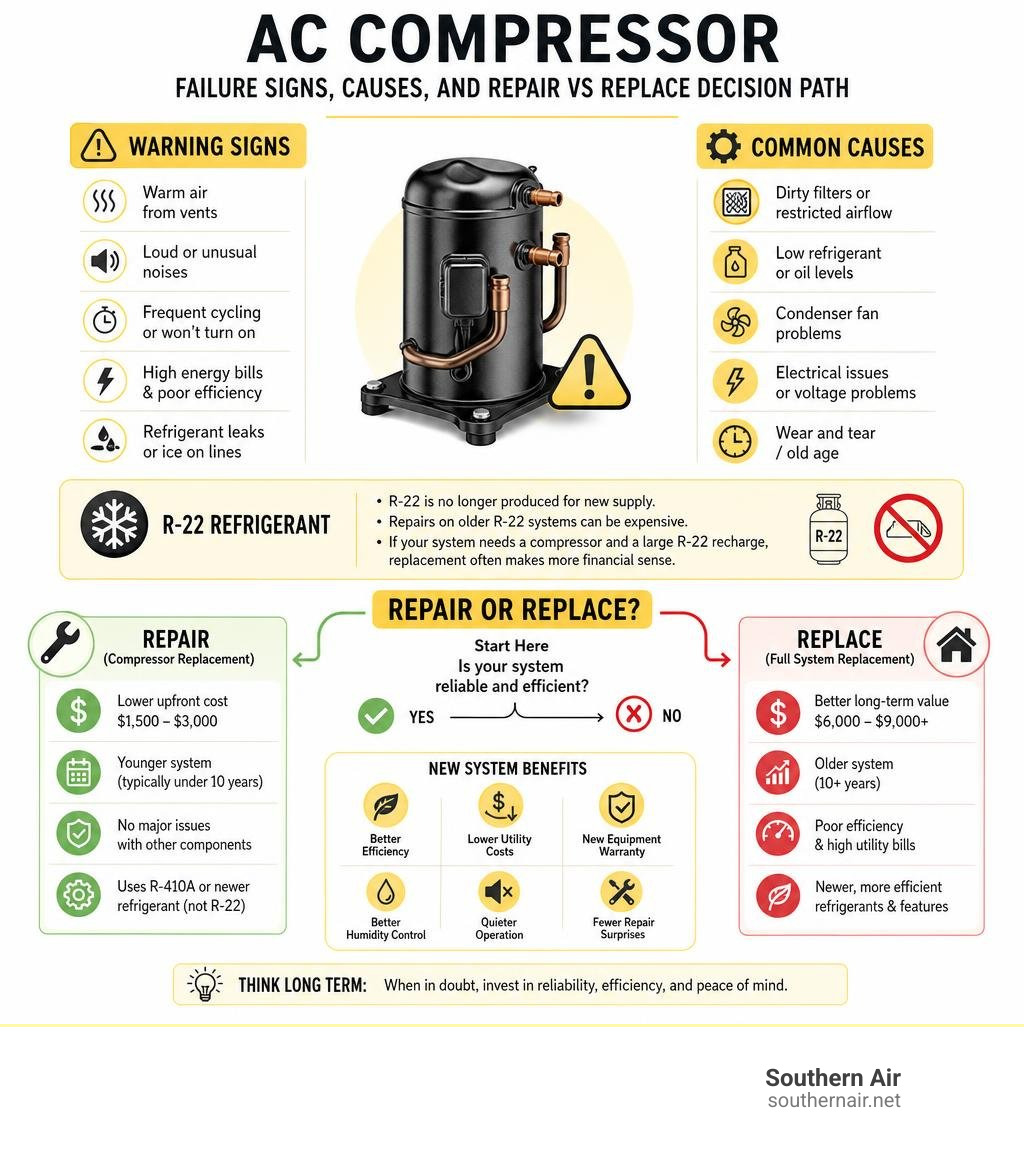
R-22 refrigerant is a major factor. R-22 is no longer produced for new supply, so repairs on older R-22 systems can get expensive. If your older system needs a compressor and a large R-22 recharge, replacement often makes more financial sense.
Most newer systems use R-410A, though the industry is transitioning toward lower-GWP refrigerants such as R-32 and R-454B in new equipment. That transition is another reason to think carefully before putting major money into an older system.
Comparing Compressor Replacement to Full System Replacement
Compressor replacement usually costs $1,500 to $3,000.
Full central AC replacement often costs $6,000 to $9,000+, depending on size, efficiency, ductwork condition, installation details, and equipment type. For broader AC installation pricing context, see how much does an AC unit cost in 2026?.
So yes, compressor replacement is usually cheaper upfront. But upfront cost is not the only factor.
A new system may provide:
- Better SEER2 efficiency
- Lower monthly utility costs
- New equipment warranty
- Better humidity control
- Quieter operation
- Fewer repair surprises
- Compatibility with newer refrigerants
If your current AC is inefficient, unreliable, or near the end of its expected life, replacement may be the smarter long-term investment. You can learn more about efficiency here: how to know if your air conditioner is energy efficient.
For homeowners ready to compare options, Southern Air Cooling & Heating provides AC replacement services across Palatka and nearby communities.
Frequently Asked Questions About AC Compressor Replacement
What are the warning signs that an AC compressor is failing?
Common warning signs include:
- Warm air blowing from vents
- Outdoor unit humming but not starting
- Breaker trips when the AC tries to run
- Loud grinding, rattling, or clanking sounds
- Hard starts or repeated failed starts
- Outdoor fan runs but compressor does not
- Ice on refrigerant lines
- Oil stains around refrigerant fittings
- Cooling that starts and stops intermittently
Some of these symptoms can also be caused by less expensive problems, such as a failed capacitor or contactor. That is why proper diagnosis is critical before approving a compressor replacement.
What are the most common causes of AC compressor failure?
The most common causes include:
Failed capacitor
- A weak capacitor can make the compressor struggle to start, overheat, or fail.
Refrigerant leaks
- Low refrigerant causes poor cooling and can overheat the compressor.
Dirty condenser coils
- Heat cannot leave the system properly, so pressures rise and the compressor works harder.
Electrical issues
- Loose wires, bad contactors, voltage spikes, and storm-related surges can damage compressor windings.
Moisture and contamination
- Moisture inside the refrigerant circuit can form acid and damage internal parts.
Poor installation or incorrect refrigerant charge
- Overcharging or undercharging stresses the compressor.
Age and wear
- Even well-maintained compressors eventually wear out.
Regular service helps reduce these risks. To understand how efficiency and maintenance affect operating costs, see the impact of an efficient HVAC system on your utility bills.
Is it worth replacing a compressor on an older AC unit?
Sometimes, but not always.
As a rule of thumb, replacing the compressor is more likely to make sense if:
- The system is under 10 years old
- The compressor is under warranty
- The system uses R-410A or another current refrigerant
- The rest of the unit is in good shape
- The system has not needed frequent major repairs
Full replacement is usually worth considering if:
- The system is 12 to 15 years old or older
- It uses R-22 refrigerant
- The repair cost is close to half the cost of a new system
- The coil is leaking
- The condenser is badly corroded
- You have had repeated breakdowns
- Your energy bills keep climbing
We also wrote about this from another angle here: is your AC a money pit or a quick fix? 3 signs it’s time for AC replacement.
Conclusion
An AC compressor failure is stressful, especially during a North Florida summer. But with the right diagnosis and a clear estimate, you can make a confident decision.
For most homeowners in 2026, AC compressor install cost lands between $1,500 and $3,000, or $600 to $1,200 if the compressor part is covered under warranty and you are paying labor and materials only.
The biggest decision is not just, “How much is the compressor?”
It is:
- Is the system young enough to justify the repair?
- Is it still under warranty?
- Is the refrigerant type practical to keep repairing?
- Would a new system save more over time?
- Has the compressor truly failed, or is there a smaller issue?
At Southern Air Cooling & Heating, we have served Palatka, FL and surrounding communities with 43+ years of family-owned HVAC excellence. Our team provides 5-star service, honest recommendations, Comfort Club maintenance options, and repair specials like $50 off repairs when available.
If your AC has gone warm, loud, or completely silent, we can help you figure out whether compressor replacement or full system replacement is the better move.
Start here with our AC replacement team, or explore our full services air conditioning options.
Request Service
Please fill out the form below to request an estimate or schedule service.
"*" indicates required fields