Common Causes of a Burning Smell When Heat Turns On
A burning smell when heat turns on can be unsettling when homeowners in Northeast Florida switch their thermostats from cooling to heating. In most situations, the scent is simply the result of heat meeting settled debris inside the cabinet. During the long spring and summer months, your system sits idle in heating mode while the blower circulates cool air. Microscopic particles settle across internal surfaces, creating a thin coating that reacts the moment temperatures rise.
However, airflow restrictions, mechanical wear, and electrical malfunctions can also create burning odors. Knowing what causes these scents helps you determine whether your system is performing a normal seasonal startup or crying out for professional attention.
Dust Combustion: The Initial Burning Smell When Heat Turns On
The most frequent culprit behind an autumn heating odor is simple dust combustion. Over months of AC operation, everyday household dust, pet dander, and fabric fibers settle directly onto your furnace heat exchanger or electric heat strips.
When you switch on the heat for the first time, these components rapidly reach high operating temperatures. The settled layer of organic matter instantly vaporizes. This process creates a dry, smoky aroma similar to burning paper or a dusty radiator.
A light dusty smell during the first heating cycles of the season is common and should fade after the system runs for a while. If it lingers, returns, or smells like plastic, rubber, or electrical burning, turn the system off and call Southern Air Cooling & Heating.
Dirty Air Filters and Overheating Components
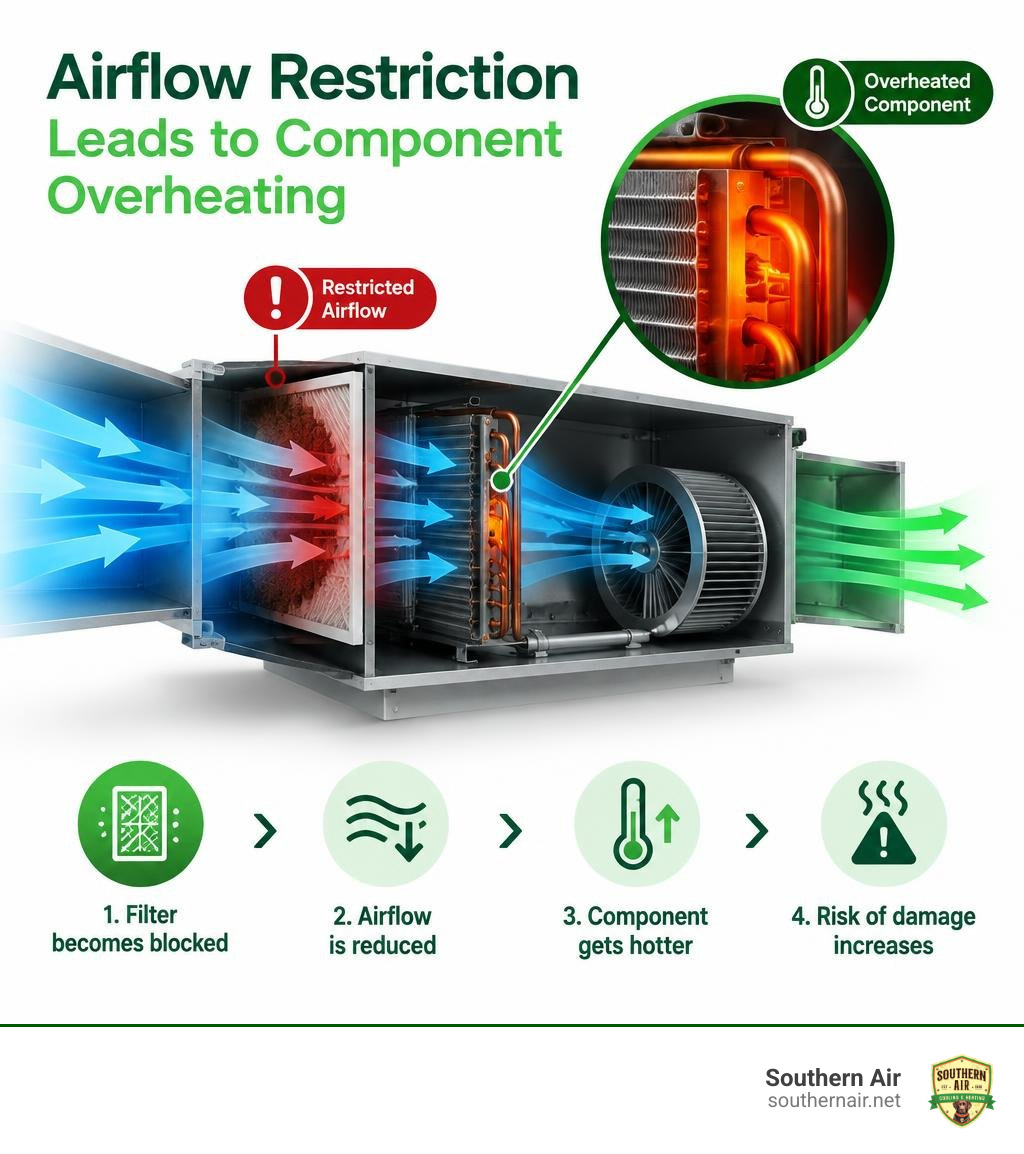
A neglected air filter is another primary source of heating odors. When a filter becomes packed with dirt and pet hair, it chokes the system, drastically restricting the volume of air passing across the heating elements.
Without adequate airflow to carry heat away, internal components can overheat, baking dust in the housing and straining the blower assembly. Routine furnace maintenance and professional furnace maintenance plans help reduce that strain. Check your air filter monthly during heavy use and replace it when it is dirty.
Odor Decoder: Identifying Plastic, Rubber, Electrical, and Gas Smells
Not every odor coming from your vents smells like harmless campfire dust. Recognizing the distinct scent profiles of mechanical and electrical issues allows you to react quickly before minor faults escalate into serious hazards.

| Odor Profile | Likely Cause | Urgency Level | Immediate Action |
|---|---|---|---|
| Dry Dust / Burning Paper | Settled dust vaporizing on heat exchanger or coils | Low | Let the system run and monitor for a fading odor |
| Burning Plastic / Fishy | Melted wire insulation, failing control board, or foreign debris | High | Turn off the system at the thermostat; call Southern Air Cooling & Heating |
| Burning Rubber / Metallic Friction | Worn drive belt, slipping motor pulley, or seized bearings | High | Turn off the system; schedule a mechanical inspection |
| Rotten Eggs / Sharp Sulfur | Natural gas leak | Critical | Leave the home; call from outside |
| Smoke | Overheating motor or an electrical short | Critical | Shut off power at the breaker; evacuate if smoke persists |
Burning Plastic and Electrical Wiring Failures
A sharp, acrid odor that resembles melting plastic or ozone points toward electrical trouble. Wiring connections, safety switches, relays, and the main control board can overheat when a connection becomes loose or a component fails. That resistance can generate intense localized heat.
This excessive heat melts the protective plastic coating on the wires, exposing bare copper and releasing harsh chemical fumes into the ductwork. Overheating transformer windings and failing circuit boards create a similar pungent scent. Professional heater repair can address these signs before an electrical fault creates a more serious safety concern.
Burning Rubber from Motor Belts and Friction
If the air coming from your registers carries a scent reminiscent of burning tires or an overheated car engine, the problem is usually mechanical friction within the blower assembly. Older heating units often use a rubber belt to connect the motor to the blower wheel. If the belt slips, frays, or becomes misaligned, friction can create enough heat to melt the rubber. In modern direct-drive blowers, dry bearings can create heavy resistance and heat, and unusual furnace noises such as screeching or grinding can signal that a belt or bearing needs professional attention.
Sulfur, Rotten Eggs, and Hazardous Fumes
Natural gas is naturally odorless and invisible. To make gas leaks easier to detect, utility companies add mercaptan, which creates an unmistakable sulfur or rotten egg scent.
If you smell rotten eggs near your furnace or vents, do not use switches or the thermostat, leave the home right away, and call the gas utility or 911 from outside. A damaged heat exchanger can allow carbon monoxide to mix with circulating air, and carbon monoxide is odorless and colorless, so it cannot be identified by smell. The CDC carbon monoxide guidance lists symptoms such as headache, dizziness, weakness, upset stomach, vomiting, chest pain, and confusion, and recommends battery-operated or battery backup carbon monoxide detectors near every sleeping area and yearly heating-system service by a qualified technician.
Homeowner Action Plan: Safe Checks and Immediate Steps
When an unfamiliar odor emerges after turning on your heating system, taking methodical, safe steps will help you isolate the cause without putting your household at risk. Limit your checks to items you can inspect safely without opening equipment or handling internal components.
Troubleshooting a Persistent Burning Smell When Heat Turns On
If the burning odor lingers, returns, or suddenly appears mid-season, follow these safe troubleshooting steps. Stop if you notice smoke, a gas smell, or any odor that becomes stronger.
- Turn Off the System at the Thermostat: Switch your thermostat to the “Off” position to cut power to the heating elements immediately.
- Ventilate Your Living Space: Open a few windows and turn on ceiling fans to flush lingering fumes and odors out of the house.
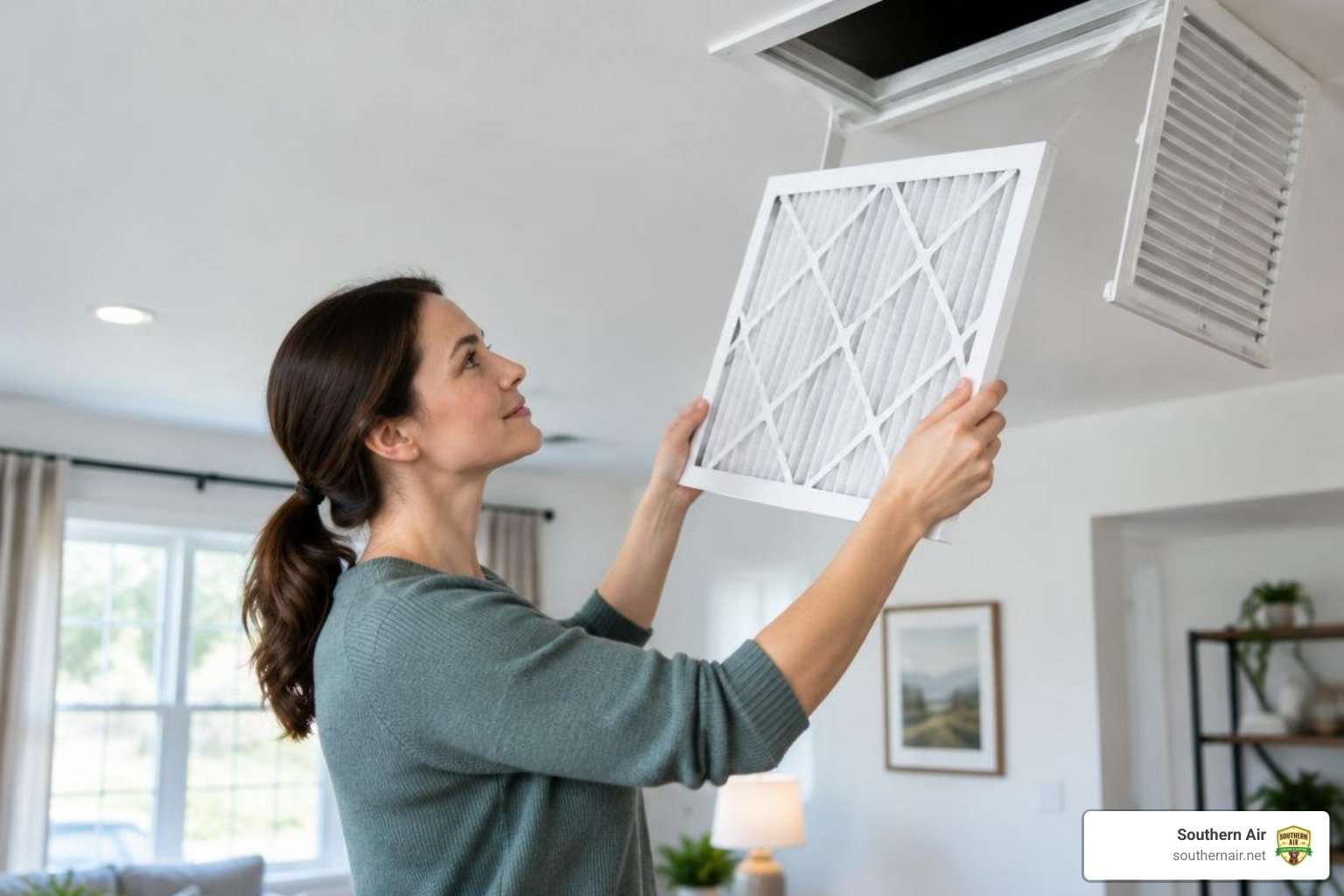
- Inspect the Air Filter: Pull the filter from its slot. If it is coated in a thick gray blanket of dust, replace it with a fresh, correctly sized filter.
- Check the Electrical Panel: Look inside your home’s breaker box to see if the heating circuit has tripped. A tripped breaker often accompanies overheated motors or wiring faults.
- Review System Guidelines: If the odor continues once you restart the system with a clean filter, professional heating repair may be needed to diagnose electrical or mechanical faults safely.
Safety Note: Homeowners should restrict DIY troubleshooting to checking the thermostat, changing filters, clearing exterior debris, and inspecting visible registers. Never open sealed electrical cabinets, adjust gas line fittings, or handle internal wiring yourself. Any work on gas, electrical, refrigerant, or sealed parts must be performed by a technician.
Inspecting Vents, Filters, and System Operation
Walk through your home with a flashlight and check every supply register and return grille. In homes with children or pets, small toys, crayons, or scraps of plastic can easily fall through floor grates. Once heat blows across those items, they melt against the hot metal boot, creating a strong burning plastic odor.
Ensure that all supply vents remain open and unobstructed by rugs, furniture, or drapes. Closing off multiple vents can restrict airflow and cause the furnace to shut down on a safety switch. If the unit shuts down shortly after starting or the odor persists, furnace repair may be needed. Contact our team to schedule an inspection; our technician handles electrical, gas, and sealed components.
When to Call an HVAC Technician vs. Emergency Services
Distinguishing between a standard mechanical repair and an immediate life safety emergency ensures the right professionals respond to your home. When safety is uncertain, leave the area and seek emergency help rather than trying to diagnose the equipment yourself.
Call 911 and Evacuate If:
- You smell rotten eggs or sulfur.
- You see visible smoke pouring from vents or the heating unit.
- You hear active electrical sparking or see flames.
- Anyone in the home has symptoms of carbon monoxide exposure.
Call an HVAC Technician If:
- A light dusty smell does not fade after the system runs for a while or returns during later heating cycles.
- The system emits a persistent plastic, rubber, or chemical odor.
- The unit repeatedly trips the circuit breaker or blows safety fuses.
- You notice rattling, squealing, or grinding mechanical sounds alongside the odor.
What Our Technician Checks
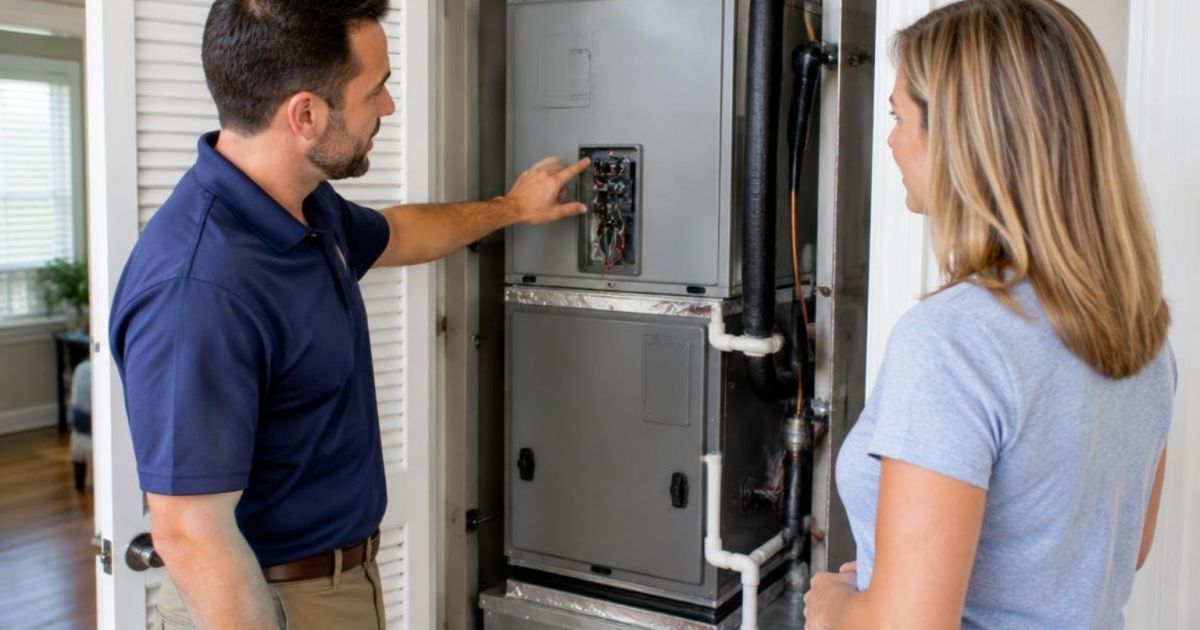
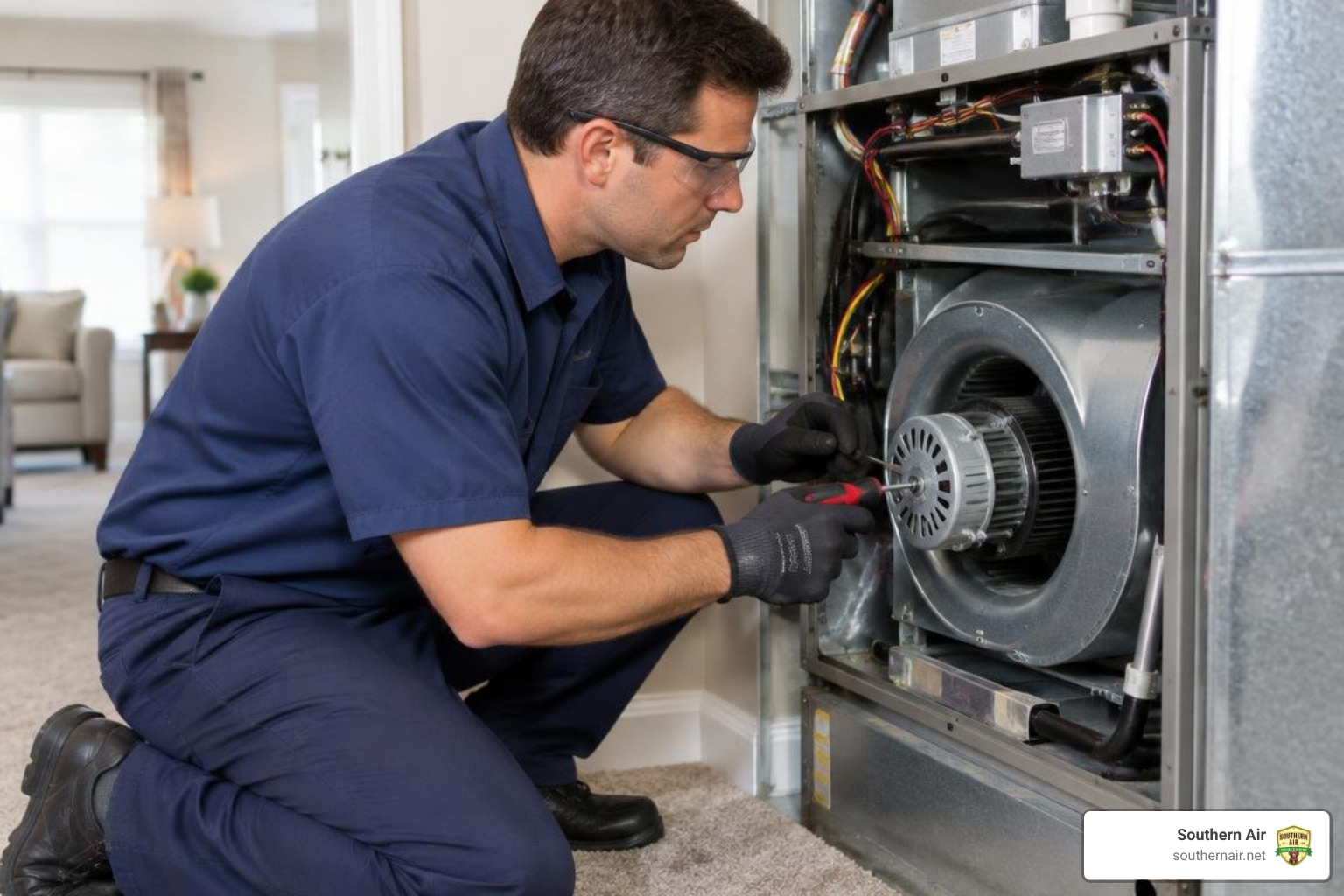
Our technician checks the filter and airflow, blower motor and wiring connections, heat strips or burners, heat exchanger condition on gas furnaces, safety switches, and venting. These checks help identify concerns that homeowners should not attempt to repair themselves. Homeowners should not work on gas, electrical, refrigerant, or sealed parts.
A Recent Service Call in Satsuma
A Satsuma homeowner called about a burning smell coming from their furnace. Our technician found a cracked heat exchanger, a safety issue that meant the unit needed to come offline immediately. The unit was taken offline, and we installed a new furnace within days. The family had safe heat again before the next cold front. A burning smell that does not fade is worth a professional inspection.
Preventing a Burning Smell Next Heating Season
Planning ahead can reduce the chance that a burning odor becomes a surprise on the first cool day. Schedule a fall tune-up before the first cold front so our technician can check the heating system as it prepares for seasonal use. Clear airflow and regular care can also help the system operate as intended when the heat comes on. Keeping vents and registers clear before startup supports normal airflow through the home and reduces strain on the system.
The ENERGY STAR maintenance checklist recommends checking the heating system in the fall and scheduling an annual pre-season check-up with a contractor. It notes that faulty electrical connections can create unsafe operation, while parts that lack lubrication can create friction in motors. A dirty burner or cracked heat exchanger can also make burner operation less safe, so those concerns should be handled by our technician.
Between visits, inspect your filter monthly and clean or replace it when it is dirty, then keep supply vents and return registers clear of toys and debris. Keep carbon monoxide detectors working near sleeping areas, and do not cover an unfamiliar odor with air fresheners. If a concerning smell appears or anything changes, contact Southern Air Cooling & Heating for a furnace maintenance visit.
Frequently Asked Questions About Heating System Odors
Why does my heater smell like burning the first time I turn it on in the fall?
When a heater sits idle through warm weather, dust, pet dander, and fibers can settle on heating components. A light dusty smell during the first heating cycles is common, but a plastic, rubber, or electrical odor needs attention.
How long should a burning smell last when the heat comes on?
A normal dust burn-off smell should fade as the system continues running. If the odor lingers, grows stronger, returns during later cycles, or smells like plastic, rubber, or electrical burning, turn the system off and call Southern Air Cooling & Heating.
Is it safe to keep running the heat if the smell is faint?
A faint smell that is clearly getting weaker can be watched. Never mask any smell with air fresheners, and keep carbon monoxide detectors working near sleeping areas. Turn the system off and call Southern Air Cooling & Heating if anything changes.
What does a burning plastic smell from my vents mean?
A burning plastic smell can mean that wire insulation, a circuit board, a blower motor, or an object in the ductwork is overheating. Turn the system off at the thermostat and have our technician inspect the cause.
Can a clogged air filter cause my heating system to smell like burning?
Yes, a dirty filter can restrict airflow and allow heat to build up inside the furnace or air handler. Check the filter monthly during heavy use and replace it when it is dirty.
Conclusion
Understanding what causes heating odors helps you protect your home and enjoy reliable comfort through the heating season. While a brief dusty scent can be a normal part of seasonal startup, persistent electrical, plastic, or rubber smells require prompt action.
At Southern Air Cooling & Heating, we have been serving Palatka and Northeast Florida since 1980. With 4.9 stars on Google, our licensed technicians provide comprehensive heating services for local homeowners.
Written by Dustin Caison, Florida Certified Air Conditioning Contractor (CAC1816263), Southern Air Cooling & Heating.
Southern Air Cooling & Heating · 3849 Reid St, Palatka, FL 32177 · (386) 222-1342
Request Service
Please fill out the form below to request an estimate or schedule service.
"*" indicates required fields