Understanding Air Conditioner Energy Efficiency Ratings
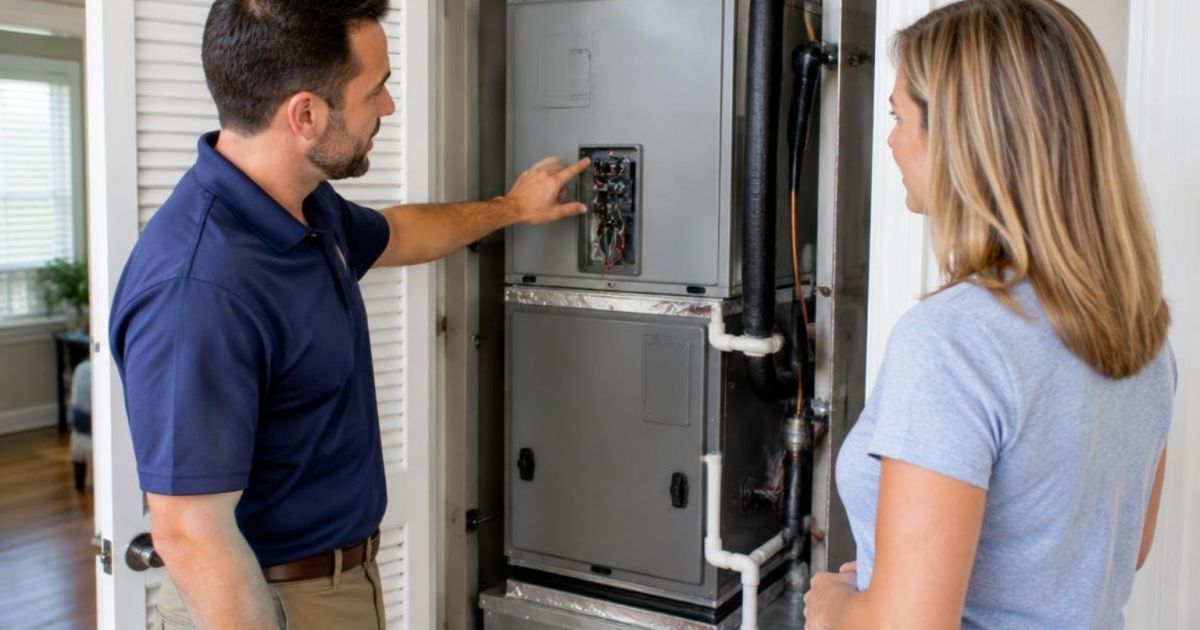
Air conditioner energy efficiency starts with choosing equipment that fits the home, then maintaining it correctly. For Northeast Florida homeowners repairing or replacing a central AC, heat pump, or ductless mini-split, SEER2, EER2, and HSPF2 help compare how equipment performs in different conditions. A rating is only one part of the decision. Ductwork, thermostat settings, airflow, humidity control, installation quality, and a full load calculation all affect comfort and system performance. When replacement is on the table, our technician can explain the options during an AC replacement visit.
Homeowners can safely check the thermostat, filter, breaker, supply vents, and leaves or debris around the outdoor unit. Any work involving gas, electrical components, refrigerant, drain lines, or sealed parts is work our technician does.
SEER2, EER2, and HSPF2 Explained
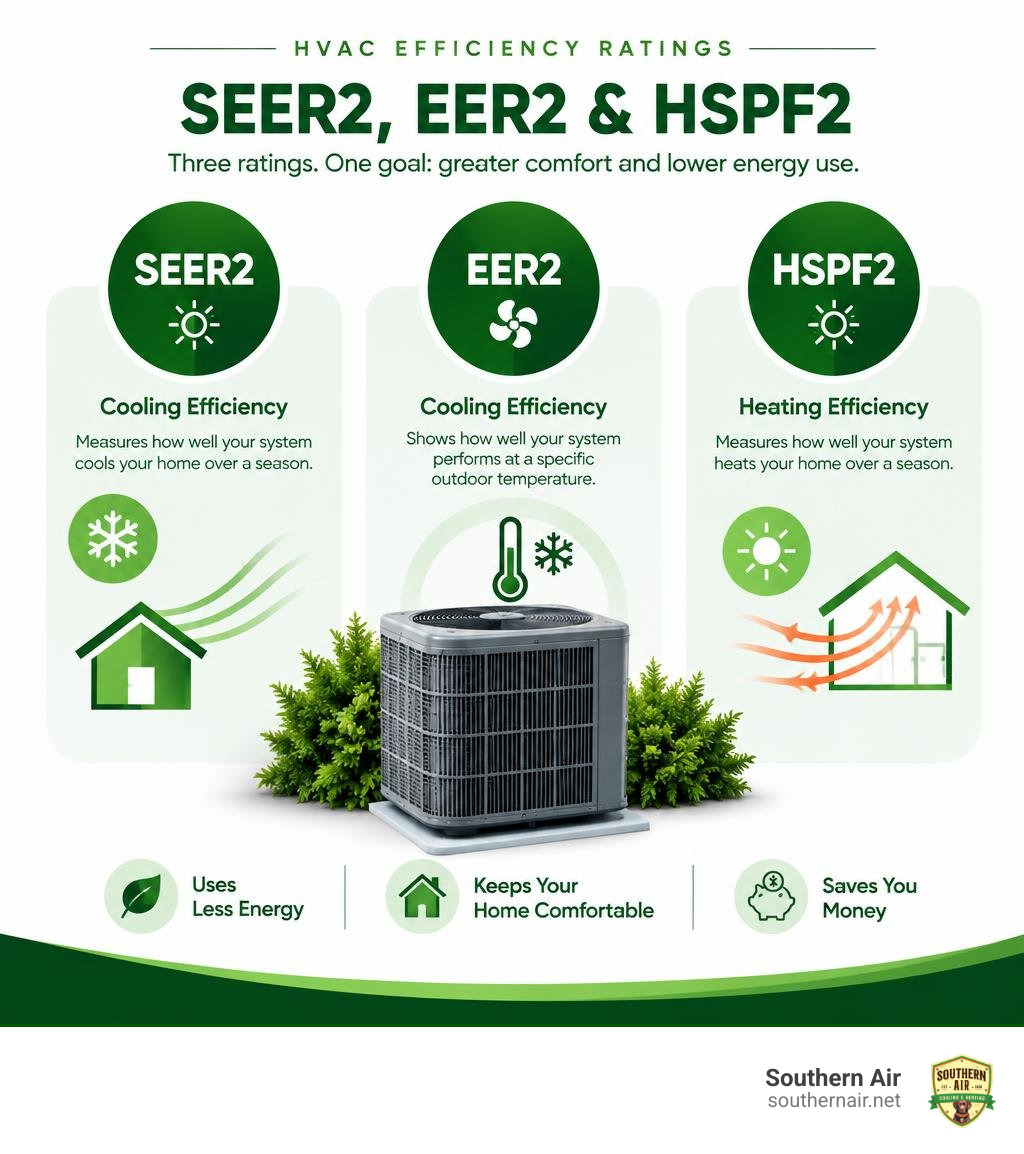
SEER2 measures seasonal cooling efficiency for central AC systems and heat pumps. EER2 focuses on cooling performance during high outdoor temperatures, while HSPF2 measures seasonal heating efficiency for heat pumps. They help homeowners compare year-round performance. Since January 1, 2023, U.S. Department of Energy regional standards require new split central air conditioners installed in the Southeast to meet at least 14.3 SEER2 when capacity is under 45,000 Btu/h, or 13.8 SEER2 when capacity is 45,000 Btu/h and above. Those minimums are a starting point, not a substitute for selecting equipment that fits the home and its duct system.
| Metric | Full Name | What It Measures |
|---|---|---|
| SEER2 | Seasonal Energy Efficiency Ratio 2 | Seasonal cooling efficiency for central AC systems and heat pumps |
| EER2 | Energy Efficiency Ratio 2 | Cooling efficiency during high outdoor temperatures |
| HSPF2 | Heating Seasonal Performance Factor 2 | Seasonal heating efficiency for heat pumps |
How SEER2 Differs From the Older SEER Rating
SEER2 replaced the older SEER test procedure for newly rated equipment. The U.S. Department of Energy updated the testing approach in 2023 to better reflect real ductwork conditions. That change makes SEER2 a more useful label for comparing current equipment, but the number on a SEER2 label is not directly comparable to the number on an older SEER label. For repair and replacement decisions, compare current SEER2-rated systems with other current SEER2-rated systems, then consider the home, ductwork, humidity needs, and installation plan. Southern Air Cooling & Heating can explain what the rating means for the equipment under consideration without reducing the decision to one label.
Why EER2 Matters in a Florida Summer
SEER2 describes performance across a cooling season, while EER2 focuses on performance during hotter outdoor conditions. That makes EER2 especially relevant in Northeast Florida, where an AC system may need to maintain indoor comfort during long stretches of heat and humidity. A stronger EER2 rating can be helpful when comparing systems designed for demanding summer operation, but it does not override system design. Airflow, duct condition, thermostat operation, and the match between the equipment and the home influence how the system performs when temperatures are high. A full evaluation looks at those factors together.
HSPF2 and Heat Pumps in Mild Florida Winters
HSPF2 measures the seasonal heating efficiency of a heat pump. Although Florida winters are generally mild, heat pump performance still matters on cooler mornings and during seasonal temperature changes. A properly selected heat pump can provide both heating and cooling through one system. Homeowners comparing a heat pump with a central AC system should look beyond the heating rating alone. The cooling needs of the home, humidity control, electrical setup, ductwork, and long-term maintenance needs are also part of the discussion. Ductless mini-splits can be a practical option for homes or areas that need zoned comfort without extending existing ductwork. Learn more about ductless mini-splits and thermostat options that can support consistent indoor comfort.
Sizing, System Design, and Maintenance
Equipment ratings work best when the system is matched to the home. A full load calculation considers the structure, insulation, windows, layout, and ductwork so our technician can recommend appropriate equipment. The Florida sizing guide explains why square footage alone does not tell the whole story.
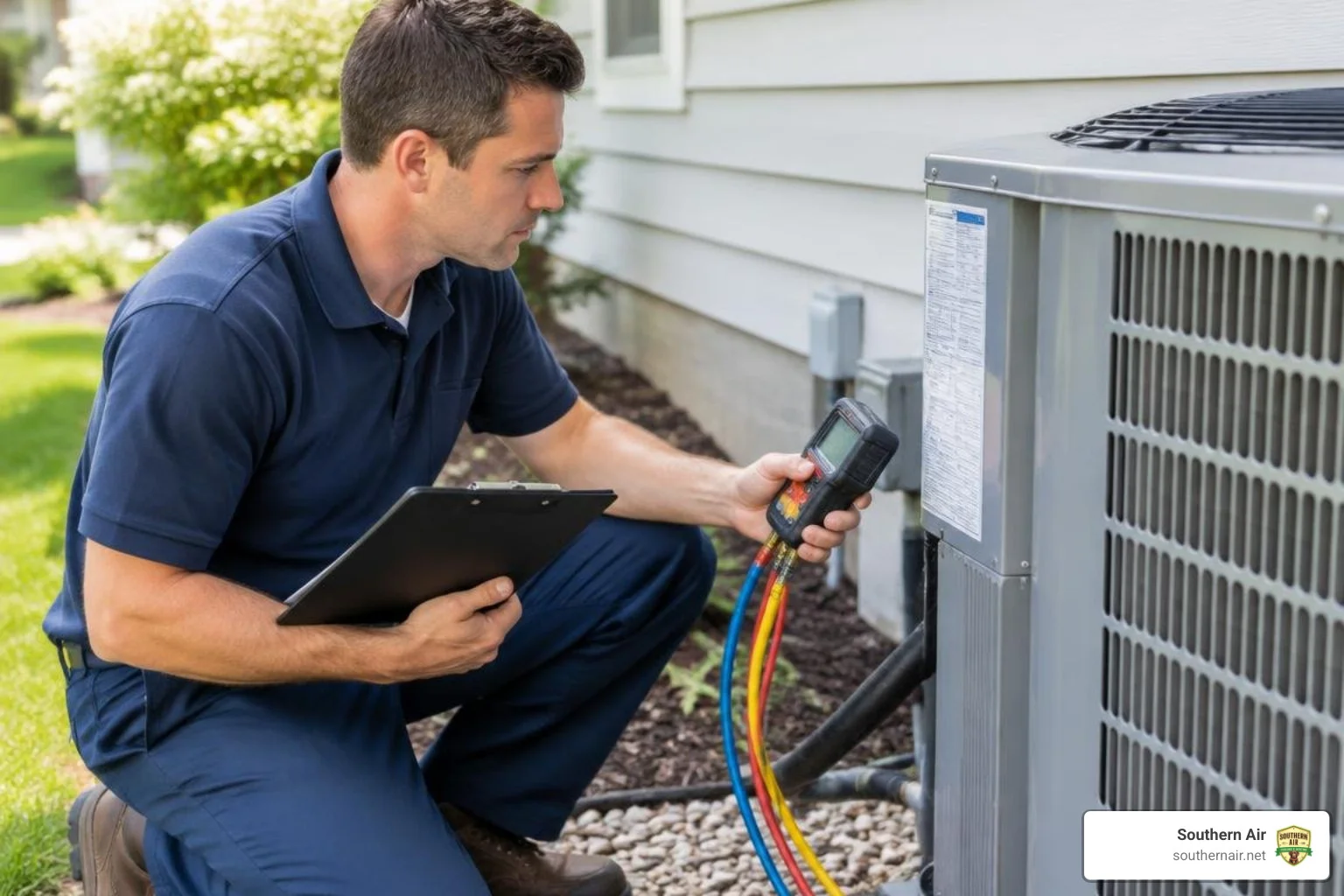
Variable-speed equipment can adjust output gradually to support steadier temperatures and humidity control. Air conditioner energy efficiency also depends on clear airflow and clean equipment. Dirty filters and coils make the system work harder, so use the maintenance checklist as a guide and schedule professional AC maintenance when service is due.
Why Oversized Systems Struggle With Florida Humidity
An oversized AC system can cool indoor air quickly without running long enough to manage humidity consistently. The house may reach the thermostat setting while still feeling clammy, and frequent starts and stops can make temperatures feel less even from room to room. Bigger equipment is not automatically a better fit. The right capacity depends on the home rather than a rule of thumb. Insulation, window exposure, the layout, household activity, existing ducts, and airflow all affect the load. A full load calculation helps our technician recommend equipment that supports both comfort and dependable operation.
How Ductwork Affects Efficiency
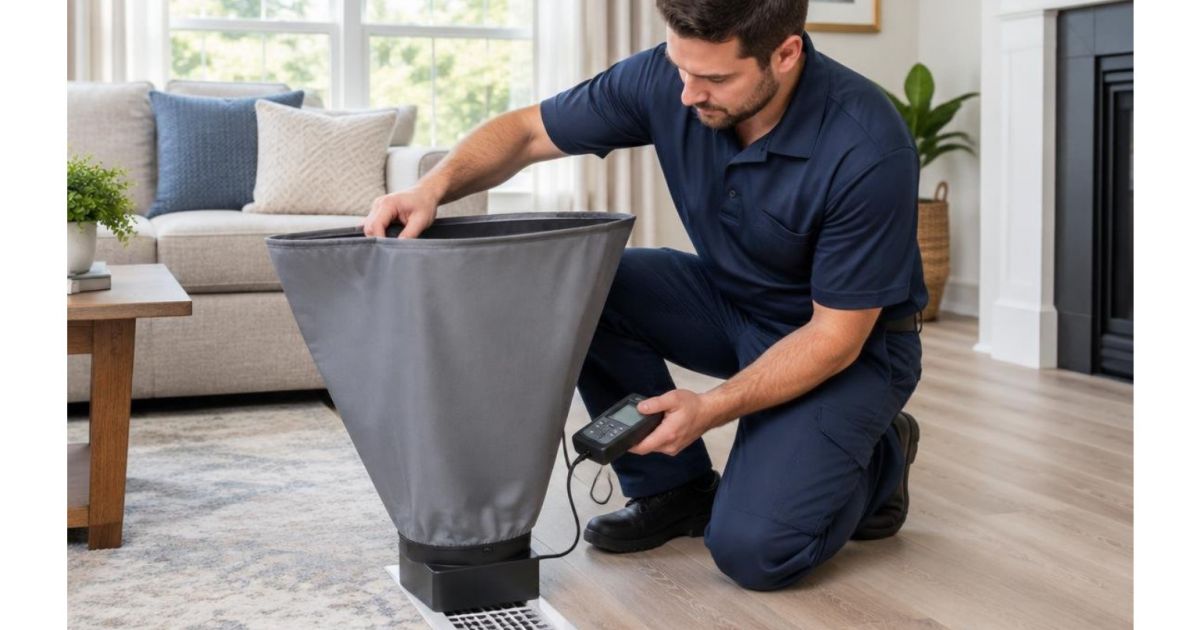
Ductwork carries conditioned air to each room, and its condition can influence comfort as much as the outdoor equipment. Leaks, loose connections, poorly insulated runs, or restricted airflow can leave some rooms warmer than others and make the system run longer to meet the thermostat setting. ENERGY STAR explains how duct sealing can help reduce waste from leaking ducts. During a repair or replacement visit, our technician can inspect accessible ductwork and airflow concerns. The selected equipment should work with the air-delivery system already serving the home.
Daily Habits That Protect Efficiency
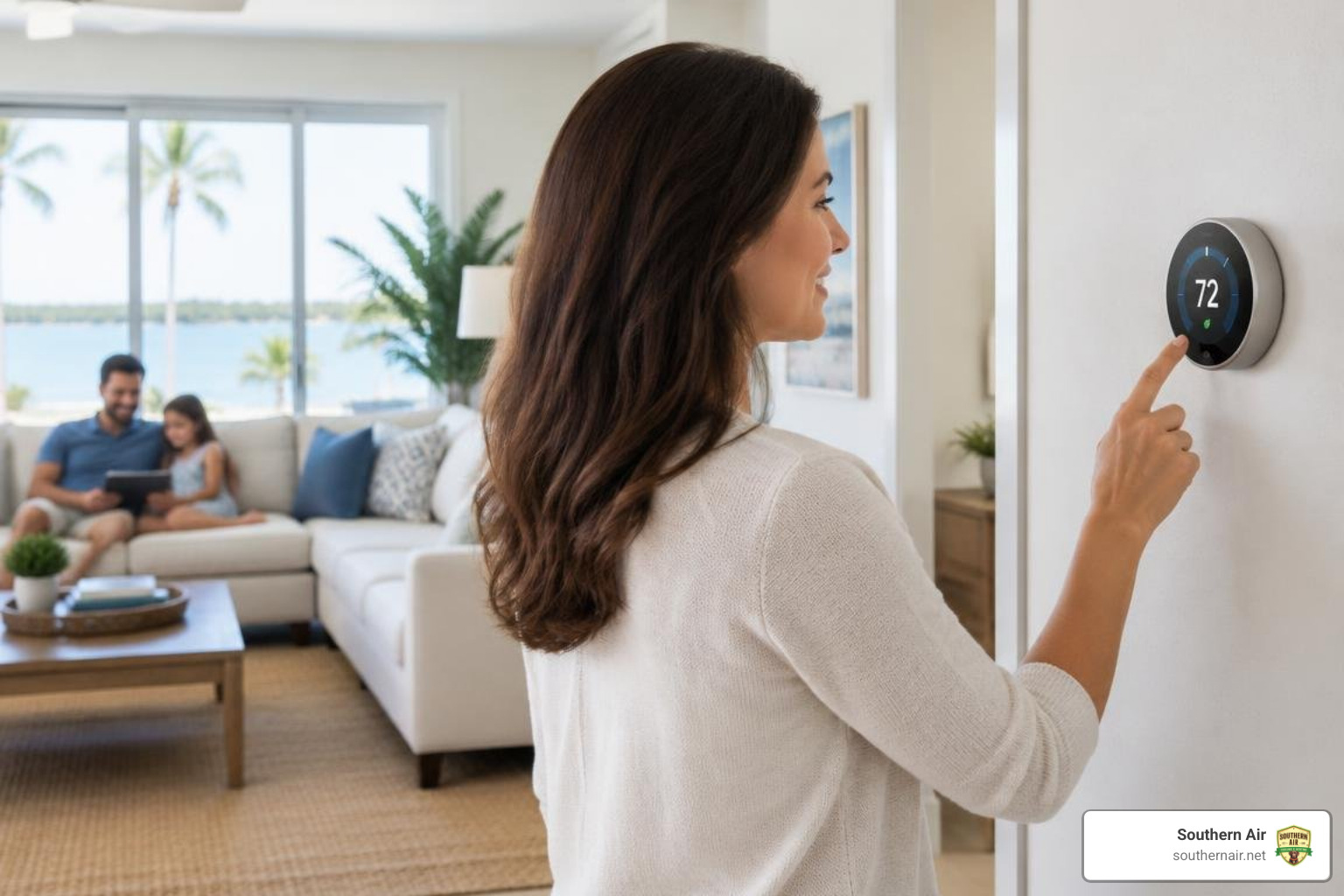
Small habits can help protect air conditioner energy efficiency between professional visits. Use a consistent thermostat schedule that fits the household routine, and consider a smart thermostat if it supports the desired settings without frequent manual changes. Ceiling fans can improve the feeling of air movement in occupied rooms, allowing the thermostat to remain steady.
Check the filter regularly and replace it with a compatible option when it is dirty. Keep supply vents open and avoid blocking return grilles with furniture or stored items. For a quick overview of rating basics, see efficient AC signs.
When an Efficiency Upgrade Makes Sense
An efficiency upgrade may make sense when an older system needs repeated repairs, utility bills keep rising, or the home has uneven temperatures and humidity problems. Our technician can compare repair and replacement options, inspect the equipment and ductwork, and complete a full load calculation before recommending a central AC, heat pump, or ductless mini-split. For related guidance, review high AC bills and common AC myths. Air conditioner energy efficiency is important, but reliable comfort and the right system fit matter just as much.
Questions to Ask Before Replacing Your AC
Before replacing an AC system, ask what is causing the current comfort problem and whether a repair could address it. It is also useful to ask whether the existing ductwork, thermostat, and airflow support the new equipment being considered. A replacement decision should be based on the complete system, not one component’s age. Homeowners can also ask how the proposed equipment will address humidity, room-to-room comfort, and everyday operation. Our technician can explain the practical differences between available central AC, heat pump, and ductless mini-split options, then recommend a path that fits the home.
A Recent Service Call in Palatka
A Palatka homeowner’s AC was running all day and could not get the house below 82 degrees. Our technician found a fouled condenser coil and cleaned it. The case shows why a system that runs constantly does not always need replacement.
Another Recent Service Call in East Palatka
An East Palatka homeowner noticed weak airflow. Our technician found a failing blower motor and a clogged filter. This case shows why weak airflow should be evaluated rather than dismissed as a minor comfort issue. Restricted airflow can affect how efficiently the system operates and how consistently it supports indoor comfort, while a technician can identify the contributing issue before recommending the appropriate repair.
Frequently Asked Questions About HVAC Efficiency
Is a higher SEER2 always better for my home?
Not necessarily. A higher SEER2 rating can be useful, but the system also needs to match the home’s size, ductwork, comfort needs, and budget. Our technician can help compare options before replacement.
Does a new AC fix high humidity?
A new AC can improve humidity control when the existing system is poorly matched or no longer operating correctly. Humidity concerns can also involve airflow, ductwork, thermostat settings, or maintenance, so our technician should evaluate the whole system.
Can a dirty filter lower efficiency?
Yes. A clogged filter restricts airflow, which can make the AC work harder and reduce comfort. Homeowners can safely replace a compatible filter, while our technician handles internal cleaning and service.
Are ductless mini-splits more efficient?
Ductless mini-splits can be an efficient choice for certain rooms and homes because they provide targeted comfort without relying on extended duct runs. The right option depends on the area being conditioned and the home’s overall system design.
How often should efficiency be checked?
Pay attention when comfort changes, the system runs longer than usual, or humidity becomes harder to control. Routine professional maintenance gives our technician an opportunity to check airflow, equipment condition, and performance.
Conclusion
Choosing efficient equipment is easier when SEER2, EER2, and HSPF2 are considered alongside proper sizing, installation quality, and the comfort needs of the home. Southern Air Cooling & Heating has been serving Palatka and Northeast Florida since 1980 and maintains 4.9 stars on Google. For homeowners considering a qualifying replacement, financing may be available after discussing the project with contact our team.
Written by Dustin Caison, Florida Certified Air Conditioning Contractor (CAC1816263), Southern Air Cooling & Heating.
Southern Air Cooling & Heating · 3849 Reid St, Palatka, FL 32177 · (386) 222-1342
Request Service
Please fill out the form below to request an estimate or schedule service.
"*" indicates required fields