Why Changing Your AC Filter in an Apartment Matters More Than You Think
Changing your AC filter in an apartment is one of the simplest maintenance tasks you can do, and it takes about five minutes once you know where to look.
Here’s what you need to know right away:
- Check your lease first. Most leases put filter changes on the tenant. Skipping them can cost you part of your deposit.
- Replace the filter every 60 to 90 days in most apartments. Change it sooner if you have pets, allergies, or live near construction.
- Turn off your HVAC system before you remove the old filter.
- Note the size printed on the filter frame and match it exactly when buying a replacement.
- Insert the new filter with the airflow arrow pointing toward the unit, not away from it.
Now, here’s why this matters beyond just following the lease.
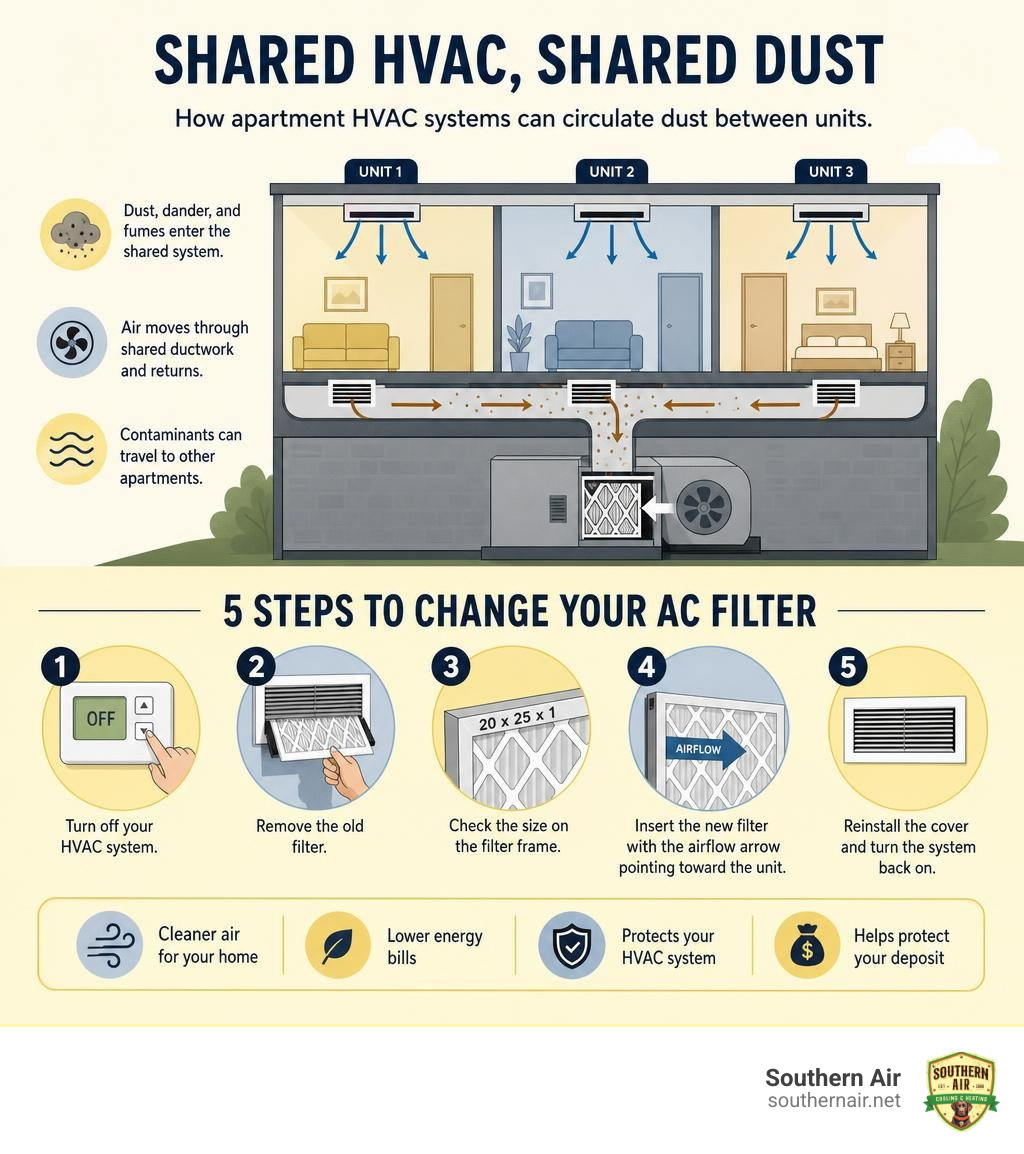
The EPA reports that indoor air can be 2 to 5 times more polluted than outdoor air. In apartments, that problem gets worse. Shared ductwork moves dust, pet dander, and fumes between units, and one-third of apartments exceed World Health Organization PM2.5 limits on an average day. Your filter is the main line of defense between that circulating air and your lungs.
A dirty filter also forces your HVAC system to work harder, which drives up energy bills and shortens the life of equipment your landlord, or you, will eventually have to repair or replace.
I’m Dustin Caison, President and CEO of Southern Air Cooling & Heating, a State Certified Air Conditioning Contractor with over two decades of hands-on HVAC experience, including helping countless Florida renters and homeowners understand the importance of changing their AC filter in an apartment or home before small neglect turns into a costly repair call. With that background, let me walk you through everything you need to know to do this right.
The Rules of Changing AC Filter in Apartment Rentals
When you rent, the line between what you are responsible for and what the landlord has to fix can sometimes feel a little blurry. However, when it comes to HVAC filters, the expectations are usually spelled out directly in your lease agreement.
In most standard rental contracts, the landlord is responsible for providing a clean, working HVAC system when you move in. This includes installing a fresh filter. Once you take keys and move your boxes in, the day to day upkeep, including swapping out that filter, typically shifts to you.
Why do landlords put this on the renter? It is not just to save them a trip to your unit. A clogged, dirty filter is the number one cause of avoidable HVAC issues. When a filter is packed with dust, the system has to work twice as hard to pull air through. This extra strain can cause the system to overheat, short cycle, or even freeze up.
If a technician comes out to service a broken AC and finds a filter that looks like a thick wool blanket, the landlord may hold you financially responsible for the repair bill. Even worse, if you leave a clogged filter in place when you move out, the resulting dust buildup on the walls, vents, and coils could give your property manager a reason to withhold a portion of your security deposit for professional cleaning. Understanding how to change air filters in rentals is your best defense against these unexpected costs.
How Often to Replace Your Filter and Where to Find It
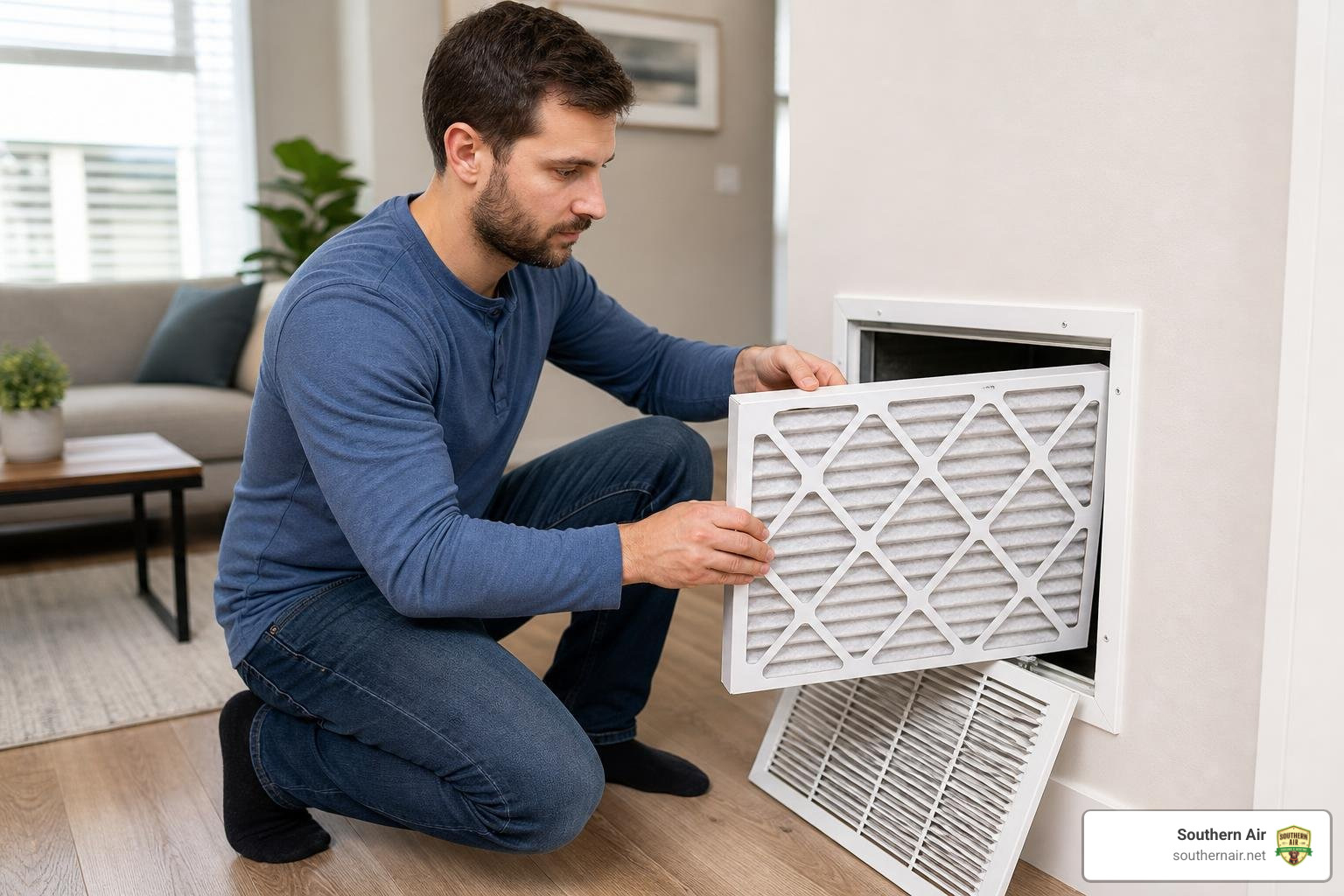
Finding your filter is often the hardest part of the job because apartment layouts vary wildly. Unlike a single family home, which usually has a dedicated furnace room or basement utility closet, apartments have to squeeze HVAC systems into tight, creative spaces.
To find your filter, look for these common locations:
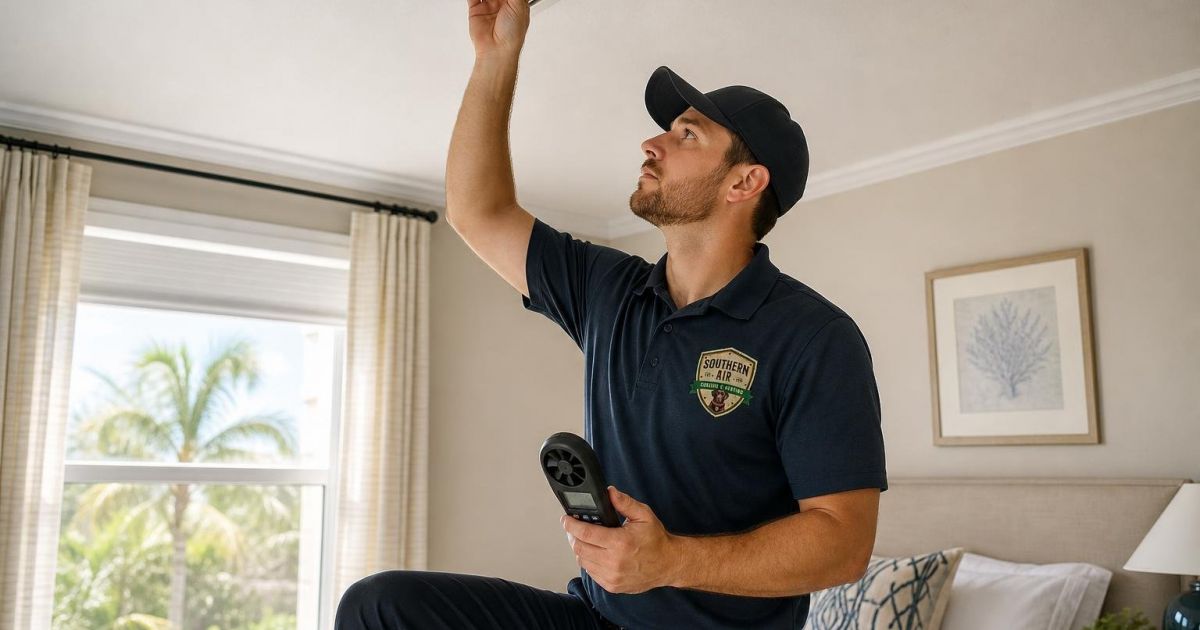
- The Return Air Grille: This is a large metal vent located on a central wall or ceiling. It is usually much larger than the standard supply vents that blow cold air into your rooms.
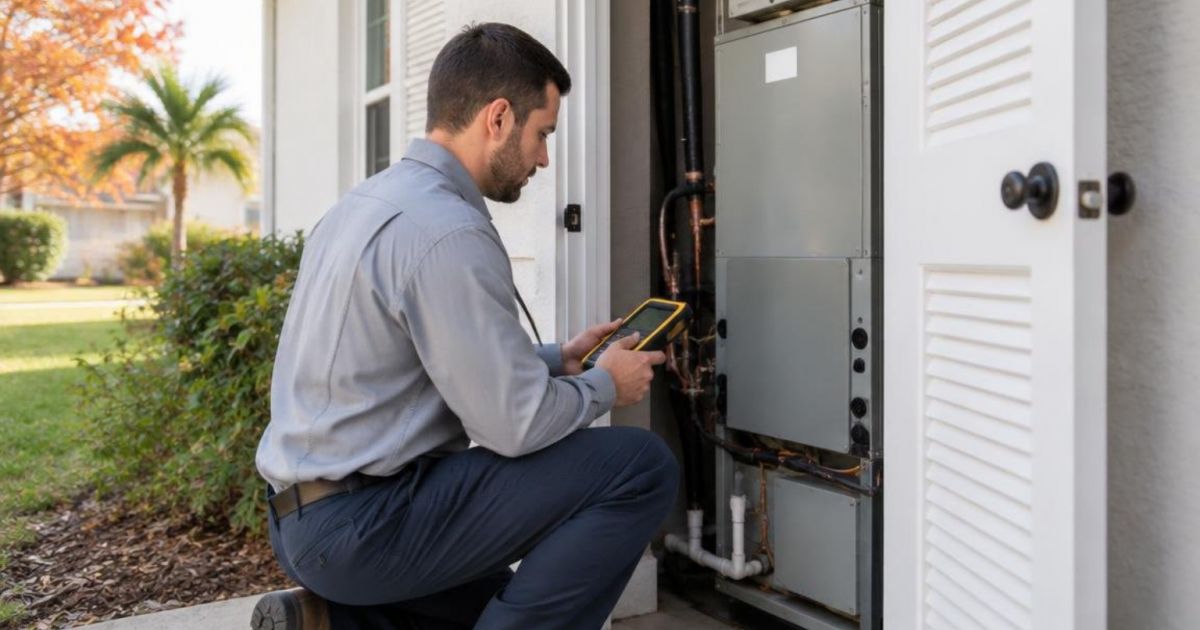
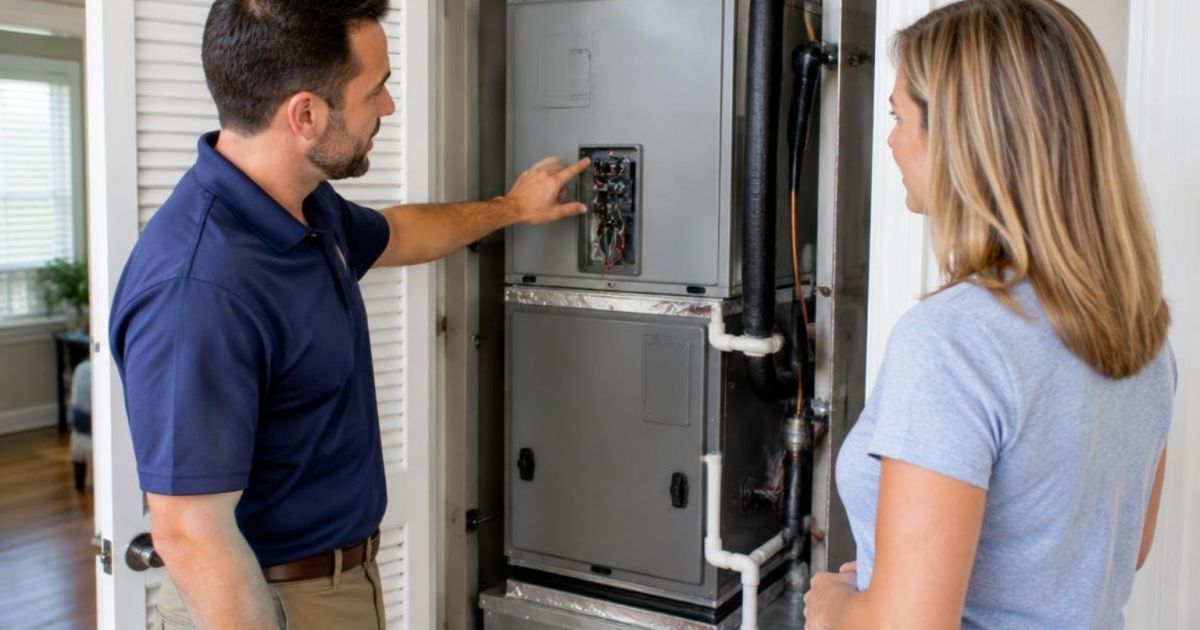
- A Blower Cabinet or Utility Closet: Many apartments have a small, locked or unlocked closet containing the air handler. The filter is typically located at the bottom or side of this unit where the main air duct enters.
- A Blower Compartment Slide Out: On some vertical systems, the filter slides directly into a slot on the side of the indoor unit itself.
Once you know where it is, you can easily perform a quick visual inspection to see if it needs to be swapped. For a deeper look at the physical differences between various systems, you can read our guide on how to change an AC or furnace filter to help you identify your specific setup.
Locating Your System and Changing AC Filter in Apartment Closets
If your apartment has a dedicated utility closet, the filter is usually slotted directly into the air handler cabinet. Sometimes these closets are left unlocked for tenant access, while other times they are secured to keep residents from messing with the electrical components.
If the closet is unlocked, open the door and look at the base of the tall metal air handler unit. You should see a narrow slot, sometimes covered by a removable metal flap, where the filter slides in. If your system relies on a large wall or ceiling grille instead, you will need to locate the latches on the frame of the grille, flip them open, and let the hinged grate swing down to access the filter.
Because space is at a premium in multi family buildings, mastering these tight spaces is essential. For more detailed tips on managing filter setups in smaller living spaces, you can check out this resource on apartment HVAC & furnace air filters to see how different building designs handle air filtration.
Establishing a Schedule for Changing AC Filter in Apartment Homes
While the general rule of thumb is to change your filter every 60 to 90 days, your actual timeline depends heavily on your lifestyle and your surroundings.
Consider these factors when planning your replacement schedule:
- Occupancy Rates: More people living in a smaller space means more skin cells, clothing fibers, and general dust circulating through the air. A crowded apartment needs more frequent filter changes.
- Pet Dander: If you have dogs or cats, their fur and dander will clog a filter much faster than dust alone. Pet owners should inspect their filters every 30 to 45 days.
- Urban Pollution: If your apartment is in a busy urban area or near a major highway, outdoor smog and fine particulate matter will find their way indoors, shortening your filter’s lifespan.
- Environmental Factors: High pollen seasons, construction dust from nearby developments, or seasonal wildfire smoke can reduce a filter’s effective life by 25% to 40%.
Keeping your system clean ensures it does not break down when you need it most. To learn more about keeping your system running smoothly year round, read about how often should you service your AC to stay ahead of seasonal changes.
Step-by-Step Guide to Safely Swapping Your Filter
Ready to swap your filter? It is a fast, clean process when you follow these steps:
- Turn Off the System: Go to your thermostat and switch the system to the “Off” position. You do not want the fan running while you change the filter, as this can pull loose dust and debris directly into the exposed blower motor.
- Open the Access Panel or Grille: Locate the latches on your return grille or open your utility closet door. If you are dealing with a ceiling grille, hold the frame gently as you release the latches so it does not swing down too quickly.
- Slide Out the Old Filter: Carefully slide the old filter out of its slot. Keep it flat to avoid spilling any loose dust onto your carpet. Take a close look at the cardboard edge of the filter. You will see three or four numbers printed there, such as 16x20x1. These are the nominal dimensions, which is the size you need to buy.
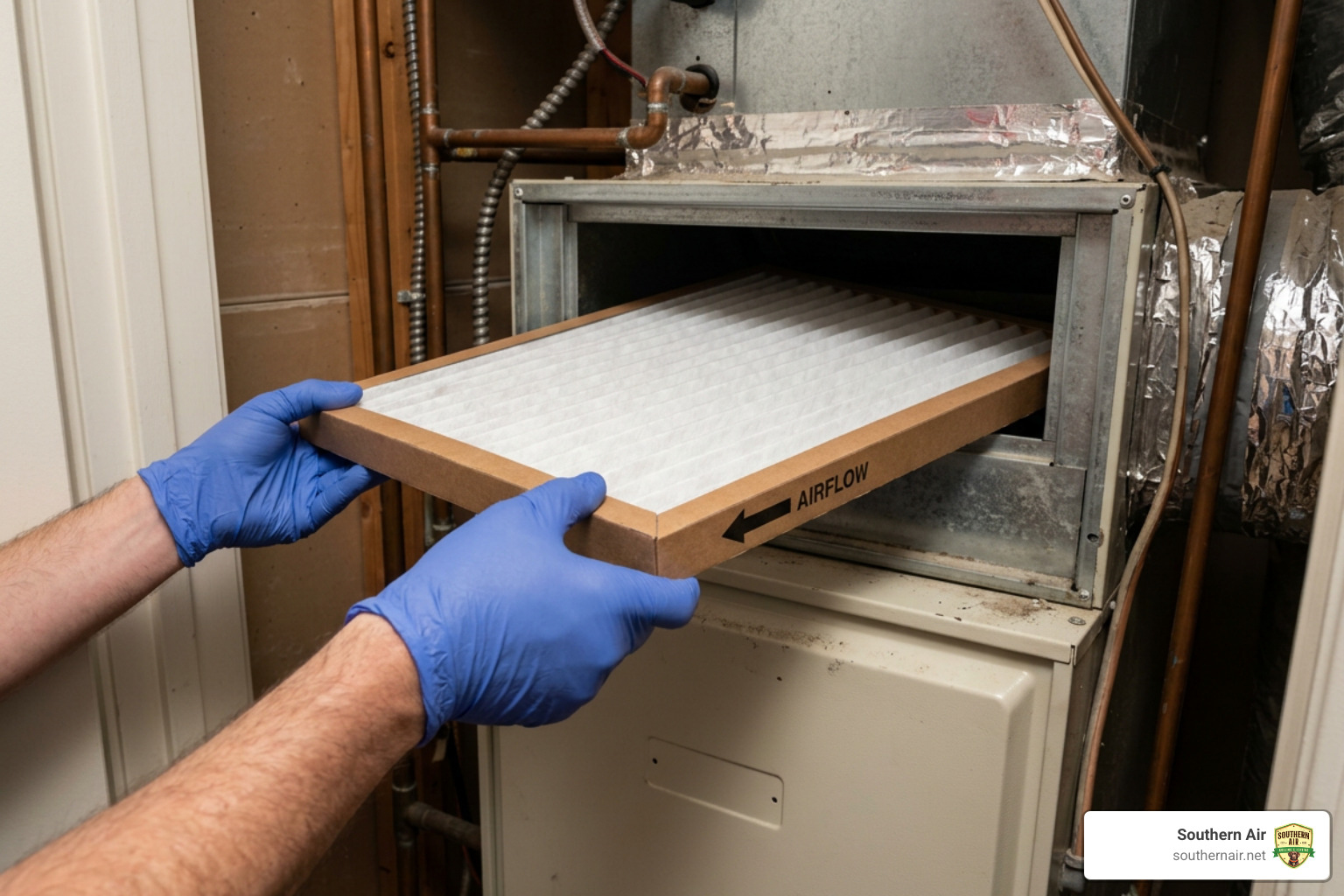
- Check the Airflow Arrow: Before you throw the old filter away, look for a printed arrow on the cardboard frame. This arrow shows the direction the air needs to flow through the filter. It should always point toward the indoor unit, away from the room.
- Insert the New Filter: Slide the fresh filter into the slot, making sure the airflow arrow points in the correct direction. If you install it backward, the filter’s structural support wires will be on the wrong side, which can cause the filter to bow, sag, or allow air to bypass it completely.
- Close and Secure: Close the grille or access panel and secure the latches. Go back to your thermostat and turn your system back on.
If you want to see how manufacturers recommend handling this process, you can review the official guide on how to change air conditioner filters for more professional tips.
Selecting the Right Filter Size and MERV Rating
Using the correct filter size is critical. Air filters are designed to fit snugly within their slots to prevent unfiltered air from slipping around the edges, a problem known as air bypass. Never try to force a thicker filter, like a 4 inch media filter, into a slot designed for a 1 inch filter. If your apartment uses an unusual size that is hard to find in local stores, look online for custom sizes rather than trying to cut a larger filter down to fit, as cut to fit filters lack structural integrity and can easily collapse into your blower motor.
You also need to pay attention to the MERV rating, which stands for Minimum Efficiency Reporting Value. This scale ranges from 1 to 20 and measures how effectively the filter traps particles of various sizes.
| MERV Rating | What It Traps | Ideal Apartment Use Case |
|---|---|---|
| MERV 1 to 4 | Large particles, lint, carpet fibers, heavy dust | Budget friendly, but offers minimal protection for indoor air quality. |
| MERV 5 to 8 | Mold spores, dust mites, pet dander, pollen | The sweet spot for most standard apartments. Good filtration without restricting airflow. |
| MERV 9 to 12 | Fine dust, lead dust, automotive emissions, humidifier dust | Excellent for renters with moderate allergies or asthma. |
| MERV 13+ | Bacteria, smoke, microscopic allergens, virus carriers | High filtration, but can restrict airflow in older apartment HVAC systems. |
While it is tempting to buy the highest MERV rating available to get the cleanest air possible, doing so can actually harm your system. High efficiency filters have denser fibers, which create more airflow resistance. If your apartment’s system is older, a MERV 13 filter might restrict airflow so much that it causes the system to overheat or short cycle. Always check the label on your air handler or ask your landlord before upgrading to a high MERV filter.
For a complete breakdown of how filter selection fits into your overall home maintenance routine, take a look at our guide on the top HVAC maintenance tasks homeowners should never skip.
Frequently Asked Questions About Apartment AC Maintenance
To help you keep your rental running efficiently, we have compiled answers to some of the most common questions renters ask about regular AC maintenance and filter care.
What happens if I don’t change my apartment air filter?
If you neglect your air filter, a chain reaction of problems begins. First, dust builds up on the filter fibers, restricting airflow. Your system will have to run longer to cool your apartment, leading to higher utility bills and weak airflow from your vents.
Over time, the restricted airflow can cause the evaporator coils to drop below freezing, turning moisture on the coils into a solid block of ice. When this ice melts, it can overflow the drain pan, causing water damage to your apartment walls or ceiling. Additionally, the system may begin short cycling, which means turning on and off rapidly, leading to premature wear and expensive component failures. To see what else goes into keeping a system healthy, check out our annual AC maintenance checklist.
What should I do if I can’t find or access my filter?
If you cannot find the filter slot or if the utility closet containing your air handler is locked, do not try to force it open. Reach out to your landlord or property management office. Submit a polite maintenance request asking them to show you where the filter is located or to have a maintenance technician swap it out for you. Some apartment complexes prefer to have their own staff handle filter changes during scheduled pest control or safety inspections to ensure the work is done correctly.
How can renters improve indoor air quality beyond filters?
While your AC filter does a great job of protecting your HVAC equipment and catching larger airborne particles, you can take extra steps to keep your indoor air fresh:
- Use a HEPA Air Purifier: A standalone air purifier with a true HEPA filter can capture 99.97% of microscopic particles, including smoke, viruses, and fine dust, without putting any extra strain on your apartment’s HVAC system.
- Run Exhaust Fans: Always run your kitchen exhaust fan while cooking and your bathroom fan during and after showers to control moisture and prevent mold growth.
- Control Pollution Sources: Vacuum regularly with a vacuum cleaner equipped with a HEPA filter, wash your bedding weekly in hot water, and avoid smoking or burning candles indoors.
Conclusion
Taking five minutes to change your apartment’s AC filter keeps your utility bills low, protects your health, and ensures you leave with your security deposit fully intact when it is time to move.
If you are renting a condo, townhome, or single family home in Palatka, FL, or surrounding areas like Crescent City, FL, Fleming Island, FL, or Green Cove Springs, FL, and your system is not cooling properly even after a filter change, we are here to help. At Southern Air Cooling & Heating, we bring over 43 years of family-owned excellence and 5-star service to every job. Whether you need a quick repair or want to learn about our priority Comfort Club plans to keep your system in peak shape, contact us today to schedule an appointment with our friendly, professional team.
Request Service
Please fill out the form below to request an estimate or schedule service.
"*" indicates required fields