The Science Behind Florida Humidity AC Problems: Sensible vs. Latent Cooling
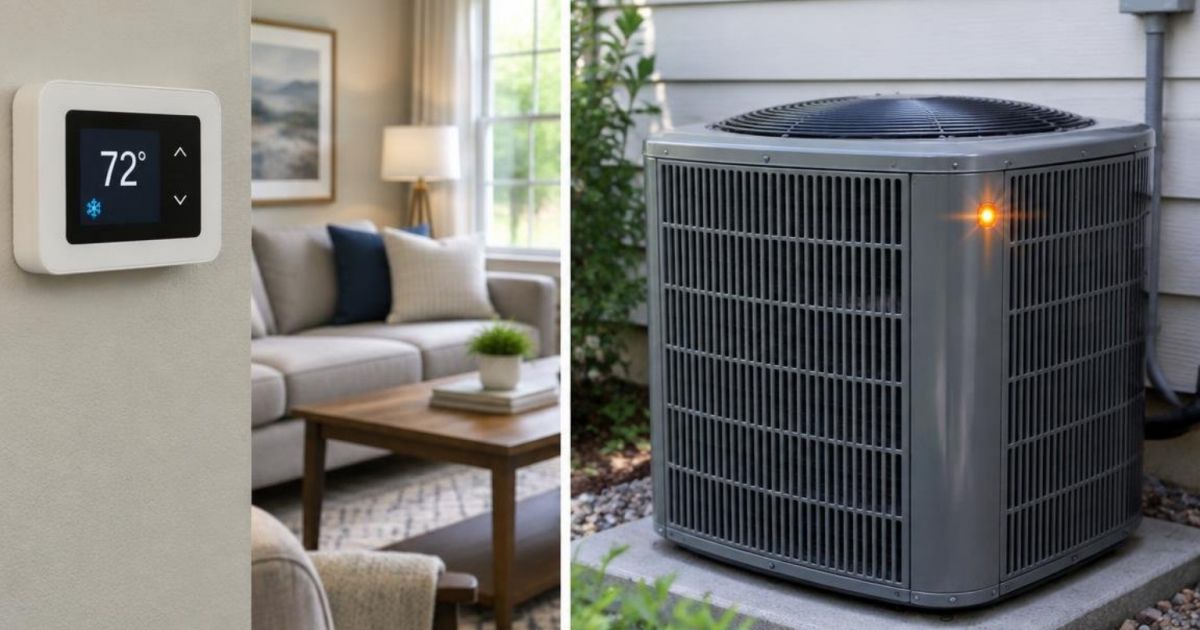
If your AC cools your Florida home but does not remove enough humidity, common causes include an oversized system that short-cycles, a thermostat fan left on ON, a dirty evaporator coil, or leaky ductwork pulling humid air indoors. These problems can lower the temperature quickly while leaving moisture behind, which is why a house can feel cold and clammy at the same time.
To understand why this happens, it helps to look at the two jobs your AC must perform: sensible cooling and latent cooling. Sensible cooling lowers the temperature shown on your thermostat. Latent cooling removes airborne water vapor. When warm, moisture-laden indoor air passes over the cold indoor evaporator coil, moisture condenses into liquid water and drains away through the condensate system.
For more detail on how these two processes affect comfort, see the impact of humidity on AC performance.
When your system is working properly, it removes heat and moisture in balance. When that balance is disrupted, indoor relative humidity can climb above 60%, creating conditions that support mold and dust mites. The Florida Department of Health’s mold guidance offers additional information about controlling indoor moisture.
| Cooling Aspect | Sensible Cooling | Latent Cooling |
|---|---|---|
| Primary Goal | Lowers measurable dry-bulb air temperature | Removes moisture and water vapor from the air |
| Measurement Metric | Degrees Fahrenheit (°F) | Relative Humidity percentage (% RH) |
| System Mechanism | Refrigerant absorbs heat from passing air | Water vapor condenses onto cold evaporator coil fins |
| Comfort Impact | Stops you from feeling hot | Stops you from feeling sticky, clammy, or muggy |
| Ideal Performance | Achieves a steady setpoint, such as 74°F to 76°F | Helps maintain indoor humidity between 30% and 50% |
Sensible Cooling vs. Latent Heat Removal
When your AC turns on, it immediately begins cooling the air moving past the evaporator coil. This sensible cooling occurs quickly. Latent heat removal takes longer because the coil must first fall below the dew point of the indoor air before water vapor can condense on its metal fins.
Once condensation begins, water droplets must collect, travel down the coil surface, and drain through the pan and condensate line. If the system shuts off after only five to ten minutes, it may have lowered the temperature but has not had enough run time to remove much moisture. Some of the water left on the coil can evaporate back into the home after the cooling cycle ends.
Why Lowering Your Thermostat Worsens Clammy Air
When a home feels muggy, it can be tempting to lower the thermostat from 75°F to 68°F. In a humid climate, lowering the setpoint rarely solves the source of a moisture problem and can make the home feel less comfortable.
Dropping the setpoint can make the AC deliver very cold air into an already damp room. If moisture removal does not keep pace, the result can be a cold, clammy house. It can also waste energy and add unnecessary strain to HVAC components.
How Oversized Air Conditioners Create Lingering Indoor Moisture
A widespread misconception in the HVAC industry is that bigger is always better. Many homeowners assume that installing a 4-ton or 5-ton system will cool their home faster and keep them more comfortable than a smaller unit. In Florida’s humid climate, an oversized cooling unit is one of the quickest ways to create chronic indoor dampness.
When an AC has too much cooling capacity for the home it serves, it can lower the thermostat reading in just a few minutes. Because it reaches the setpoint so quickly, it turns off before it can remove meaningful amounts of moisture from the air. This constant cycling leaves humidity behind and can affect indoor air quality.
Short-Cycling and Florida Humidity AC Problems
Short-cycling occurs when an AC runs in brief bursts of three to eight minutes, shuts down, and restarts a few minutes later. A standard single-stage system typically needs longer, steadier cycles to cool the evaporator coil, remove latent moisture, and send condensate outside.
Short-cycling prevents that deep dehumidification process from occurring. Beyond persistent moisture issues, frequent cycling creates repeated electrical startup demands that can increase utility costs and contribute to premature component wear.
Common Signs Your Cooling System Is Too Large
If you suspect your cooling equipment might be oversized, look for these household indicators:
- Damp bedsheets and upholstery: Linens and fabrics feel damp to the touch, even when the house feels chilly.
- Interior window condensation: Fog or water droplets collect on interior window panes during the warmest parts of the day.
- Musty indoor odors: A persistent mildew smell lingers in hallways, closets, or living areas.
- Short run times: Your outdoor unit turns on, runs for fewer than 10 minutes, and shuts down repeatedly throughout the day.
- Uneven room temperatures: Some rooms feel frigid while distant bedrooms remain warm and muggy.
The Importance of a Manual J Load Calculation
Proper AC sizing requires far more than estimating square footage. Professional contractors use an industry-standard Manual J load calculation developed by the Air Conditioning Contractors of America (ACCA).
A complete Manual J calculation analyzes structural and environmental factors such as:
- Precise square footage and ceiling heights across every room
- Insulation values in the attic, exterior walls, and floors
- Window types, framing materials, and low-E coatings
- Directional orientation, sun exposure, and exterior shading
- Total window surface area
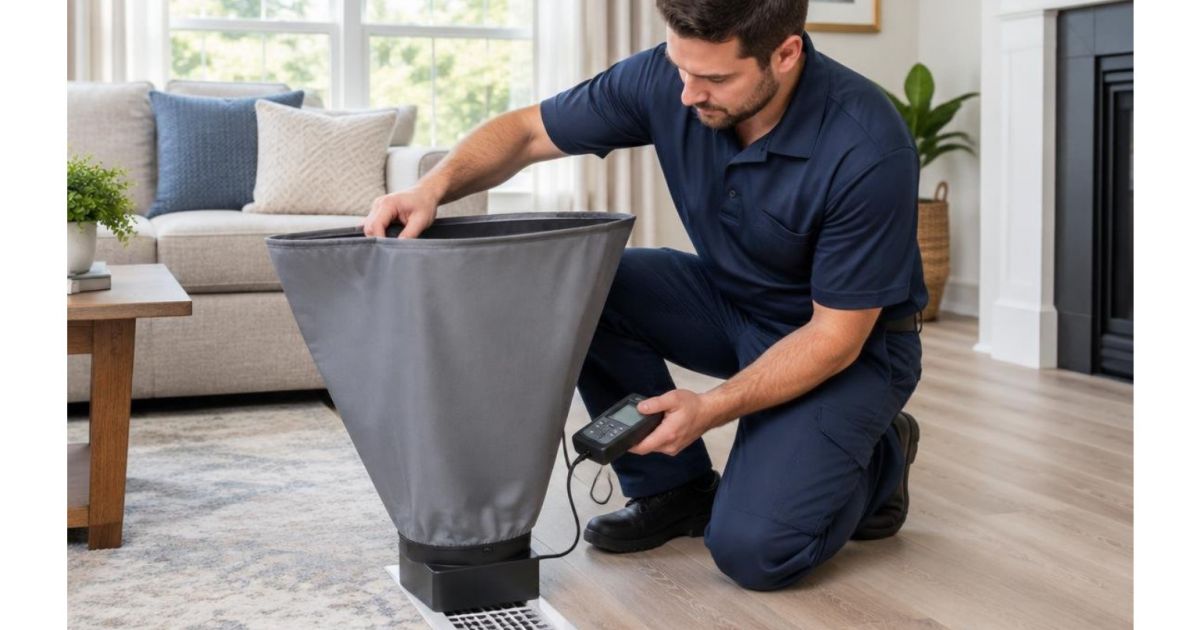
- Ductwork layout and attic heat gains
- Typical household occupancy and heat-generating appliances
By weighing these variables, a technician can select a system size that runs longer, steadier cycles and balances sensible cooling with moisture extraction.
If frequent short cycles or uneven comfort are affecting your home, Fleming Island AC service can help identify whether equipment sizing, airflow, or another HVAC issue is contributing to the problem.
Everyday Thermostat Habits and Environmental Factors That Trap Moisture
Equipment sizing is not the only cause of indoor humidity troubles. Daily operating habits, maintenance oversights, and coastal environmental conditions can all reduce your AC’s ability to dry out your home.
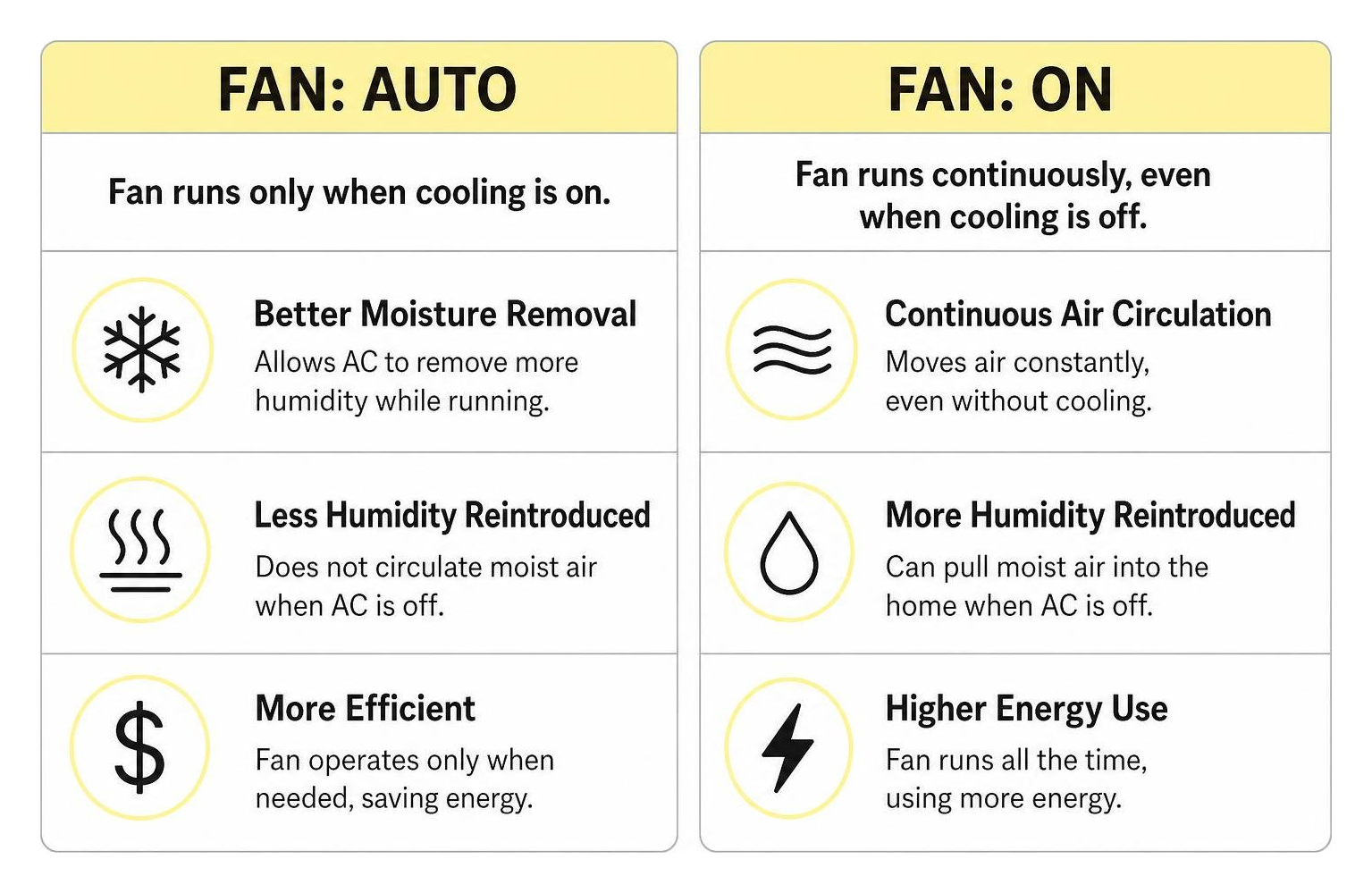
Simple mistakes, such as choosing the wrong fan setting or skipping routine maintenance, can return collected moisture to the indoor air.
Thermostat Fan Settings: AUTO vs. ON
Your thermostat fan setting has a direct impact on indoor humidity levels. Most thermostats offer two primary settings: AUTO and ON.
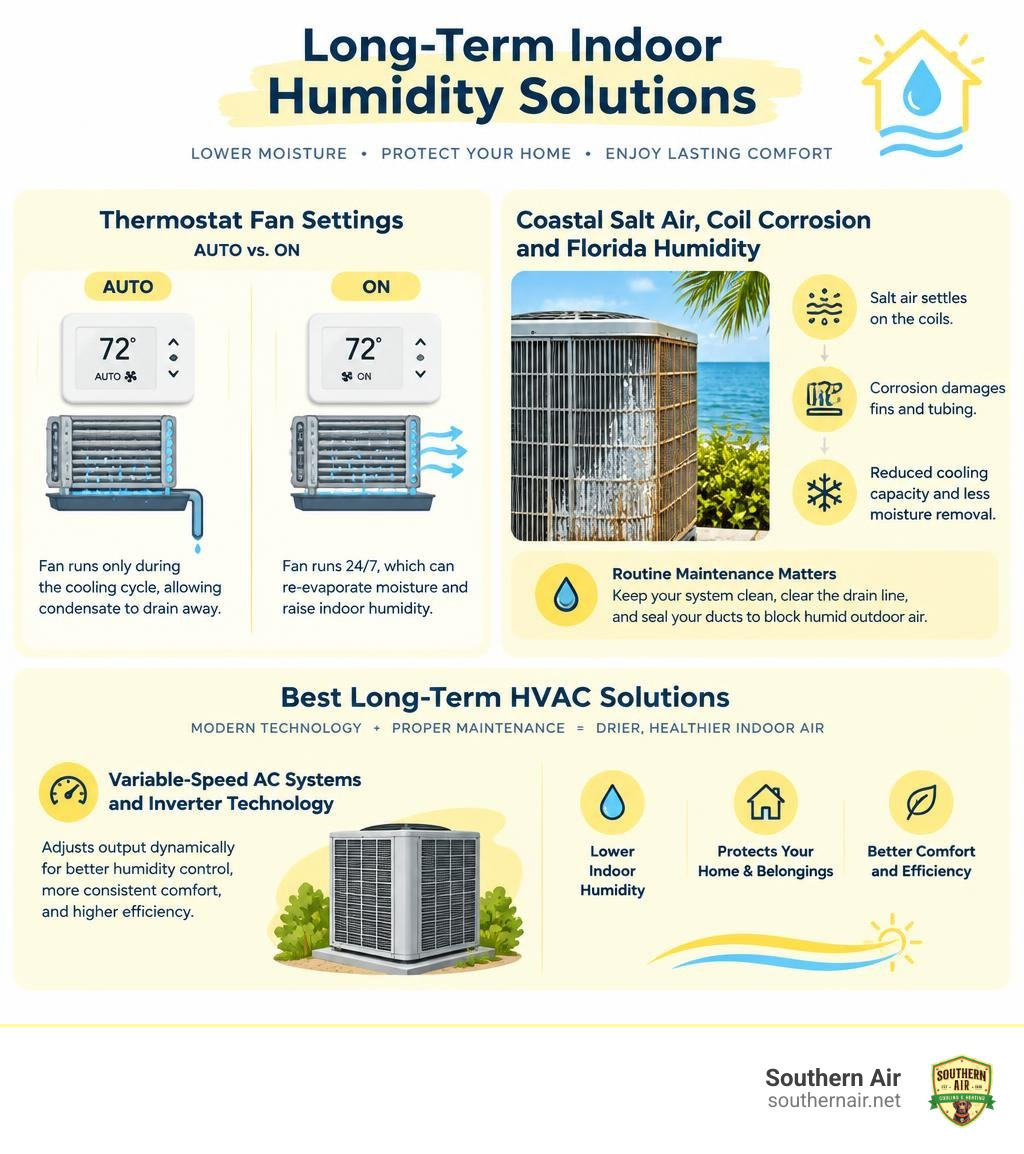
When set to AUTO, the indoor blower runs only while the outdoor compressor is actively cooling. When the system reaches the thermostat setting and turns off, the fan stops as well. This gives condensation on the evaporator coil time to drain through the pan and condensate line.
When set to ON, the indoor blower runs continuously, even when the cooling cycle is inactive. After the compressor cycles off, air can pass across a wet evaporator coil and re-evaporate some of that collected moisture into the living space. In humid weather, keeping the fan on AUTO usually supports better moisture control.
Coastal Salt Air, Coil Corrosion, and Florida Humidity AC Problems
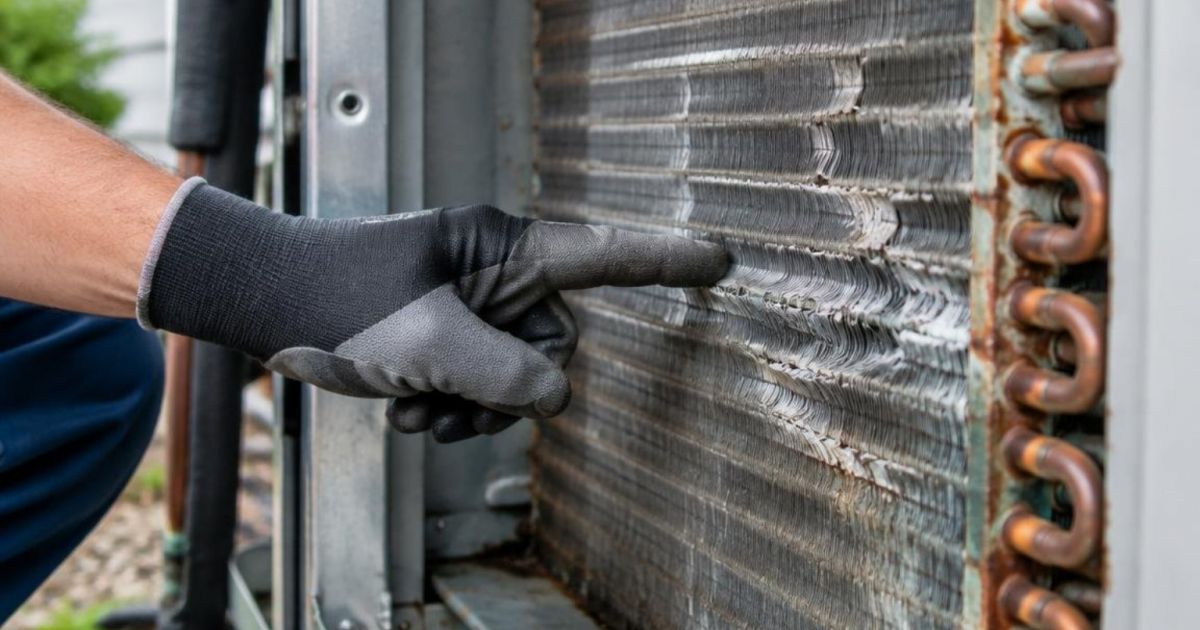
Homes near waterways, bays, and ocean coastlines face an added challenge: airborne salt. Salt particles carried by coastal breezes can settle on the aluminum fins and copper tubing of outdoor condenser units.
Over time, salt exposure can corrode metal fins and affect the connection between coils and refrigerant tubing. As condenser components deteriorate, the system may lose efficiency and struggle to maintain the coil conditions needed for effective moisture removal.
Leaky return ducts can create a similar problem by drawing humid attic air into the system. Learn more about how leaky ductwork raises humidity levels inside Florida homes and why sealing ductwork matters.
Best Long-Term HVAC Solutions for High Indoor Humidity
If your home suffers from lingering dampness, modern HVAC technology can help lower indoor moisture, protect building materials, and improve comfort.
For recurring humidity concerns, HVAC services in Palatka, FL can help evaluate equipment sizing, ductwork, drainage, and maintenance needs in one visit.
Variable-Speed AC Systems and Inverter Technology
Traditional single-stage AC systems operate like a light switch: they are either fully on or completely off. Modern variable-speed systems use inverter-driven compressors that adjust output dynamically and can run at lower capacities for longer periods.
During mild or humid days, a variable-speed system can run at a lower capacity for extended periods. That sustained operation moves air across the evaporator coil longer, helping remove moisture without overcooling the home. It can also reduce short-cycling and improve comfort.
Dedicated Whole-Home Dehumidifiers and Ductless Mini-Splits
For homes with high internal moisture loads or floor plans that struggle with humidity balance, dedicated equipment provides more precise moisture control:
- Whole-home dehumidifiers: Installed with central ductwork, a whole-home dehumidifier works alongside the primary cooling system. Controlled by an independent humidistat, it removes moisture even when the AC is not actively cooling, helping maintain a comfortable relative humidity level during cool, rainy weather.
- Ductless mini-split systems: For room additions, sunrooms, or primary suites that stay humid, a ductless mini-split provides targeted comfort. Many systems include dry modes designed to prioritize moisture removal in problem areas.
Frequently Asked Questions About High Indoor Humidity in Florida
What is the ideal indoor humidity range for a Florida home?
For a healthy, comfortable home, indoor relative humidity is generally best kept between 30% and 50%. Relative humidity should not remain above 60% for extended periods because elevated moisture can support mold and mildew growth on drywall, carpeting, and ductwork.
Why does my house feel cold and clammy even with the AC on?
A cold and clammy home often points to an imbalance between sensible cooling and latent cooling. Common causes include an oversized AC that shuts down before removing water vapor, a thermostat fan set to ON, a dirty evaporator coil, or duct leaks that pull humid air from the attic.
Can leaky ductwork increase humidity levels indoors?
Yes. If return ductwork has cracks, loose joints, or unsealed seams in a hot, unconditioned attic, it can pull humid attic air into the system. That added moisture can overwhelm the AC’s dehumidification capacity and make the home less comfortable.
Conclusion
Living in North Florida means dealing with heavy humidity for much of the year, but your home should still feel dry and comfortable. If your AC leaves the indoor air clammy, sticky, or damp, the solution may involve correct system sizing, thermostat settings, duct sealing, and routine HVAC maintenance.
At Southern Air Cooling & Heating, our team brings more than 43 years of family-owned experience to every project. Whether you need a Manual J load calculation, duct inspection, or help diagnosing persistent moisture issues, contact our professional AC humidity-control technicians to restore comfortable indoor conditions.
Request Service
Please fill out the form below to request an estimate or schedule service.
"*" indicates required fields