How to Spot an AC Refrigerant Leak Before It Damages Your System
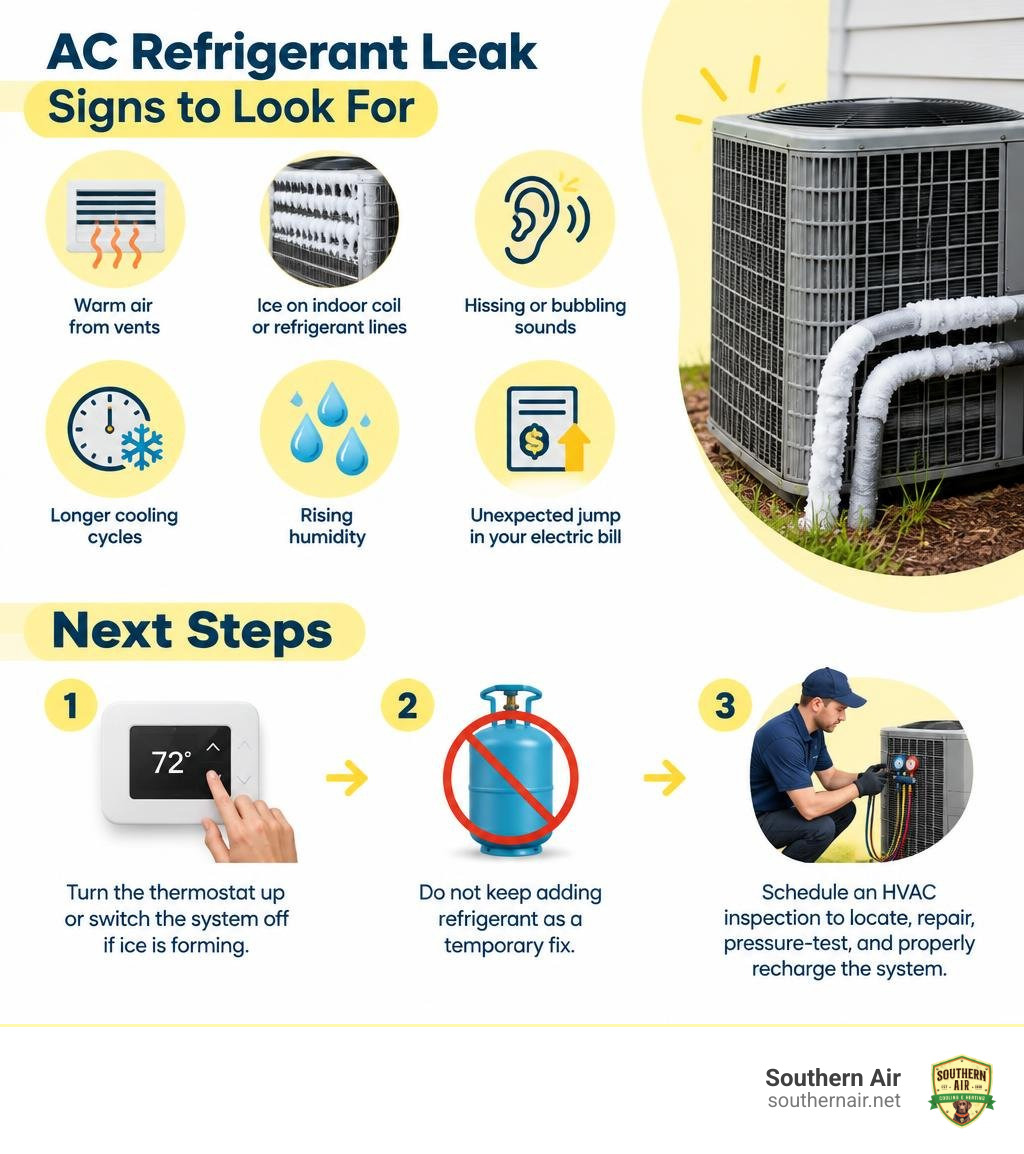
An AC refrigerant leak needs professional attention soon. Look for warm air from vents, ice on the indoor coil or refrigerant lines, hissing or bubbling sounds, longer cooling cycles, rising humidity, or an unexpected jump in your electric bill.
If you notice these signs:
- Turn the thermostat up or switch the system off if ice is forming.
- Do not keep adding refrigerant as a temporary fix.
- Schedule an HVAC inspection to locate, repair, pressure-test, and properly recharge the system.
Your AC is a closed system, so refrigerant should not be used up during normal operation. A leak lowers cooling capacity and can force the compressor to work harder. Ignoring it can lead to poor comfort during a Florida summer, higher energy use, and possible compressor damage. It also releases refrigerant, which can have a significant climate impact.
The team at Southern Air Cooling & Heating has decades of experience diagnosing AC refrigerant leaks and completing repairs for homeowners. Prompt, accurate testing helps identify the source of the problem before a minor leak creates a larger system failure.
Common Signs of an AC Refrigerant Leak
Because your central AC system operates as a sealed, pressurized circuit, refrigerant loss can produce distinct operating symptoms. When charge levels drop, the balance between pressure and temperature inside the coils changes, creating noticeable problems throughout the home.
Here are the most common warning signs to watch for:
- Lukewarm or warm airflow: When pressure drops, the evaporator coil cannot absorb heat effectively.
- Faint hissing or bubbling noises: High-pressure leaks can create an audible hissing sound near the outdoor unit or indoor air handler, while bubbling may indicate a leak in the refrigerant circuit.
- Ice on the evaporator coil and copper lines: When pressure drops too low, the remaining refrigerant can expand at sub-freezing temperatures. Moisture in indoor air condenses on the coil and freezes.
- Elevated indoor humidity: AC systems remove humidity by condensing water vapor against cold coils. An undercharged system loses some of that dehumidification capacity, leaving the home feeling sticky and clammy.
- Higher electric bills: As cooling capacity drops, the unit may run much longer to reach the thermostat setting, increasing energy use.
- Extended cooling cycles: The system may struggle to satisfy the thermostat and run for long periods without lowering indoor temperatures.
If your system is producing heat instead of cool air, these reasons your AC may be blowing warm air can help you understand when low refrigerant may be involved and when to call an HVAC professional.
What Causes Refrigerant Leaks in HVAC Systems?
Refrigerant lines, coils, and service valves are engineered to withstand continuous pressure changes. However, environmental stressors and normal wear can cause microscopic fractures and other failures over time.
The most frequent causes include:
- Formicary corrosion: Indoor evaporator coils can develop tiny pinhole leaks when corrosion affects copper tubing.
- Coastal salt-air exposure: In coastal and humid environments, airborne salt can accelerate corrosion on outdoor components and connection points.
- Mechanical vibration and friction: Line sets that rub against structural framing, sheet metal, or concrete can gradually wear down until a fracture occurs.
- Schrader valve and fitting failures: Valve cores, service ports, and flare joints can degrade or loosen over time.
- Thermal expansion stress: Repeated heating and cooling cycles cause metal joints to expand and contract, which can weaken connections.
Knowing the signs your HVAC unit may need AC service can help you arrange an inspection before a refrigerant issue leads to more serious component damage.
The Hidden Risks of Ignoring Low Refrigerant
Allowing an AC system to operate with inadequate refrigerant can damage mechanical components. Beyond reduced home comfort, low charge can start a harmful chain reaction inside the sealed system.
When refrigerant escapes, the compressor can lose the cooling vapor that helps keep motor windings within safe operating temperatures. Refrigerant also circulates oil that protects internal moving parts.
Operating with a low charge can lead to oil starvation and excessive heat, accelerating compressor wear. A neglected leak can ultimately require major repairs or compressor replacement.
| Operating metric | Correct refrigerant charge | Undercharged system |
|---|---|---|
| Cooling capacity | Normal rated output | Reduced output |
| Compressor operating temperature | Normal vapor return temperature | Elevated operating temperature |
| Compressor lubrication | Continuous oil return | Possible oil-return problems |
| Energy consumption | Normal efficiency | Increased energy use |
| Environmental impact | No leak-related venting | Refrigerant can escape to the atmosphere |
Refrigerant loss can also create a climate concern when refrigerant escapes to the atmosphere. Federal rules require proper containment and handling of regulated refrigerants.
Diagnostic and Testing Procedures for an AC Refrigerant Leak
Finding the exact location of a leak requires specialized tools and methodical testing. Professional HVAC technicians rely on several proven detection techniques:

- Electronic leak detectors: Sensitive detectors are used around coils, brazed joints, and valves to identify escaping refrigerant.
- Soap bubble testing: Applying a specialized solution to suspect fittings can reveal bubbling at the location of an active leak.
- Ultraviolet dye: An approved fluorescent dye can help technicians locate oil and refrigerant seepage with a UV lamp.
- Nitrogen pressure testing: Technicians may isolate and pressurize the circuit with dry nitrogen to identify pressure loss and assess joint integrity.
- Deep vacuum hold testing: Pulling a deep vacuum helps confirm whether the closed loop holds tight without allowing moisture and non-condensables inside.
How Professionals Fix an AC Refrigerant Leak
Fixing a pressurized cooling system requires certified technical expertise, recovery equipment, and precision brazing tools. That is why these repairs should be handled by professionals with EPA Section 608 certification.
The restoration process follows strict industry standards:
- Refrigerant recovery: Remaining refrigerant is recovered into an approved containment cylinder using certified recovery equipment.
- Structural repair or replacement: Minor copper line fractures may be brazed with an inert nitrogen purge. If an evaporator coil has multiple pinhole leaks, replacement may be the better solution.
- Evacuation: A two-stage vacuum pump removes air, nitrogen, and moisture from the refrigerant lines.
- Precision charging: Refrigerant is weighed in to match the manufacturer’s specifications after the repair and testing are complete.
For a confirmed leak, Southern Air Cooling & Heating provides professional AC repair services that focus on accurate diagnosis, repair, testing, and proper refrigerant charging.
If the leak is part of a larger comfort or equipment concern, our broader air conditioning services can help homeowners evaluate the next appropriate step.
If the compressor has already been strained by low refrigerant, understanding the cost of AC compressor replacement can help you prepare for the repair conversation.
For regulatory context, the EPA’s refrigerant leak repair requirements explain applicable containment and repair obligations for covered equipment.
Should You Repair the Leak or Replace Your AC System?
When confronted with a significant leak, homeowners should weigh the repair scope against the long-term efficiency and reliability benefits of newer equipment.
Key factors to consider include:
- Refrigerant type: If your equipment is older, check whether AC systems still use Freon. R-22 is no longer produced for new use in the United States, which can make it costly and difficult to source compared with R-410A or newer alternatives.
- Equipment age and condition: Central AC units often last 10 to 15 years in hot, humid climates. If an older system develops a major coil failure, consider the long-term reliability, efficiency, and warranty benefits of replacement.
For a closer comparison of the options, this guide to repairing or replacing your AC unit explains the factors that can affect the decision.
Frequently Asked Questions About Refrigerant Leaks
Can I just keep adding refrigerant instead of fixing the leak?
No. Adding refrigerant to a leaking AC system is only a short-term measure that can waste money and place additional strain on the equipment. The leak should be found, repaired, tested, and then recharged to the manufacturer’s specifications.
How much does it cost to repair a refrigerant leak?
Repair needs vary based on the leak’s severity, location, and affected component. A technician can identify the source of the leak and explain the repair options after testing the system.
Is an AC refrigerant leak harmful to breathe?
In small residential quantities, refrigerant typically dissipates quickly outdoors. However, concentrated exposure in enclosed spaces can irritate the eyes and airways, cause dizziness, or displace oxygen. If you notice a persistent chemical odor alongside unusual AC odors, turn off the system, ventilate the area, and call an HVAC professional for prompt testing.
Conclusion
A leaking AC system compromises home comfort, drives up electric utility costs, and can risk compressor failure. By identifying warning signs early, from iced-over coils to warm supply vents, you can protect your cooling equipment and maintain a cool, dehumidified home.
The experienced team at Southern Air Cooling & Heating brings decades of expertise to every service call across Northeast Florida. If you suspect a refrigerant issue or declining AC performance, contact our professional AC repair technicians to restore dependable, energy-efficient comfort.
Request Service
Please fill out the form below to request an estimate or schedule service.
"*" indicates required fields