Why Ignoring Ductwork Repair Costs You More Every Month
Ductwork repair is one of the most impactful fixes a Florida homeowner can make, and one of the most overlooked.
Here’s a quick look at what you need to know:
| Question | Quick Answer |
|---|---|
| What does ductwork repair cost? | $200–$2,100, with a national average around $660 |
| How do I know my ducts need repair? | High energy bills, hot/cold spots, dust near vents, musty odors |
| Can I DIY it? | Yes, for small accessible leaks, use UL 181 foil tape or mastic sealant |
| What should I never use? | Regular cloth duct tape, it fails quickly under heat |
| When should I call a pro? | Mold, asbestos, inaccessible ducts, or damage larger than 6 inches |
Think about this: up to 30% of the air your HVAC system conditions can escape before it ever reaches a single room. In a Florida summer, that’s not just uncomfortable, it’s money disappearing through cracks in your attic or crawl space every single day.
The good news? Many common duct problems are fixable. Some you can handle yourself on a Saturday morning. Others need a trained eye. This guide walks you through both.
I’m Dustin Caison, President and CEO of Southern Air Cooling & Heating, a State Certified Air Conditioning Contractor with over two decades of hands-on experience, including countless ductwork repair jobs across North Florida’s unique climate. With that background, I’ll show you exactly what to do, step by step.
Identifying the Need for Ductwork Repair
Before you grab your toolkit, you need to know if your home is actually crying out for help. In May 2026, with energy costs continuing to fluctuate, identifying these signs early can save you hundreds of dollars in utility waste.
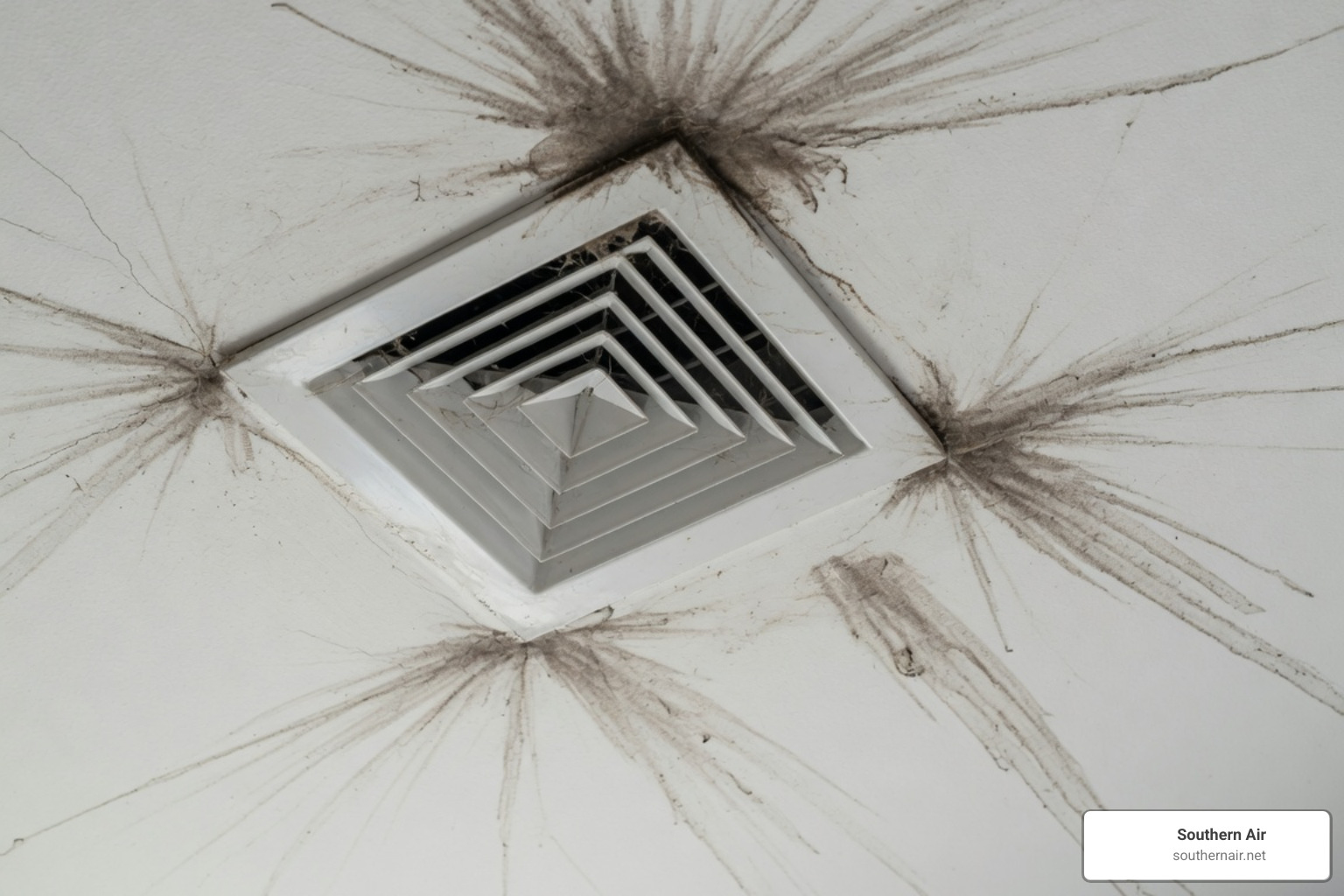
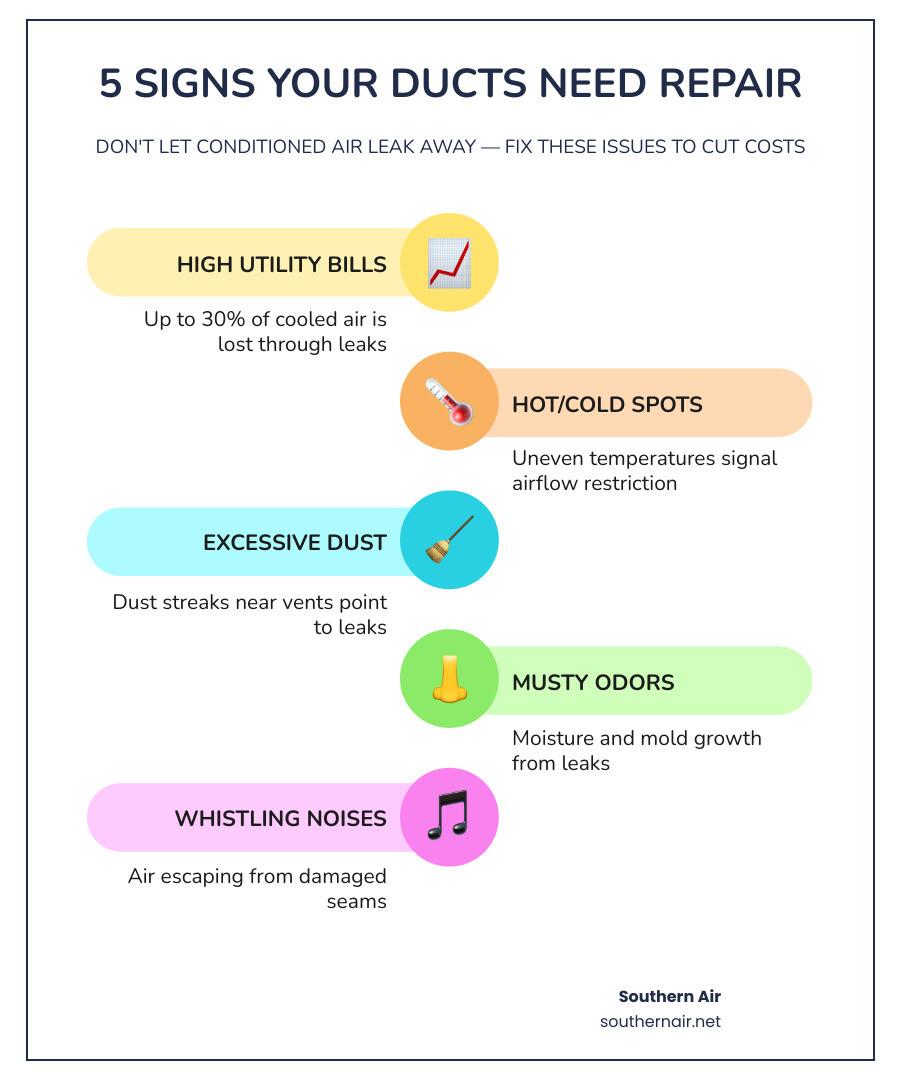
Your ductwork is the “highway” for your home’s air. When that highway has potholes or broken bridges, your comfort takes a detour. One of the most common visual cues we see in homes from Palatka to Fleming Island is the presence of dark dust streaks around ceiling vents. This often indicates that the duct is pulling in dirty attic air through a leak right at the boot connection.
Beyond the visual, keep an eye on your utility bills. If your usage has spiked but your habits haven’t changed, your HVAC system is likely working overtime to compensate for air escaping into unconditioned spaces. You might also notice “hot spots,” those stubborn rooms that never seem to get cool enough in July, no matter how low you set the thermostat.
Strange noises are another major red flag. If you hear whistling, it’s often air being forced through a tiny hole at high pressure. Rattling or flapping sounds usually mean a connection has come loose or a piece of internal liner is flapping in the wind. Finally, never ignore musty odors. These can signal that moisture is entering the system through a gap, potentially leading to mold growth. How air duct repair can improve your home’s air quality is a great resource if you’re worried about the air you’re breathing.
Common Signs of Air Loss
Airflow restriction is a subtle but serious symptom. If you hold your hand up to a vent and the breeze feels more like a whisper than a gust, you likely have a disconnected branch or a crushed flex duct. Excessive dust buildup on your furniture shortly after cleaning is another sign; leaky return ducts can “suck in” insulation particles and dust from your crawl space or attic and blast them into your living room. Humidity spikes are also common in our part of Florida, as leaky ducts allow muggy outside air to bypass your system’s dehumidification process.
Health and Efficiency Risks
Damaged ducts aren’t just a blow to your wallet; they’re a risk to your health. When ducts leak, they create a “vacuum effect,” pulling in allergens, pesticides, and even rodent droppings from the dark corners of your home. This puts immense strain on your HVAC equipment, leading to premature blower motor failure and a shorter overall lifespan for your unit. If you’re noticing these issues, exploring professional HVAC solutions is the best way to protect your home’s mechanical health.
5 Steps to Successful DIY Ductwork Repair
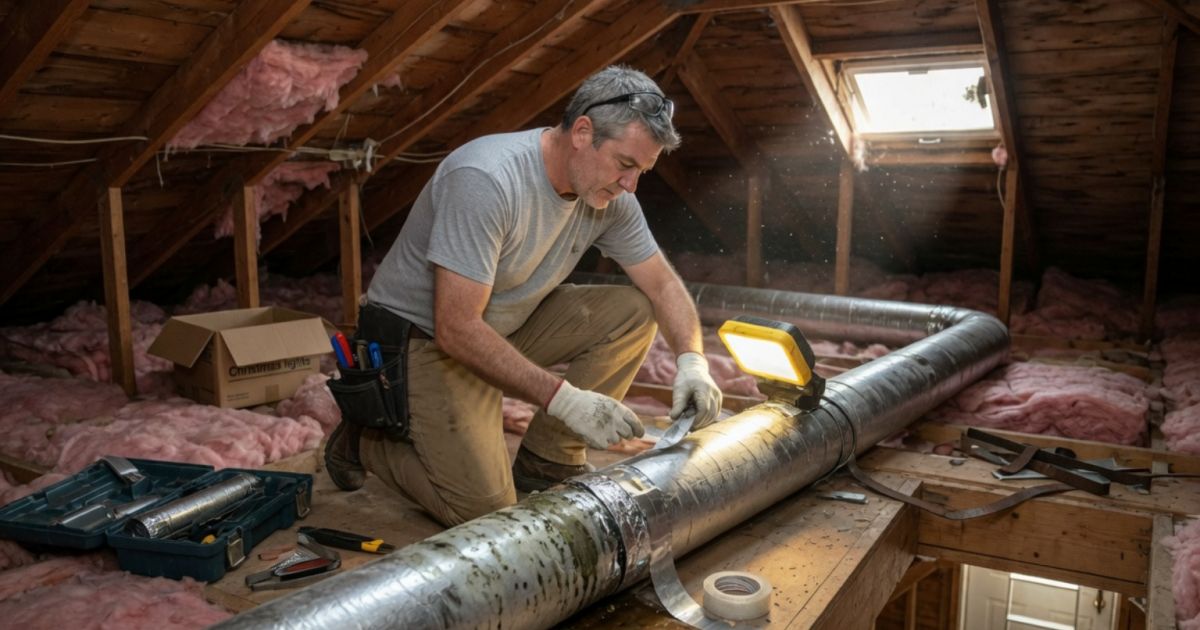
If you’ve identified a leak in an accessible area like an open attic or a basement, you might be tempted to fix it yourself. While we always recommend a professional evaluation for complex systems, small patches are manageable for the handy homeowner.
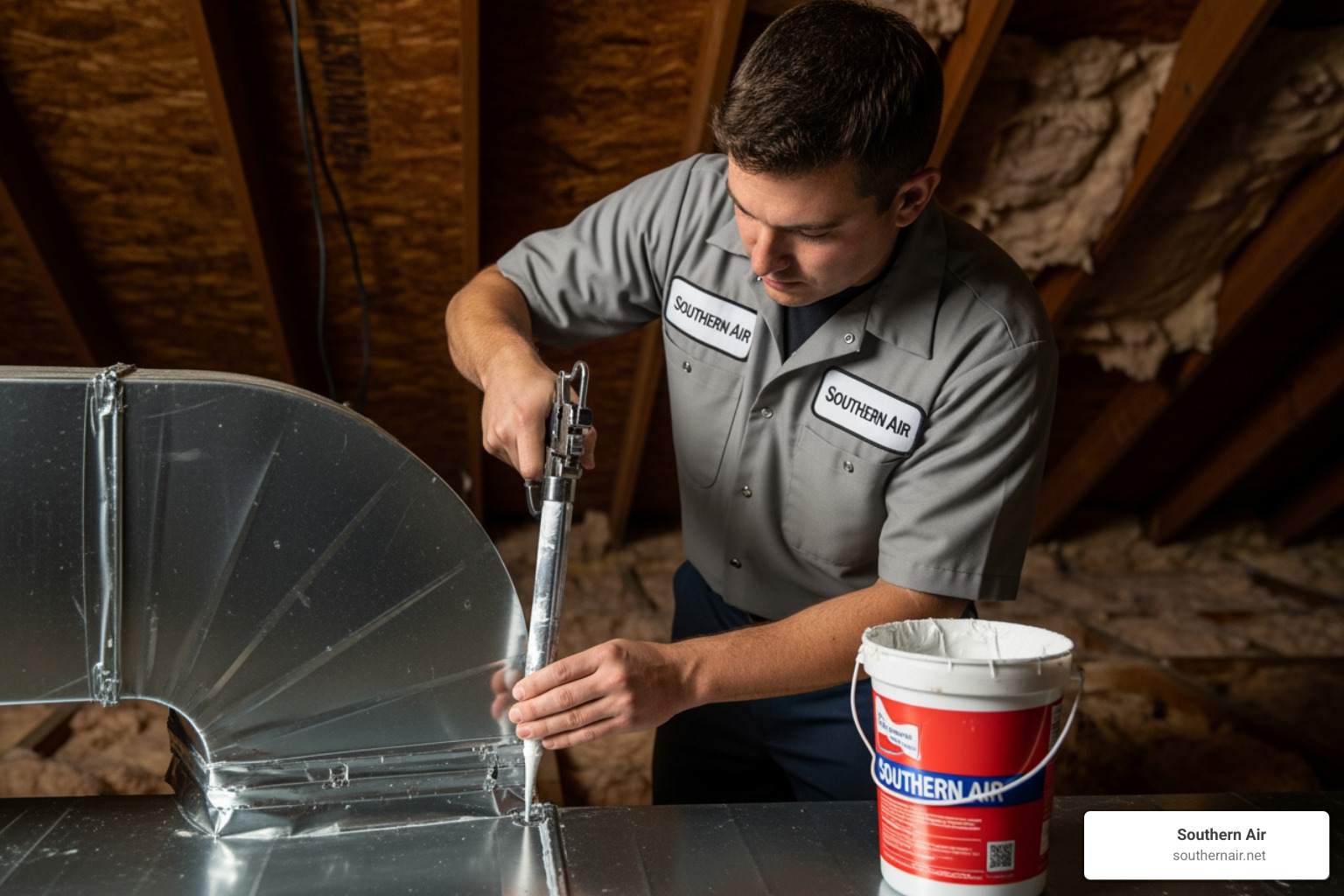
To do this right, you need the proper materials. Forget the “silver” duct tape you find in the hardware aisle; for HVAC work, you must use UL 181 rated materials. This includes foil-backed tape and water-based mastic sealant. You’ll also want safety gear: gloves (duct edges are sharp!), a mask, and eye protection. For a deeper dive into the technical side, the air seal and repair ducts guide provides excellent guidance.
Step 1: Locate and Clean the Leak
You can’t seal what you can’t see, or feel. Start the system and run your hand along the joints. You’ll feel the “jet” of air escaping. Once you find the leak, turn the system off. Use a microfiber cloth and a bit of isopropyl alcohol to clean the surface. Mastic and tape will not stick to 15 years of Florida attic dust. Surface preparation is 90% of a successful ductwork repair.
Step 2: Apply UL 181 Rated Foil Tape
For small holes or tight seams, use UL 181 foil tape. This isn’t your average tape; it’s designed to handle the extreme temperature cycling of an HVAC system. Apply the tape, ensuring it overlaps the leak by at least two inches on all sides. Use a plastic squeegee or your hand to apply firm pressure, smoothing out any bubbles to ensure a permanent bond. Avoiding common duct repair mistakes homeowners make is key here, specifically, don’t use regular cloth tape!
Step 3: Seal with Mastic and Mesh
For larger gaps (up to 5/8 of an inch), tape isn’t enough. You need mastic sealant. Think of this like “icing” for your ducts. Apply a layer of fiberglass mesh tape over the gap first to provide structural integrity. Then, spread the mastic over the mesh using a brush or a gloved hand. You want it to be about the thickness of a nickel. This creates a rock-solid, airtight bond that will last for years.
Step 4: Restore Duct Insulation
Once the seal is dry, you must replace any insulation you moved. In Florida, uninsulated ducts will sweat, leading to water damage and mold. Ensure you are using R-8 value insulation. Wrap it snugly (but don’t compress it!) and seal the outer vapor barrier with FSK (Foil-Scrim-Kraft) tape. This prevents condensation from forming on the cold metal.
Step 5: Test the Airflow
The “tissue test” is the easiest way to verify your work. Turn the system back on and hold a single ply of toilet paper or a tissue near your repair. If the tissue stays still, you’ve succeeded! If it flutters, you still have air escaping. Once the leaks are sealed, it’s often the perfect time to look into duct cleaning services to remove any debris that entered while the ducts were open.
Cost Factors and Material Lifespans in 2026
As we move through 2026, the cost of materials and labor has shifted. Understanding the lifespan of your materials helps you decide whether to patch a hole or replace the whole run.
| Duct Material | Average Lifespan | 2026 Repair Cost (Avg) | 2026 Replacement Cost (Per Run) |
|---|---|---|---|
| Sheet Metal | 25–50+ Years | $250 – $1,000 | $500 – $1,200 |
| Flex Duct (Non-Metallic) | 10–20 Years | $200 – $800 | $300 – $600 |
| Fiberglass Duct Board | 10–15 Years | $250 – $900 | $400 – $700 |
Average Costs for Professional Ductwork Repair
In the Palatka, FL area, we find that most homeowners pay between $200 and $1,000 for localized repairs, with a national average landing around $660. The price fluctuates based on accessibility. If your ducts are easily reached in a walk-in attic, the cost is lower. If we have to cut through drywall or navigate a tight crawl space in Saint Augustine, the labor time increases.
Repair vs. Full Replacement
We generally use the “15-year rule.” If your ductwork is over 15 years old and showing signs of systemic failure, like widespread corrosion, crushed sections, or multiple leaks, replacement is often more cost-effective than constant patching. New ducts provide a fresh start with modern R-8 insulation standards, which significantly lowers monthly bills. Our expert ductwork services can help you weigh the ROI of a full upgrade versus a simple fix.
When to Call a Professional for Ductwork Repair
While the 5-step DIY guide is great for a single loose joint, some situations are simply too dangerous or complex for a homeowner to handle.
If you suspect your older home has asbestos-insulated ducts, stop immediately. Asbestos requires professional encapsulation or abatement. Similarly, if you see visible mold inside the vents, a simple patch won’t solve the problem; you need professional remediation to ensure those spores aren’t being circulated throughout your bedrooms.
Inaccessible runs, ducts located between floors or behind permanent walls, also require specialized tools. We use high-resolution cameras and pressure-testing equipment to find leaks we can’t physically reach. Furthermore, professional repairs ensure your home remains compliant with local Florida building codes, which is vital if you ever plan to sell your property.
Advanced Techniques in Ductwork Repair
Today’s technology allows us to fix things that were impossible a decade ago. We offer aerosolized sealing, like Aeroseal, which involves pressurizing your duct system and injecting a specialized mist that seals leaks from the inside out. For underground or in-slab ducts common in some older Florida homes, we can apply rubberized liners that restore the duct without having to jackhammer your concrete floors.
Professional Maintenance and Prevention
The best ductwork repair is the one you never have to make. Annual inspections are the “oil changes” of your HVAC system. During these visits, we check for sagging supports, rodent damage, and early signs of seal failure. Keeping your filters changed every 1–3 months prevents “static pressure” from building up and blowing out your seams. For total peace of mind, our Comfort Club members receive priority inspections to catch these issues before they become emergencies.
Frequently Asked Questions about Ductwork Repair
Can I use regular cloth duct tape for HVAC repairs?
Absolutely not. Despite its name, standard cloth-backed duct tape is the worst thing for a duct. The adhesive is not designed for the extreme heat of a Florida attic. Within one season, the adhesive will dry out, the tape will fall off, and you’ll be right back where you started — but with a sticky mess to clean up. Always use UL 181 rated foil tape or mastic.
How long does typical residential ductwork last?
It depends on the material. Rigid sheet metal can last 50 years or more if it stays dry. However, the flexible ductwork common in many North Florida homes typically lasts 10 to 20 years. In our humid environment, the outer vapor barrier on flex ducts can degrade, and the inner coils can rust or collapse over time.
Will fixing my ducts really lower my energy bill?
Yes! Because leaky ducts can waste up to 30% of your conditioned air, sealing them is like getting a 30% discount on the cooling portion of your power bill. It also allows your thermostat to reach its target temperature faster, meaning your expensive outdoor unit runs for fewer hours each day, extending its life by years.
Conclusion
At Southern Air Cooling & Heating, we’ve spent the last 43 years serving our neighbors in Palatka, Crescent City, and across the Saint Johns River area. As a family-owned business, we know that your home’s comfort is about more than just a thermostat setting, it’s about the health of your family and the value of your investment.
Whether you’ve found a small leak you want to tackle yourself or you’ve realized your 20-year-old ducts need a professional overhaul, we’re here to help. We pride ourselves on 5-star service and upfront pricing. If you’ve noticed hot spots, high bills, or dusty vents, don’t let your hard-earned money leak into the attic.
Take advantage of our current specials, like $50 off any repair, and join our Comfort Club for ongoing protection. schedule your professional ductwork repair today or contact us and let us help you breathe easier and save more.
Request Service
Please fill out the form below to request an estimate or schedule service.
"*" indicates required fields