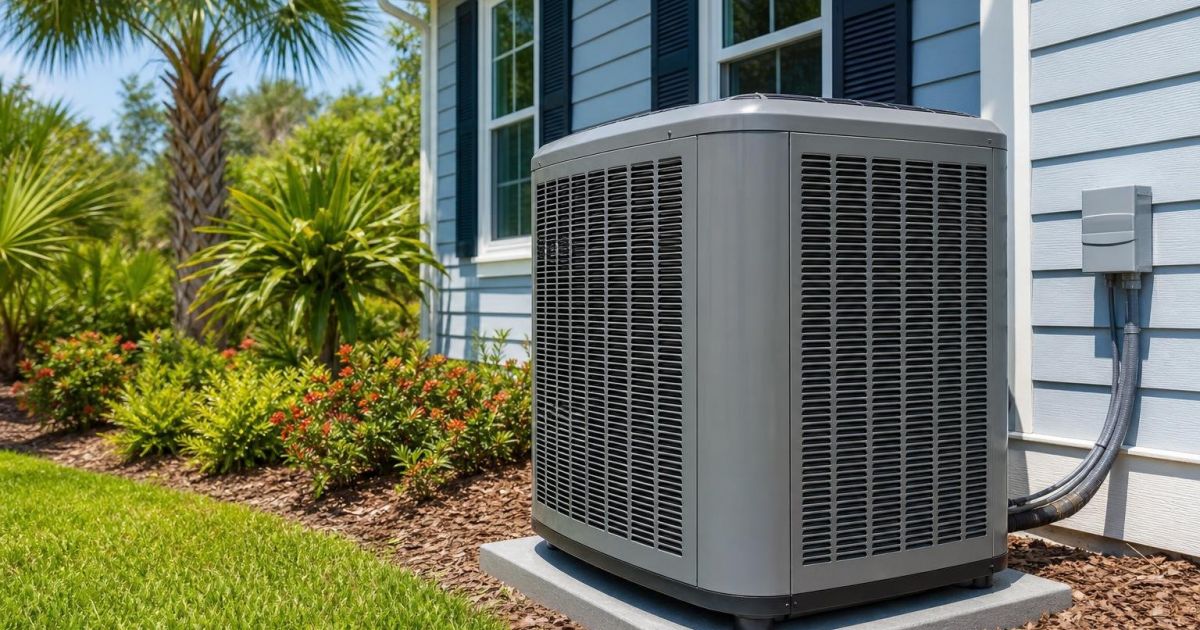
How Often Should Home AC Be Serviced?
If you’ve ever wondered how often should home AC be serviced, here is the short answer:
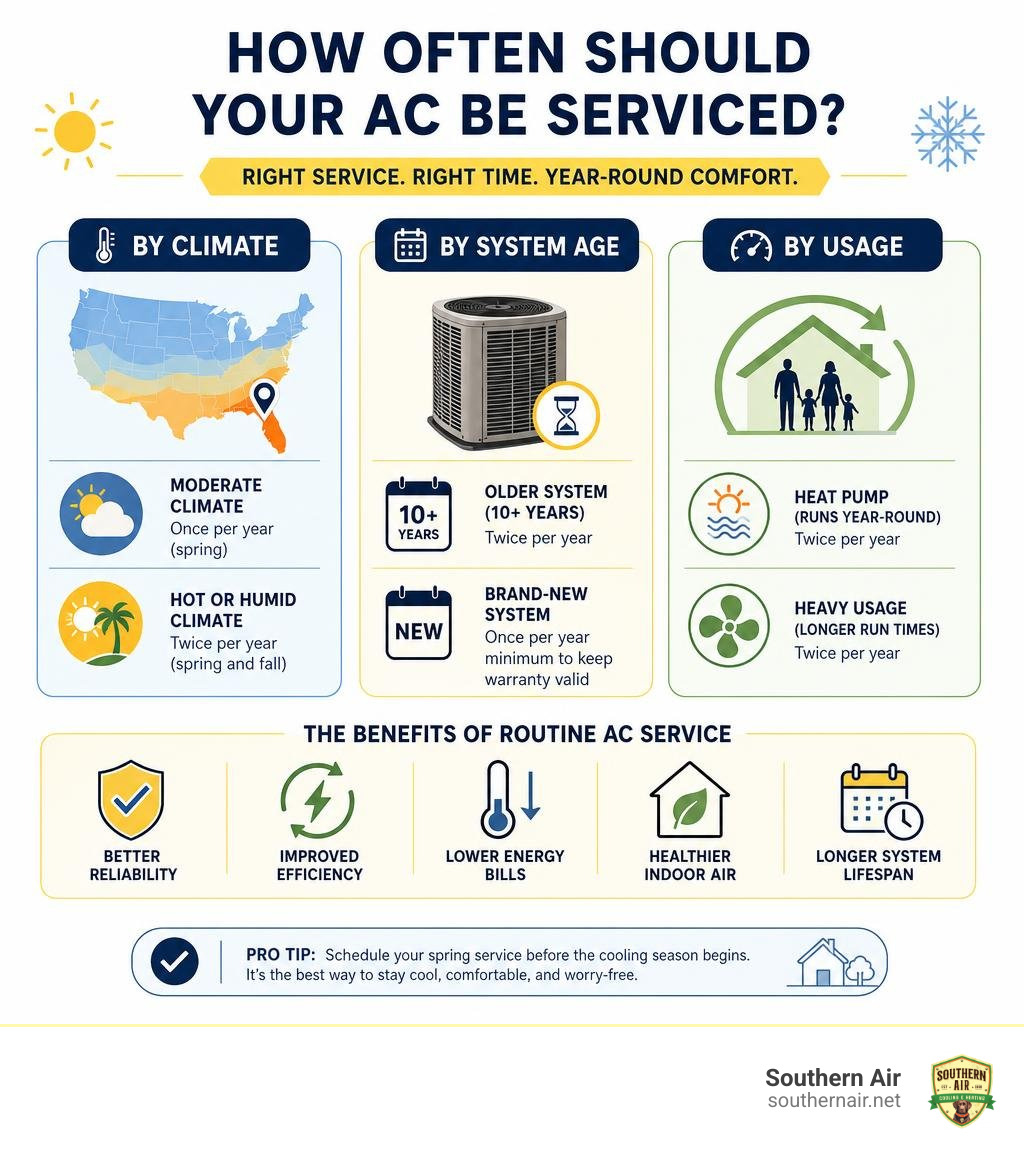
| Situation | Recommended Service Frequency |
|---|---|
| Moderate climate, standard usage | Once per year (spring) |
| Hot or humid climate (like Florida) | Twice per year (spring and fall) |
| Older system (10+ years) | Twice per year |
| Heat pump (runs year-round) | Twice per year |
| Brand-new system | Once per year minimum to keep warranty valid |
Most home AC systems need at least one professional tune-up per year, scheduled in the spring before the cooling season begins. But if you live in a hot, humid state like Florida, where your AC runs nearly nonstop for most of the year, twice-yearly service is the smarter standard.
The stakes are real. Only about 43% of American homeowners get their central AC professionally serviced each year. That means the majority are running a system that is quietly losing efficiency, wearing out faster, and costing more to operate every single month.
Skipping maintenance does not just mean a warmer house. It can mean a system that fails at year 10 instead of lasting 20 years. It can mean energy bills that creep up 30% or more without any obvious reason. And it almost always means a much more expensive repair bill down the road.
I’m Dustin Caison, President and CEO of Southern Air Cooling & Heating, a family-owned HVAC company serving North Florida since 1980, and answering the question of how often should home AC be serviced is one of the most important conversations I have with homeowners across our region. In the sections below, I’ll walk you through exactly what drives the right maintenance schedule for your home, what a proper tune-up covers, and what you can do yourself between professional visits.
When we talk about maintaining your home, we often use the car analogy. You would not dream of driving your vehicle for 100,000 miles without changing the oil, checking the brakes, or rotating the tires. Yet, many homeowners expect their air conditioner to run for thousands of hours, through brutal Florida summers, without a single professional checkup.
To determine the ideal schedule for your property, you have to look at the differences between a standard annual service and a more comprehensive bi-annual maintenance plan. Understanding how often should central HVAC system be serviced is the first step toward protecting your investment, keeping your family comfortable, and ensuring your indoor air quality remains high.
For the vast majority of systems, investing in regular AC maintenance keeps minor mechanical issues from snowballing into catastrophic, mid-summer failures. While a single yearly visit is the absolute baseline recommended by manufacturers, local conditions often demand a more proactive approach.
The Standard Rule: Annual AC Maintenance
Nationwide, the general consensus among HVAC professionals is that your air conditioning system should be serviced at least once a year. The ideal window for this service is early spring, around March or April, before the sweltering heat of summer arrives.
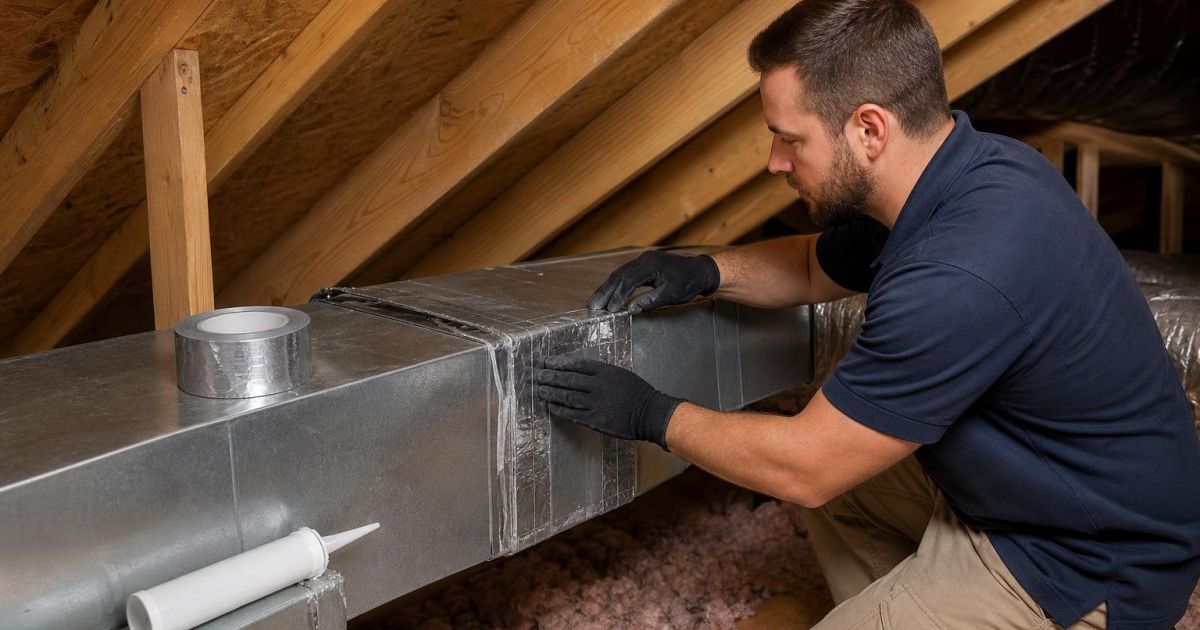
This annual tune-up serves as an efficiency baseline. During this visit, a technician cleans the system, verifies that all mechanical parts are in working order, and ensures the unit is ready to handle the upcoming workload.
Unfortunately, only about 43% of American homeowners actually schedule this essential service each year. The remaining 57% run their systems on borrowed time, unknowingly forcing their units to work harder than necessary. This neglect is the primary reason why so many AC units break down on the very first 90 degree day of the year, when local service queues are at their longest and emergency rates are in full effect.
The Florida Factor: Why Climate Changes the Rules
If you live in North Florida, in communities like Palatka, Saint Augustine, Fleming Island, or Green Cove Springs, you already know that national averages do not always apply to our unique climate. Our weather places an incredible amount of stress on mechanical systems.
Because our cooling season lasts for most of the year, a local AC unit operates for thousands of hours more than a system located in a milder climate. This continuous runtime leads to rapid dust and debris accumulation on the coils, while our extreme humidity keeps internal components constantly damp, creating a breeding ground for mold and biological growth.
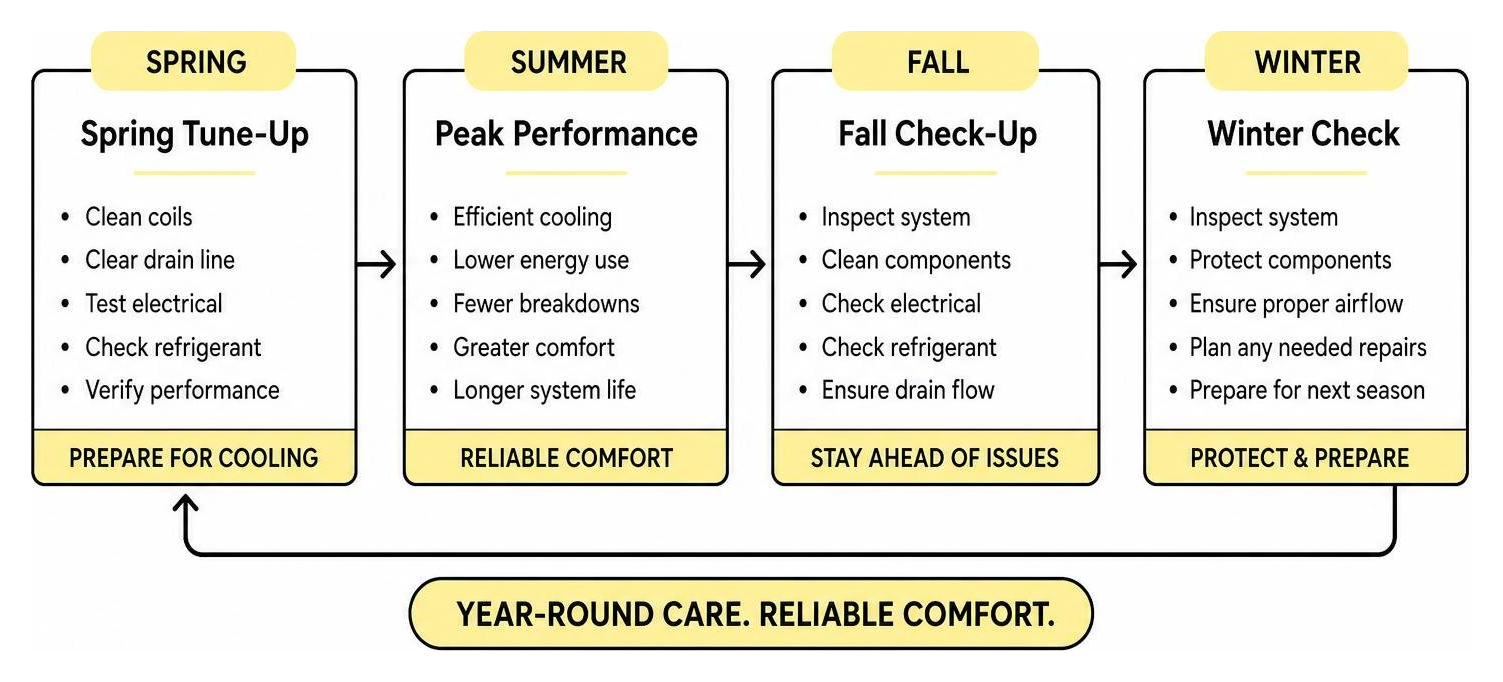
Additionally, homes in coastal areas like Saint Augustine face the constant threat of salt air corrosion, which can quickly degrade delicate aluminum condenser fins. For these reasons, local experts agree that a twice-yearly schedule is the safest and most cost-effective approach. When considering how often should AC be serviced in Florida, a bi-annual routine, once in the spring to prepare for summer, and once in the fall to clean up the wear and tear of the peak cooling season, is the gold standard.
Warning Signs Your AC Needs Immediate Attention
While sticking to a regular maintenance calendar is critical, your system may occasionally call for help between scheduled visits. Ignoring these early warning signs can lead to total system failure and a much higher repair bill. You should contact a professional immediately if you notice any of the following issues:
- Weak Airflow: If the air blowing from your vents feels weak or barely noticeable, your blower motor could be failing, or your system could have a severe blockage.
- Warm Air: If your thermostat is set to “cool” but the air coming from your registers is lukewarm or warm, you may be dealing with a refrigerant leak or a failed compressor.
- Unusual Noises: Squealing, grinding, rattling, or banging noises are clear indicators of loose, worn, or broken mechanical components.
- Musty Odors: Foul or musty smells coming from your vents often point to mold growth inside your ductwork or on your evaporator coil.
- Water Leaks: Standing water or active pooling around your indoor air handler is a sign of a clogged condensate drain line, which can cause major water damage to your ceilings and floors.
- Rising Energy Bills: A sudden, unexplained spike in your monthly utility costs indicates that your system is working significantly harder than it should to cool your home.
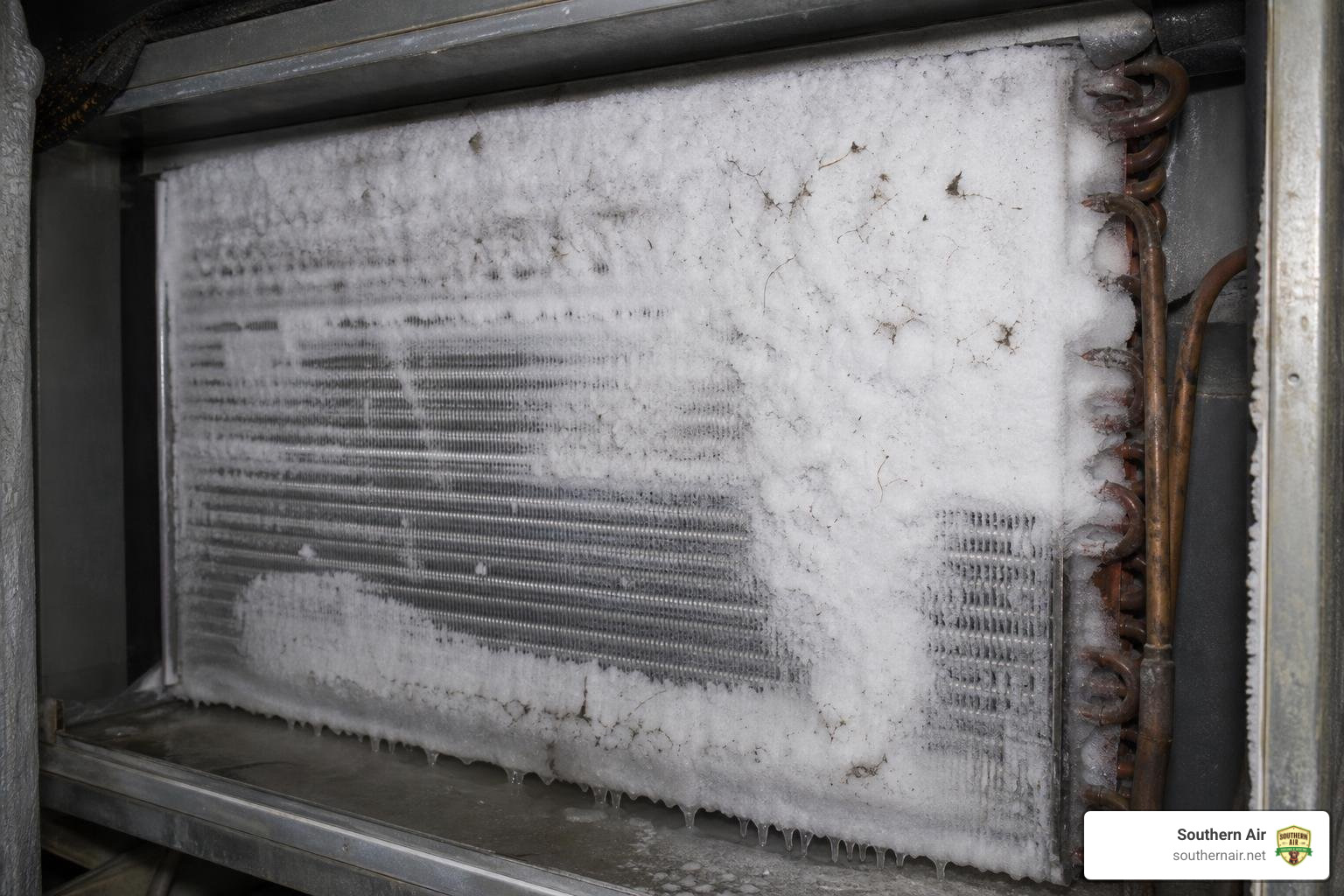
If you see ice forming on your outdoor refrigerant lines or your indoor evaporator coil, shut the system down immediately and call for service. Running an air conditioner with frozen coils can permanently damage the compressor, turning a simple repair into an expensive system replacement.
Key Factors That Determine Your AC Maintenance Schedule
Every home is different, and a one-size-fits-all approach to HVAC care does not work. The ideal frequency for your system depends on several dynamic factors, including how often you run the unit, the age of the equipment, and the specific needs of your household.
| Maintenance Factor | Annual Service | Bi-Annual Service |
|---|---|---|
| System Age | Brand-new systems (0 to 5 years old) | Older systems (10+ years old) |
| Equipment Type | Standard straight-cool split systems | Heat pumps (used for both heating and cooling) |
| Local Climate | Mild climates with short summers | Hot, humid climates (North Florida) |
| Household Pets | No pets, low dander | Multiple shedding pets |
| Health Concerns | Standard indoor air quality needs | Severe allergies, asthma, or respiratory issues |
System Age and Equipment Type
The age of your air conditioner plays a massive role in how much attention it requires. Newer systems under five years old generally run highly efficiently and can often get by with a single annual checkup, provided you change the filters regularly.
However, as a system enters its mid-life phase (6 to 10 years) and beyond, components begin to experience metal fatigue and natural wear. For older systems, scheduling bi-annual maintenance is essential to catch failing capacitors, worn contactors, or minor refrigerant leaks before they trigger a complete system shutdown.
Equipment type also dictates your schedule. If your home utilizes a heat pump, which handles both cooling in the summer and heating during our brief winter cold snaps, the system runs virtually year-round. Because it never gets a true off-season, a heat pump must be serviced twice a year, without exception.
Investing in regular care is highly effective. You might wonder, can regular AC maintenance extend the life of your unit? The data shows that properly maintained systems routinely achieve a 15 to 20 years lifespan, whereas neglected systems often fail completely after just 10 to 12 years.
Usage Intensity and Household Needs
Your lifestyle and household makeup also influence how quickly debris builds up inside your system. If you have dogs or cats, their hair and dander are constantly pulled into your return vents. Even with high-quality air filters, some of this debris bypasses the filtration system and settles on your indoor evaporator coil, reducing airflow and efficiency.
Indoor air quality is another major consideration. If anyone in your home struggles with asthma, severe seasonal allergies, or other respiratory vulnerabilities, keeping your system pristine is a health priority.
A dirty system can collect one to two pounds of dust, pollen, and biological debris on its coils annually. This buildup drops overall airflow by 20% to 30% and continuously recirculates allergens throughout your living spaces. Increasing your service frequency to twice a year ensures your system acts as a clean, efficient air purifier rather than a source of airborne irritants.
What Does a Professional AC Tune-Up Include?
A true professional maintenance visit is much more than a quick visual inspection and a filter swap. In the HVAC industry, the gold standard for maintenance is defined by ACCA Standard 4, which outlines exactly 47 distinct inspection and servicing tasks that must be performed to verify a system is running safely and efficiently.
When you hire a licensed technician, they should provide you with a detailed, written report of their findings, including specific electrical and mechanical measurements. This documentation serves as a valuable paper trail for warranty compliance and helps you track the health of your system over time.
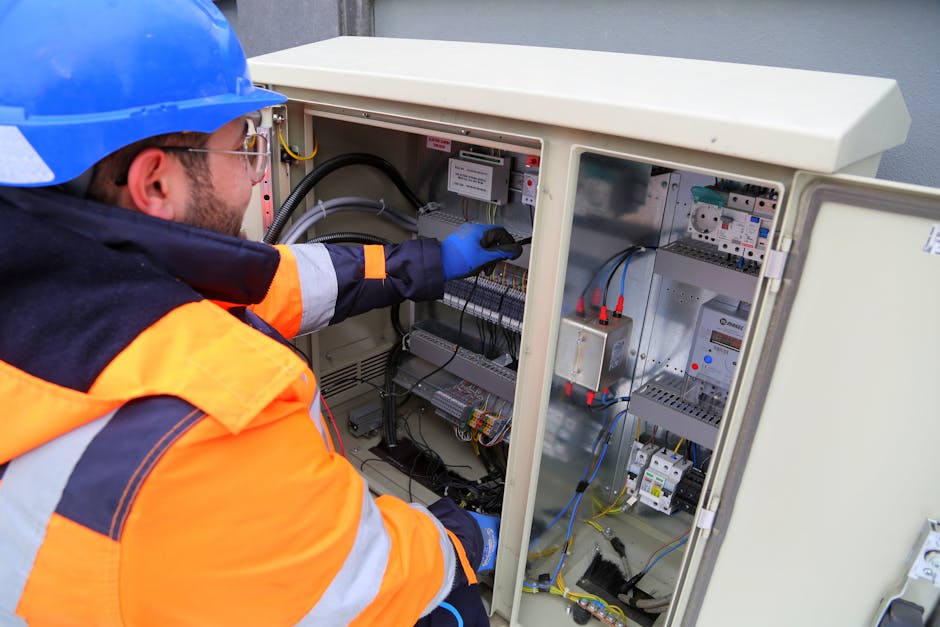
During a thorough service visit, a technician will focus on three primary areas: physical cleaning, electrical testing, and performance calibration.
To understand what we look for, you can read more about the steps involved in professional AC maintenance services to see how comprehensive this process really is.
Core Component Inspection and Cleaning
The physical cleaning of your system is critical for maintaining proper heat transfer. Your air conditioner works by absorbing heat from your indoor air and releasing it outside. If the coils are coated in a layer of dirt, this heat transfer process is severely disrupted.
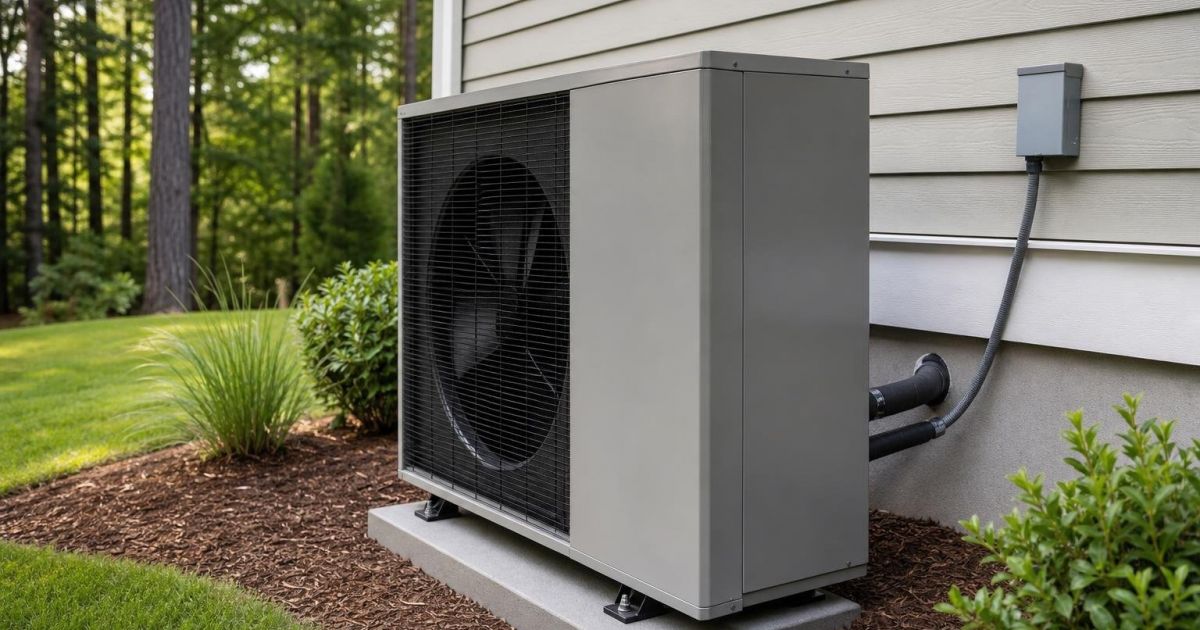
A dirty condenser coil alone can reduce system efficiency by up to 30%, forcing the compressor to run hotter and pull more electricity. During a tune-up, the technician will thoroughly clean the outdoor condenser coil and inspect the indoor evaporator coil for blockages.
Additionally, the technician will clear the condensate drain line. During hot, humid Florida days, your AC pulls gallons of water out of the air. This moisture drains through a small plastic pipe that is highly susceptible to algae and mold buildup.
Clearing this line prevents water from backing up and overflowing into your home. Reviewing a complete annual AC maintenance checklist helps you ensure your technician is inspecting every critical component, from the drain pan to the blower wheel.
Electrical and Performance Testing
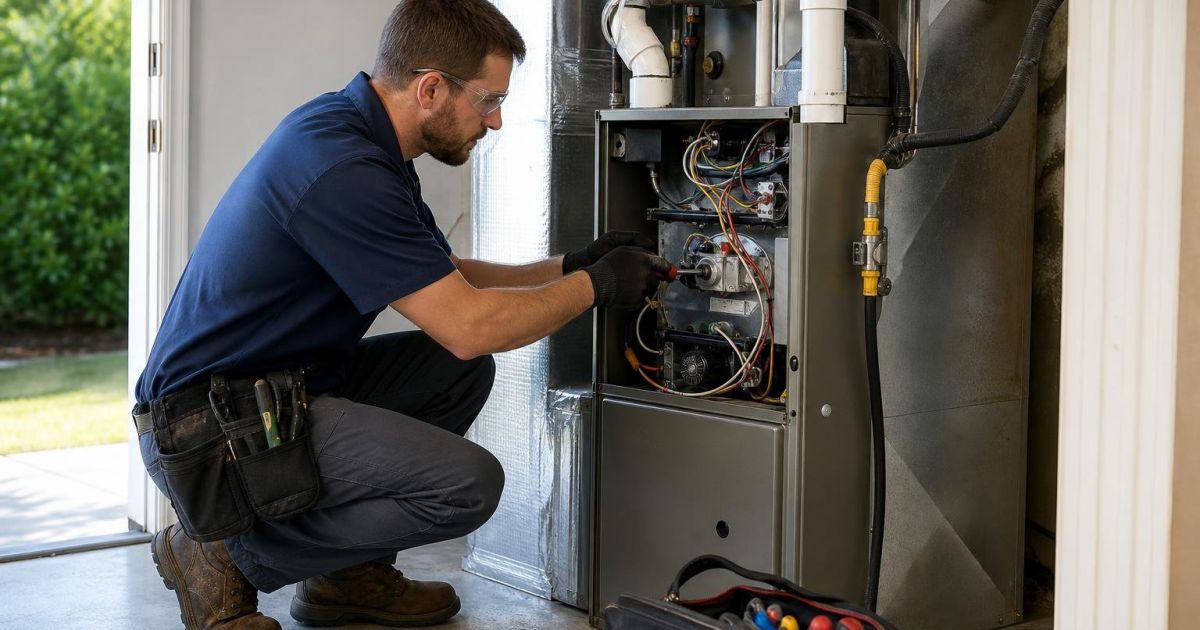
Beyond physical cleaning, your technician will perform a series of technical diagnostic tests using specialized tools. These tests are designed to catch hidden electrical and mechanical issues before they cause a breakdown.
- Testing Capacitors: Capacitors act like temporary batteries, providing the electrical boost your compressor and fan motors need to start up. If a capacitor is weak, it can cause the compressor to overheat and fail, resulting in a repair bill that can easily reach thousands of dollars. Catching a weak capacitor early and replacing it is one of the most common ways preventative maintenance pays for itself.
- Checking Refrigerant Charge: An air conditioner does not consume refrigerant. If your system is low on charge, you have a leak. Running a system with incorrect refrigerant levels places extreme stress on the compressor and can destroy the motor.
- Measuring Amp Draws: Technicians measure the electrical current running through your motors. Higher-than-normal amp draws indicate that a motor is binding or working too hard, signaling an impending failure.
- Thermostat Calibration: We verify that your thermostat is communicating accurately with your system, ensuring you do not waste energy due to inaccurate temperature readings.
DIY Maintenance Tasks You Can Do Between Services
While technical tasks like checking refrigerant charges and testing electrical systems must be left to licensed professionals, there are several simple, highly effective tasks you can perform to support your system. Taking a proactive role in your home’s upkeep is easy when you follow the top HVAC maintenance tasks homeowners should never skip.
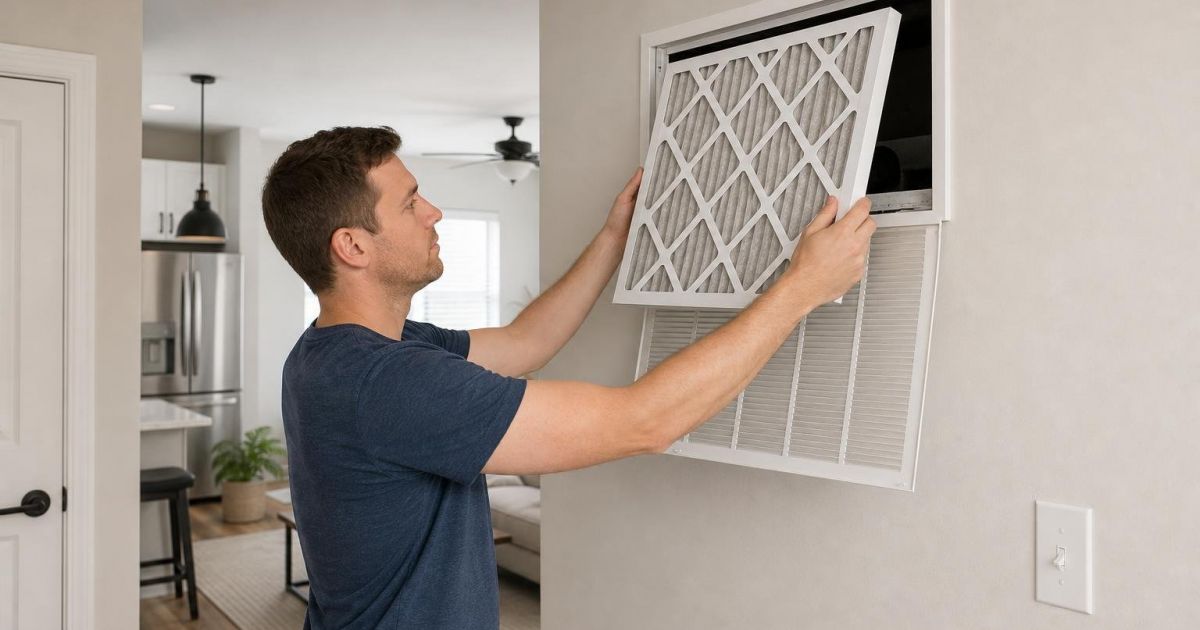
- Change Your Air Filter Regularly: This is the single most important task you can do. A clogged filter restricts airflow, forcing your system to work harder, which can drag down your SEER rating by 15% and is the root cause of nearly 60% of premature system failures. Change standard 1-inch filters every 30 to 90 days, or monthly if you have pets.
- Maintain Outdoor Clearance: Keep plants, shrubs, and weeds trimmed back at least two feet from your outdoor condenser unit. Your system needs plenty of open space to exhaust heat efficiently.
- Perform a Seasonal Vinegar Flush: Pouring a cup of plain white vinegar down your condensate drain line every few months is an excellent way to kill algae and prevent costly clogs.
- Keep Vents Clear: Ensure that indoor supply vents and return grilles are not blocked by furniture, drapes, or rugs, as restricted airflow can cause the system to short-cycle.
Frequently Asked Questions about AC Maintenance
How often should home AC be serviced if it is brand new?
Many homeowners assume that a brand-new air conditioning system does not require servicing. However, even a system installed last month needs regular professional maintenance.
First, nearly 95% of major HVAC manufacturers explicitly require documented proof of annual professional servicing to keep their parts warranties valid. If a major component like the compressor fails in year four, and you cannot provide records of annual professional maintenance, the manufacturer can deny your warranty claim, leaving you to pay for the replacement out of pocket.
Second, an annual service ensures that your new system continues to operate at its peak rated efficiency. Even minor dust buildup or a slight installation settling issue can cause a new system to pull more power than necessary, eroding the monthly energy savings you expected when you purchased the unit.
How often should home AC be serviced in hot and humid climates?
In hot, humid climates like North Florida, we highly recommend scheduling professional service twice a year, once in the spring and once in the fall.
Our systems run almost continuously for eight to ten months out of the year. This intense usage rate means your system accumulates debris, wears down electrical contacts, and clogs drain lines much faster than a system in a milder climate.
Homeowners who follow a twice-yearly maintenance schedule report 15% to 20% lower energy bills compared to those who neglect their systems. Furthermore, bi-annual visits help reduce frequent system cycling, which can raise energy use by 15% to 20% and increase compressor failure rates by 40%. It is a small upfront investment that delivers massive long-term savings.
Can skipping AC maintenance void my manufacturer warranty?
Yes, skipping your annual service can absolutely void your manufacturer warranty. Most major HVAC brands provide a 10-year parts warranty on new equipment, but this coverage is legally conditional.
Manufacturers know that a lack of routine maintenance is the primary cause of premature component failure. If you try to claim a replacement part under warranty, the manufacturer will often request the service records showing the unit was professionally maintained every year.
Without this documented proof, you may find yourself facing an unexpected, expensive repair bill for a part that should have been covered. Keeping a simple binder or digital folder with your annual service invoices is the easiest way to protect your warranty and your wallet.
Conclusion
Determining how often should home AC be serviced is not just about keeping your home comfortable today, it is about protecting your financial investment for the next fifteen to twenty years. While once a year is the national baseline, our intense North Florida humidity and extended cooling seasons make twice-yearly service the smartest, most cost-effective choice for local homeowners.
At Southern Air Cooling & Heating, we have spent over 43 years helping families across Palatka, Crescent City, Fleming Island, and Saint Augustine stay cool and comfortable. Our family-owned business is built on a foundation of 5-star service, local trust, and highly trained technicians who treat your home with the respect it deserves.
If you want to take the guesswork out of your HVAC maintenance, we invite you to learn more about how often should you service your AC and explore our priority Comfort Club plans. These plans are designed to save you money, provide priority scheduling, and ensure your system is always running at peak efficiency. Contact us today to schedule your next tune-up and experience the difference that expert, local care can make for your home.
Request Service
Please fill out the form below to request an estimate or schedule service.
"*" indicates required fields