A Clogged AC Drain Line Can Cause Serious Damage Fast
AC drain line cleaning is the process of clearing and maintaining the small pipe that carries condensation away from your indoor AC unit. Here’s how to do it quickly:
- Turn off your AC at the thermostat and breaker.
- Locate the drain line access point near your air handler.
- Vacuum the outdoor end of the drain line with a wet/dry shop vac for 1 to 2 minutes.
- Flush with 1 cup of distilled white vinegar and let it sit for 30 minutes.
- Rinse with warm water and restore power.
That’s the short version. Keep reading for a full breakdown of tools, methods, stubborn clogs, and when to call a pro.
If you live in Florida, your AC works harder than almost anywhere else in the country. All that cooling produces a lot of moisture, and that moisture has to go somewhere. It flows out through a small PVC pipe called the condensate drain line. When that line gets clogged with algae, mold, or built-up sludge, water backs up fast. The result? Leaks, water damage, mold growth, and an AC that shuts itself off at the worst possible time.
In fact, drain-related problems account for 30 to 40% of all HVAC service calls in Florida. It’s one of the most common and most preventable issues homeowners face.
I’m Dustin Caison, President of Southern Air Cooling & Heating and a State Certified Air Conditioning Contractor with over two decades of hands-on experience, including countless drain line issues just like this one. AC drain line cleaning is one of the most overlooked parts of routine HVAC care. Let me walk you through exactly what to do.
Understanding the Role of Your Condensate Drain
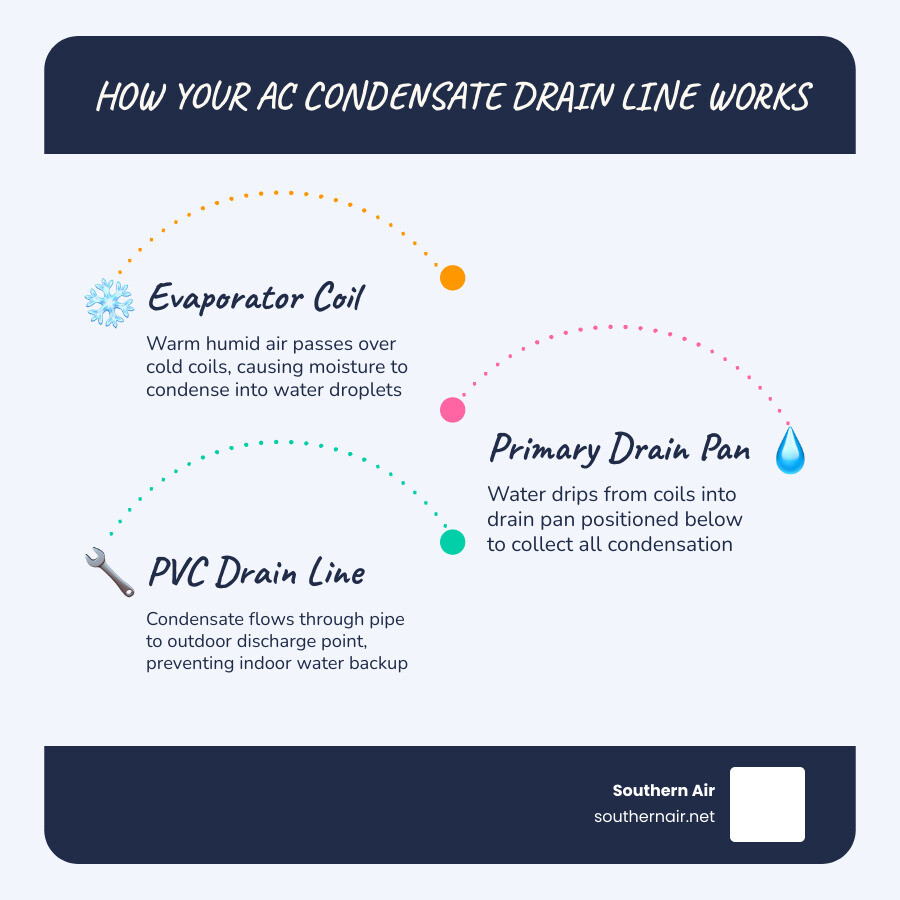
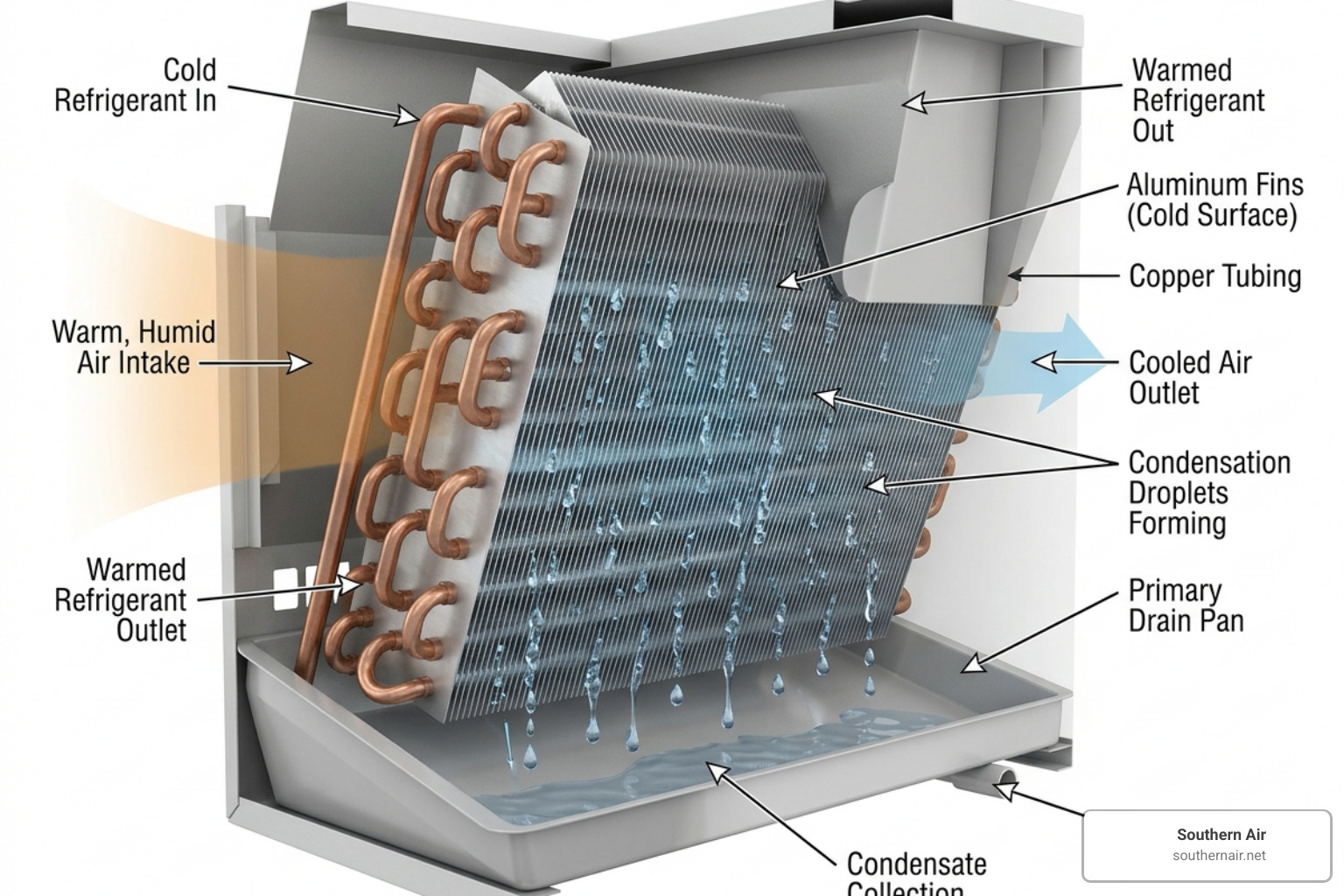
To understand why AC drain line cleaning is so vital, we first have to look at how your air conditioner actually works. Think of your AC like a giant dehumidifier. As the system pulls warm, humid Florida air over the cold evaporator coil, the moisture in the air condenses into liquid water, just like droplets forming on a cold glass of sweet tea on a July afternoon in Palatka.
This water drips off the coils and into a primary drain pan. From there, it flows through a PVC pipe called the condensate drain line and is funneled safely outside your home. In a perfect world, this process happens silently and efficiently. However, because that water is often stagnant and the environment is dark and warm, it becomes a perfect place for mold and algae growth.
In many North Florida homes, you’ll also find a secondary drain pan located underneath the unit. This is your backup protection. If the primary line clogs, the water overflows into this secondary pan. If you see water here, it’s a major red flag.
Because we live in such a high-humidity environment, our systems produce gallons of water every single day. This constant moisture makes regular AC maintenance absolutely essential. Without it, that 30 to 40% statistic for drain-related service calls becomes a very real risk for your home.
Common Signs You Need AC Drain Line Cleaning
How do you know if your drain line is backing up? Usually, your system will try to tell you before the dripping begins. Here are the most common signs we see in the field:
- Standing water: If you look at your indoor unit and see water pooling in the pan or on the floor, you have a blockage.
- Musty odors: If your vents are blowing air that smells damp or stale, it’s likely mold or biofilm growing in the drain line.
- High indoor humidity: If the house feels sticky despite the AC running, the moisture isn’t being evacuated properly. This is a common reason why your AC isn’t blowing cold air effectively.
- System shutdowns: Most modern units have a safety float switch. When the water backs up, the switch floats up and cuts power to the system to prevent a flood. If your AC suddenly won’t turn on, check the drain pan first.
- Water spots: If your AC is in the attic, you might notice brown water spots on your ceiling. This is an emergency, so turn the system off immediately to prevent additional damage.
Step-by-Step Guide to DIY AC Drain Line Cleaning
If you’ve caught the problem early, you can often handle AC drain line cleaning yourself. It’s a messy job, but someone’s got to do it. Follow these steps to clear the line safely.
1. Power Down
Safety first, neighbors. Go to your thermostat and turn the system to “Off.” Then, head to your circuit breaker and flip the switch for the AC. You don’t want the system kicking on while you’re working around the drain line.
2. Locate the Access Point
Near your indoor air handler, you’ll usually see a T-shaped PVC pipe with a small cap on top. This is your access port. Most of the time, the cap isn’t glued on, so you can just pop it off with your hands.
3. Use the Wet/Dry Vacuum Method
Go outside and find where the PVC pipe ends, usually near your outdoor condenser unit. Use a wet/dry shop vac to create a seal around the end of the pipe. You can use a rag or duct tape to make it airtight. Turn the vacuum on for about 1 to 2 minutes. This is often the fastest way to clean AC drain lines.
4. Flush With Vinegar
Back inside, use a funnel to pour about one cup of distilled white vinegar into the access port. Let it sit for 30 to 60 minutes. The acetic acid in the vinegar helps break down the remaining algae and helps slow regrowth.
5. Rinse and Test
After the vinegar has done its work, flush the line with a gallon of warm water. Do not use boiling water. Head back outside to make sure the water is flowing freely out of the pipe. If it is, put the cap back on, restore power, and enjoy the cool air.
Vinegar vs. Bleach
Many people ask if they should use bleach. We generally advise against it. Here is why:
| Feature | Distilled White Vinegar | Household Bleach |
|---|---|---|
| Effectiveness | Kills algae and mold effectively | Kills biological growth, but is very harsh |
| Pipe safety | Safe for PVC and metal | Can corrode metal pans and damage PVC glue |
| Air quality | Mild scent, non-toxic | Harsh fumes can circulate through vents |
| Recommendation | Best for DIY maintenance | Avoid unless specifically directed by a pro |
Essential Tools for AC Drain Line Cleaning
To do this right, you’ll want a small AC toolkit ready to go:
- Wet/dry vacuum: Essential for removing heavy clogs.
- Distilled white vinegar: Helpful for slowing mold and algae growth in Florida humidity.
- Funnel: Keeps vinegar from spilling around your air handler.
- Flexible brush: Helps scrub the first few inches of the pipe.
- Rags: Useful for drips and cleanup.
Advanced Methods for Stubborn Clogs
Sometimes, a simple vacuum and flush won’t cut it. If the clog is solid, you may need a more advanced method.
- Siphon tubing: You can use a small 1/4-inch vinyl tube to snake into the line. Sometimes physically breaking up the algae plug is the only way to get the vinegar to reach the source.
- Compressed air: Some technicians use CO2 cartridges or small air compressors to blow out the line. Be careful. If you use too much pressure, you can blow the PVC fittings apart inside your walls.
- Nitrogen clearing: This is a professional method. We use regulated nitrogen to clear the line. It’s effective, but because of the risks of pipe damage, we don’t recommend this for DIYers. If you’re curious about how the pros handle it, read about our professional AC maintenance steps.
Preventing Future Buildup and System Damage
The best way to deal with a clogged drain line is to make sure it never happens in the first place. Here in Florida, ignoring the drain line is a recipe for water damage.
- Monthly vinegar flushes: Every time you change your air filter, pour a cup of vinegar down the drain line. This helps keep algae from getting a foothold.
- Quality air filters: A dirty filter allows dust to bypass the system and settle on the wet coils. This dust can wash into the drain pan and create the buildup that causes clogs. Changing filters is one of the easiest ways to extend the life of your unit.
- Biocide tablets: Specialized condensate pan tablets can sit in the drain pan and slowly release treatment chemicals before buildup enters the pipe.
- Drain line slope: Gravity is your friend. Make sure your drain line has a slight downward tilt all the way to the exit. If the house has settled and the pipe now slopes the wrong way, water will sit in the pipe and allow algae to grow faster.
- Professional tune-ups: At least once a year, have a pro look at your system. Our annual AC maintenance checklist includes a deep cleaning of the drain system that goes beyond what a shop vac can do.
Frequently Asked Questions
Is it safe to use compressed air or nitrogen to clear a clog?
It can be safe, but only if you know what you’re doing. If you blast too much pressure into a line with an unglued fitting, which is common in attics, you could blow the pipe apart behind a wall. If you use air, use short, controlled bursts rather than a long, steady stream. If the clog doesn’t budge, stop and call a professional.
How often should I schedule AC drain line cleaning?
In our humid North Florida climate, we recommend a DIY flush every 1 to 3 months. For a professional deep cleaning, once a year is usually sufficient as part of your regular service. You can learn more about how often to service your AC to keep your warranty valid and your home dry.
Should I use vinegar or commercial cleaners for my drain line?
Distilled vinegar is great for maintenance. However, if you already have thick biological buildup, a commercial enzymatic cleaner might be better. These cleaners use microbes to break down biofilm. Avoid caustic drain openers meant for sinks, because they can generate heat that warps your PVC pipes or creates unsafe fumes around your AC system.
Conclusion
A clogged drain line is a small problem that can lead to massive expenses if ignored. From ruined drywall to mold remediation, the costs of neglect are high. But with a little vinegar, a shop vac, and some regular attention, you can keep your home dry and your AC humming all summer long.
At Southern Air Cooling & Heating, we’ve been the comfort heroes for Palatka and the surrounding areas for over 43 years. We are family-owned and operated, and we pride ourselves on providing 5-star service to every neighbor we visit. Whether you need a quick drain clearing or a full system replacement, we’re here to help.
Ready to stop worrying about leaks? Join our Comfort Club for priority maintenance and peace of mind. Plus, if you’re dealing with a stubborn clog right now, we offer $50 off repairs to get you back in the cool.
Schedule professional AC maintenance in Palatka today and let us handle the dirty work. Whether you’re in Crescent City, Fleming Island, or right here in East Palatka, Southern Air Cooling & Heating is just a phone call away.
Request Service
Please fill out the form below to request an estimate or schedule service.
"*" indicates required fields