What Does a Mini Split Installed Cost in 2026?
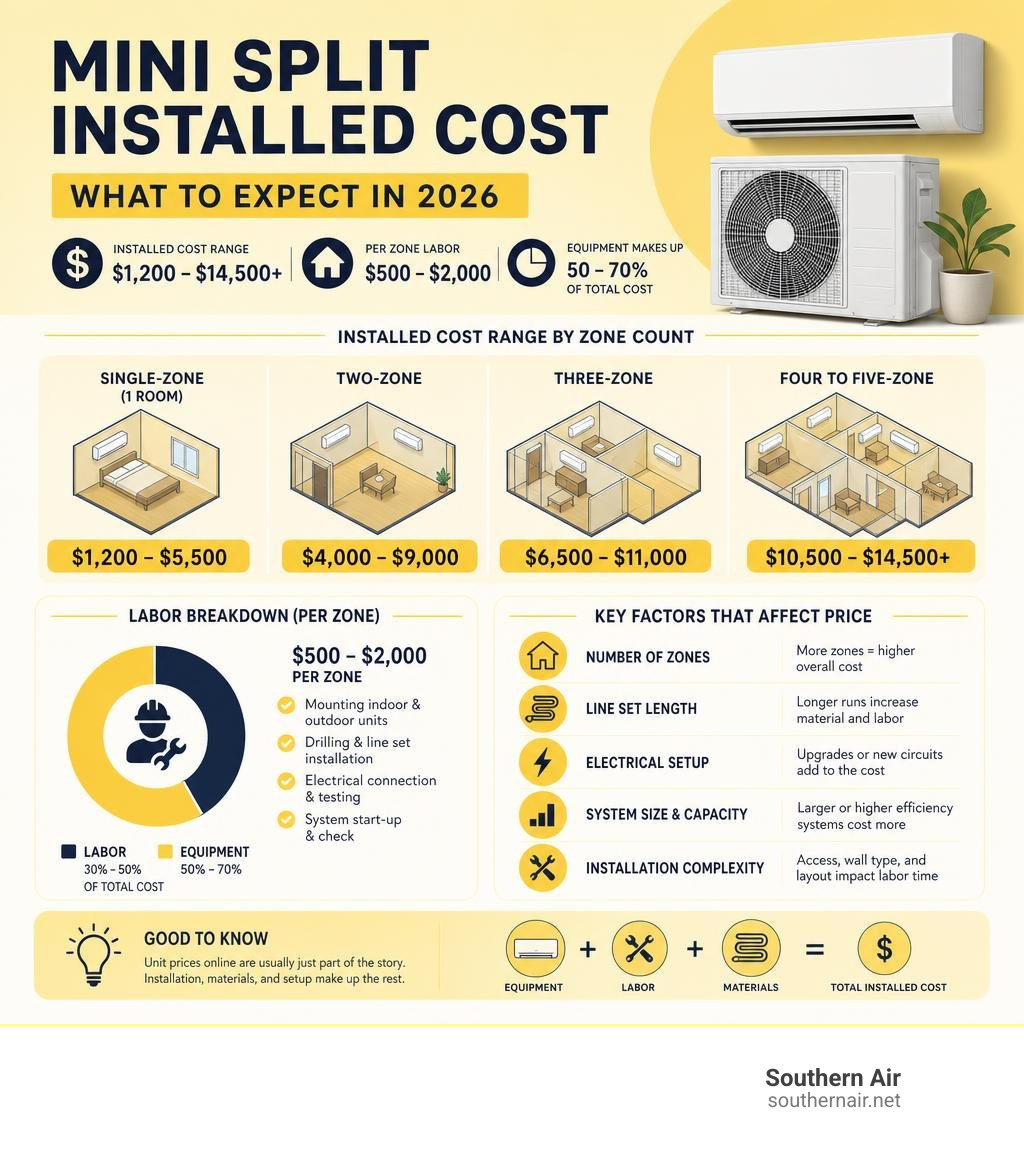
Mini split installed cost typically ranges from $1,200 to $14,500, depending on how many zones you need, the size of the system, and how complex the installation is. Here’s a quick snapshot to help you budget before reading further:
| System Type | Installed Cost Range |
|---|---|
| Single-zone (1 room) | $1,200 – $5,500 |
| Two-zone | $4,000 – $9,000 |
| Three-zone | $6,500 – $11,000 |
| Four to five-zone | $10,500 – $14,500+ |
Labor alone runs $500 to $2,000 per zone. Equipment typically makes up 50 to 70% of the total cost.
Most Florida homeowners installing a single-zone system for one bedroom or a bonus room land somewhere between $2,000 and $5,500, fully installed. If you’re cooling multiple rooms, expect to budget significantly more.
But the unit price you see online? That’s usually just half the picture. The final number depends on your home’s electrical setup, the length of the refrigerant line set, the number of zones, and local labor rates. This guide breaks all of it down clearly so you know exactly what to expect before you call a contractor.
I’m Dustin Caison, President and CEO of Southern Air Cooling & Heating, a State Certified Air Conditioning Contractor with over two decades of hands-on experience helping North Florida homeowners understand mini split installed cost and get the right system for their home. Let’s walk through everything that affects your price.
Average Mini Split Installed Cost in 2026
When you begin researching ductless mini split systems, the pricing can feel a bit overwhelming. Nationally, the overall project cost spans a wide range. However, when we look at our local North Florida communities, from Palatka and Crescent City to Interlachen and Saint Augustine, the average mini split installed cost settles into a very predictable pattern.
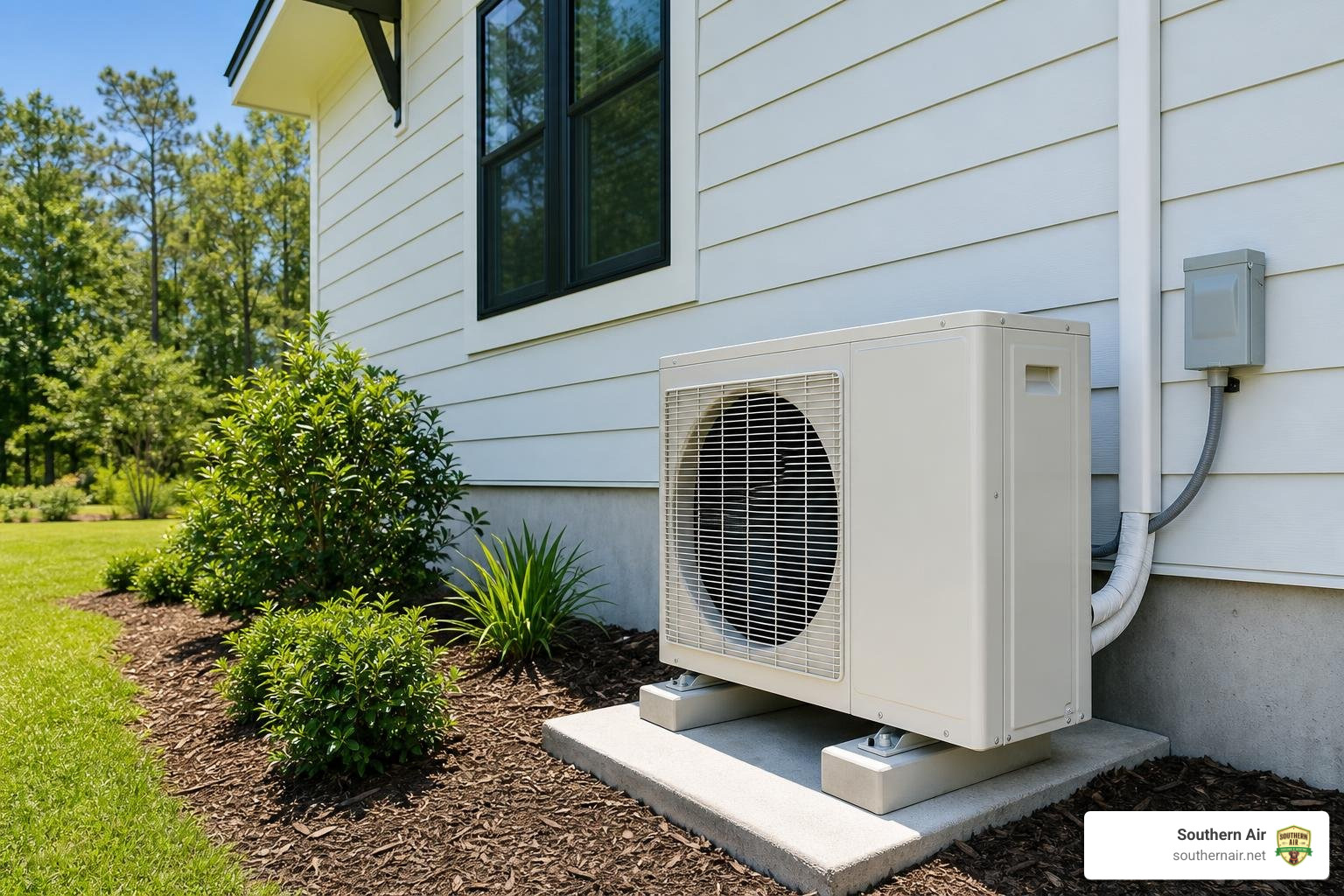
For a standard, professional installation, most of our customers pay between $3,000 and $8,500. The primary driver of this final price is not just the brand name, but the overall design of the system. Understanding what a mini split system really costs to install requires looking at both the equipment and the specialized labor required to make it run safely and efficiently in our humid climate.
Single-Zone Mini Split Installed Cost
If you are looking to cool a single space, such as a master bedroom, a home office, a converted garage, or a sunroom, a single-zone system is the perfect fit.
For a typical 12,000 BTU (1-ton) system, the equipment itself usually costs between $900 and $2,000. When you add professional labor, permits, and electrical connections, the total cost to install a mini split AC system ranges from $2,000 to $5,500.
A single-zone setup is incredibly efficient because it operates independently. It allows you to keep your bedroom ice-cold at night without wasting money to cool the rest of your house.
Multi-Zone Mini Split Installed Cost
If you want to condition multiple rooms or your entire home, you will need a multi-zone system. These setups utilize a single, high-capacity outdoor condenser connected to multiple indoor air handlers.
Multi-zone systems offer incredible flexibility, but they do require a larger upfront investment. A two-zone system typically ranges from $4,000 to $9,000, while a three-zone system runs between $6,500 and $11,000. If you need a whole-house solution with four or five zones, the price can reach $10,500 to $14,500 or more.
When planning your layout, keep in mind that meeting your mini split installation cost expectations is much easier when you design the entire system upfront. Sizing the outdoor condenser for all your planned zones from day one is significantly cheaper than trying to add extra indoor heads to an undersized condenser down the road.
Key Factors That Influence Your Installation Price
Every home in Northeast Florida is unique. A historic home in Saint Augustine will have very different installation requirements than a modern home in Fleming Island or a ranch-style house in Interlachen.
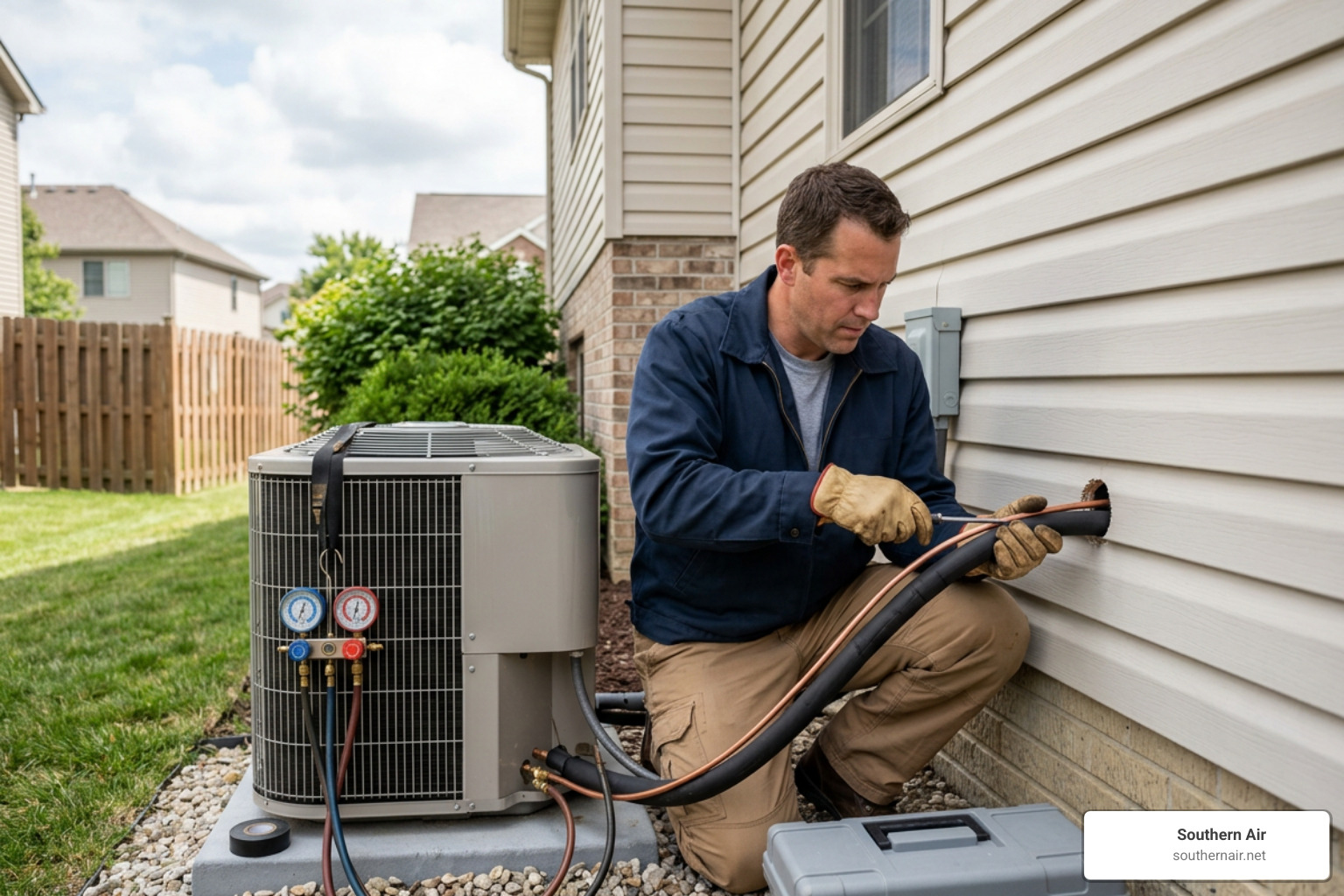
Several physical and technical factors will directly shift your final quote up or down:
- Number of Zones: Each indoor unit requires its own line set, mounting hardware, and labor, which increases the overall price.
- SEER2 Efficiency Ratings: Higher efficiency systems cost more upfront but lower your monthly electric bills.
- Electrical Panel Capacity: Older homes often require electrical upgrades to handle the new dedicated 240V circuit.
- Line Set Length: Standard installations assume the indoor and outdoor units are close together. Long runs, especially those going to a second story, require more copper line, refrigerant, and labor.
| System Sizing & Complexity | Standard Single-Zone (12,000 BTU) | Premium Multi-Zone (3 Zones / 24,000 BTU) |
|---|---|---|
| Equipment Cost | $1,000 – $2,200 | $3,500 – $6,000 |
| Labor & Commissioning | $600 – $1,200 | $1,800 – $3,500 |
| Electrical & Permitting | $400 – $800 | $700 – $1,500 |
| Total Installed Cost | $2,000 – $4,200 | $6,000 – $11,000 |
Sizing and BTU Capacity
Getting the right size system is critical. HVAC professionals use a Manual J load calculation to determine the exact BTU capacity your room needs. This calculation takes into account your room’s square footage, ceiling height, insulation quality, local climate, and window placement.
If a system is undersized, it will run constantly, driving up your power bills and wearing out the compressor. If it is oversized, the system will turn on and off rapidly, which is a process called short-cycling. Short-cycling prevents the system from properly dehumidifying your air, leaving your home feeling clammy and uncomfortable.
Electrical Work and Installation Complexity
Ductless mini splits run on dedicated electrical circuits, which usually require 240V power. Running a new line from your main electrical panel to the outdoor condenser typically adds $300 to $800 to your project.
If your home’s main panel is already fully loaded, you may need a sub-panel or a complete panel upgrade, which can add $1,500 to $4,000 to the total cost. Additionally, cutting through tough exterior walls, such as brick, concrete block, or stucco, requires extra time and specialized tools, which will increase labor costs.
Mini Split vs. Central AC: Which is the Better Value?
When it is time to replace an aging HVAC system, many homeowners wonder if they should stick with traditional central AC or switch to a ductless setup. To understand what is a ductless mini split HVAC system and how it compares to central air, you have to look at the existing structure of your home.
Homes Without Existing Ductwork
If you live in an older home that relies on window units, baseboard heat, or space heaters, installing central AC requires building a complete network of ducts. Retrofitting a home with ductwork is a major construction project that typically costs between $5,000 and $15,000 on its own.
In this scenario, a multi-zone mini split is almost always the more economical and less invasive choice. You avoid the mess of tearing open your walls and ceilings, and you do not lose valuable closet space to bulky duct runs. Plus, you completely eliminate the 30% energy loss associated with leaky ductwork.
Homes With Existing Ductwork
If your home already has functional, clean ductwork, replacing an old central AC unit is usually the cheaper upfront option. A standard central AC replacement typically costs between $3,800 and $7,500.
However, if you have hot or cold spots in your home, or if family members prefer different temperatures, a mini split system offers superior comfort. According to a comprehensive ductless system pricing guide, the higher upfront cost of a whole-home mini split can be offset over time by the incredible monthly energy savings of room-by-room zoning control.
Professional Installation vs. DIY: Is It Worth the Risk?
With pre-charged DIY mini split kits available online, it can be tempting to try to install the system yourself to save on labor costs. While a DIY project might save you $1,000 to $3,000 upfront, it comes with significant long-term risks.
First, most premium manufacturers, including Mitsubishi, Daikin, and Fujitsu, will completely void their equipment warranties if the system is not installed and commissioned by a licensed HVAC professional. If a compressor fails after a year, you will be responsible for the entire cost of the replacement.
Second, proper installation requires specialized tools. A technician must use a vacuum pump and manifold gauges to pull a deep vacuum on the refrigerant lines, removing all moisture and air before releasing the refrigerant. Skipping this step can ruin the compressor within a few seasons.
Furthermore, in 2026, the industry is transitioning to new A2L refrigerants, which require updated safety training and certified handling equipment. Consulting a guide to hiring a mini split pro is the safest way to ensure your system is installed legally, safely, and to manufacturer specifications.
Rebates, Tax Credits, and Long-Term Savings
While the initial mini split installed cost can be substantial, these systems are incredibly efficient. Thanks to advanced inverter technology, the compressor modulates its speed continuously rather than cycling fully on and off. This keeps your rooms at a perfectly steady temperature while using a fraction of the electricity of a standard system.
When deciding where to install a ductless mini split in Palatka, FL, targeting your most frequently used rooms will maximize your monthly energy savings.
Federal Tax Credits and Utility Rebates
The federal government and local utilities offer fantastic incentives to help reduce your upfront costs:
- Federal 25C Tax Credit: Under the Inflation Reduction Act, homeowners can claim a tax credit of 30% of the total installed cost, up to $2,000, for qualifying ENERGY STAR certified heat pump mini splits.
- Local Utility Rebates: Many local power companies offer cash-back rebates for upgrading to high-efficiency cooling systems.
- Income-Qualified Programs: Some state-level programs provide additional rebates for families looking to lower their energy costs.
Frequently Asked Questions About Mini Split Installation
How long does a typical mini split installation take?
A straightforward single-zone installation usually takes 4 to 8 hours, which means our crew can have your new system running in less than a day. Multi-zone systems are more complex and typically take 1 to 3 days, depending on the number of indoor heads and the complexity of the line set routing.
What does a standard professional installation quote include?
A professional, transparent quote from Southern Air Cooling & Heating is fully itemized. It includes the indoor and outdoor units, the copper line sets, line set covers to keep the exterior of your home looking clean, a concrete condenser pad or wall bracket, all electrical wiring, safety switches, permit fees, and the labor to install and test the system.
Do mini split systems require a lot of maintenance?
Mini splits require very simple, regular maintenance. The indoor units have washable mesh filters that you should slide out and rinse under a tap every two to four weeks, especially during the heavy cooling season. We also recommend scheduling a professional deep cleaning once a year to keep the blower wheels and coils free of dust and mold.
Conclusion
Investing in a ductless mini split system is one of the best ways to upgrade your home’s comfort and cut your monthly energy bills. While the mini split installed cost varies based on your specific needs, working with an experienced, local team ensures you get a system that is sized perfectly and installed safely.
At Southern Air Cooling & Heating, we have spent over 43 years providing family-owned excellence and 5-star service to our neighbors throughout Palatka, Crescent City, Interlachen, and the surrounding areas. Whether you need to cool a single hot room or want to design a whole-home comfort system, we are here to help.
Ready to get a precise, honest quote for your home? Contact us today to explore our professional ductless mini split services and schedule your free, no-obligation estimate!
Request Service
Please fill out the form below to request an estimate or schedule service.
"*" indicates required fields