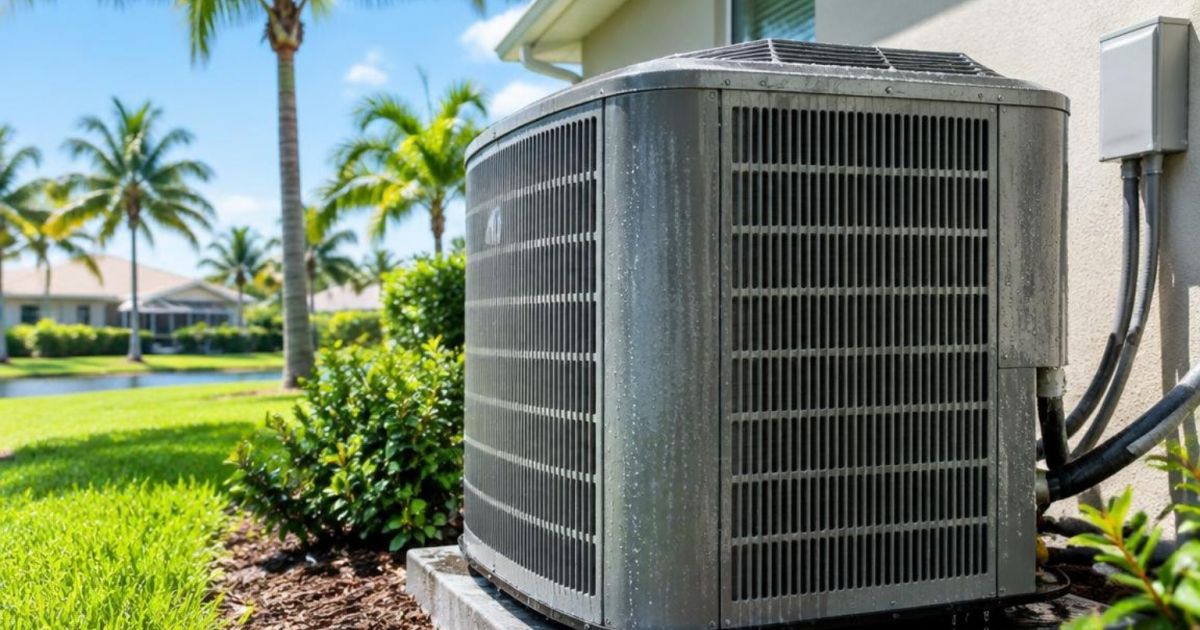
Why Your AC Unit Not Kicking On Outside Deserves Immediate Attention
If your AC unit not kicking on outside is your problem right now, here are the most likely causes and what to check first:
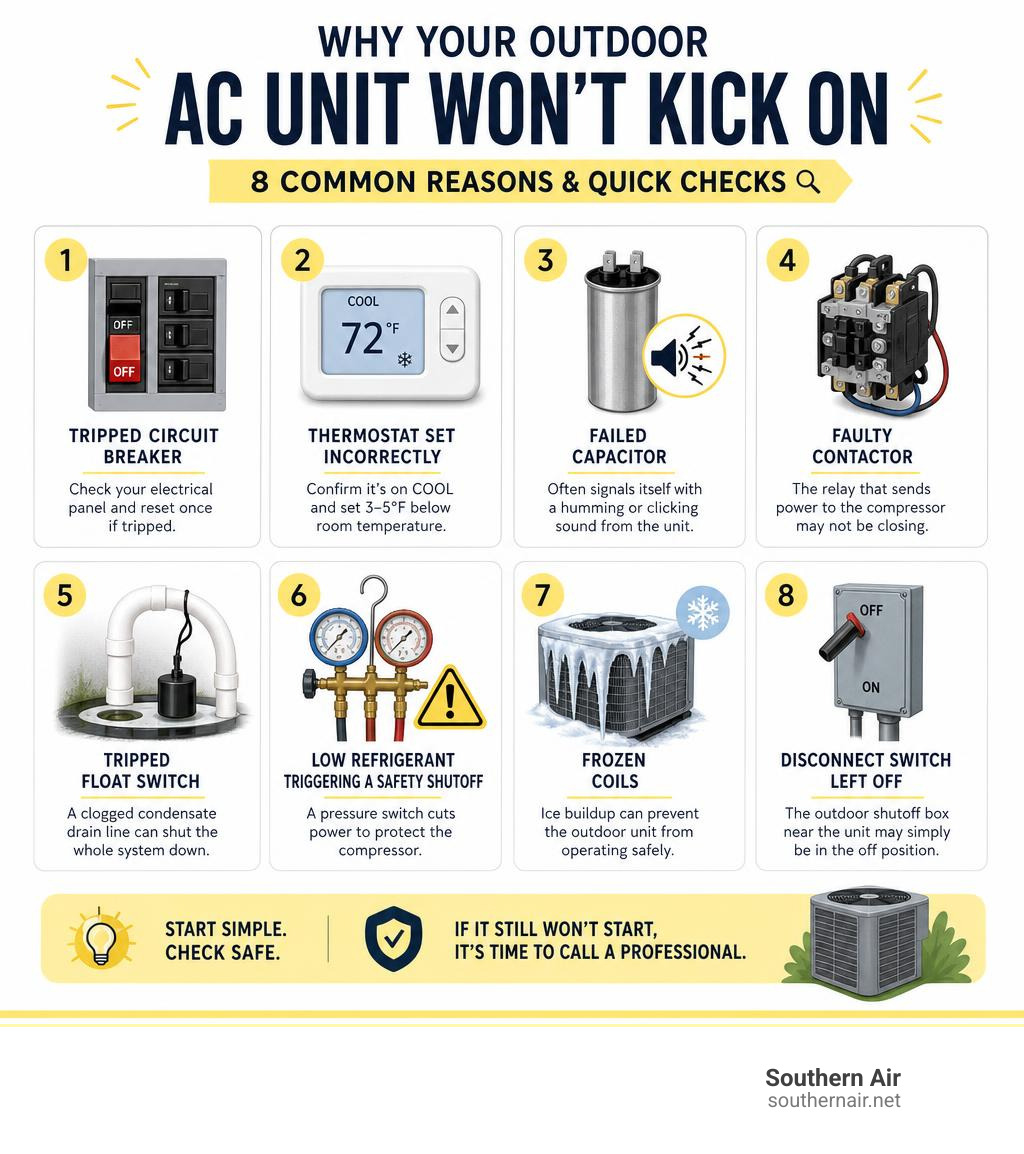
Most common reasons your outdoor AC unit won’t start:
- Tripped circuit breaker – Check your electrical panel and reset once if tripped
- Thermostat set incorrectly – Confirm it’s on COOL and set 3-5°F below room temperature
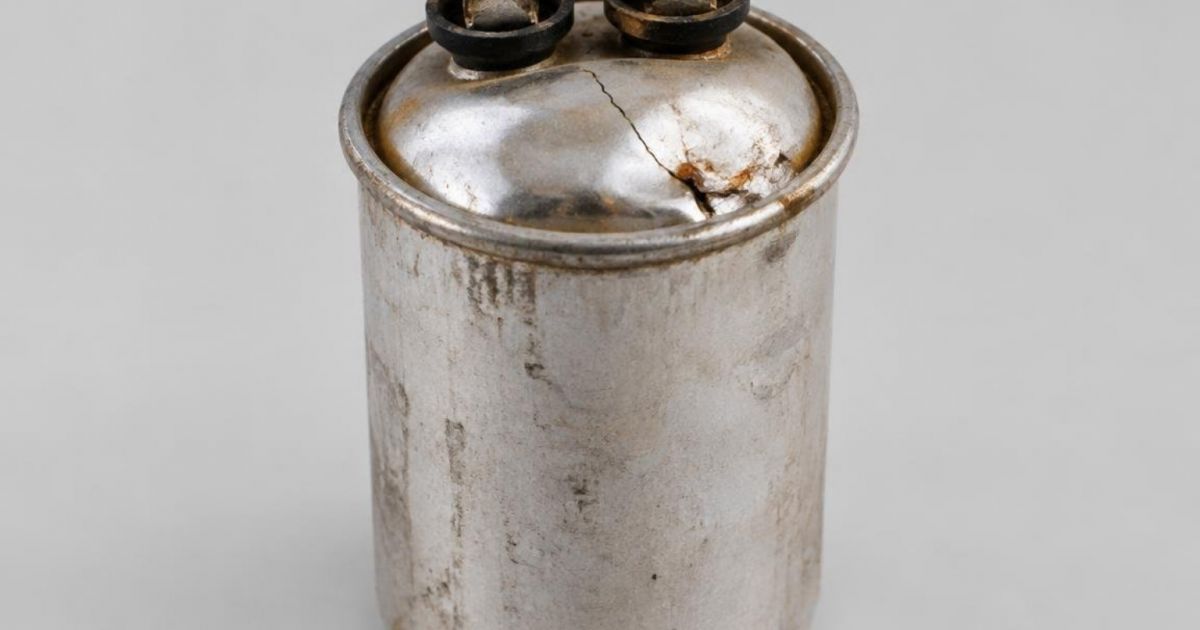
- Failed capacitor – Often signals itself with a humming or clicking sound from the unit
- Faulty contactor – The relay that sends power to the compressor may not be closing
- Tripped float switch – A clogged condensate drain line can shut the whole system down
- Low refrigerant triggering a safety shutoff – A pressure switch cuts power to protect the compressor
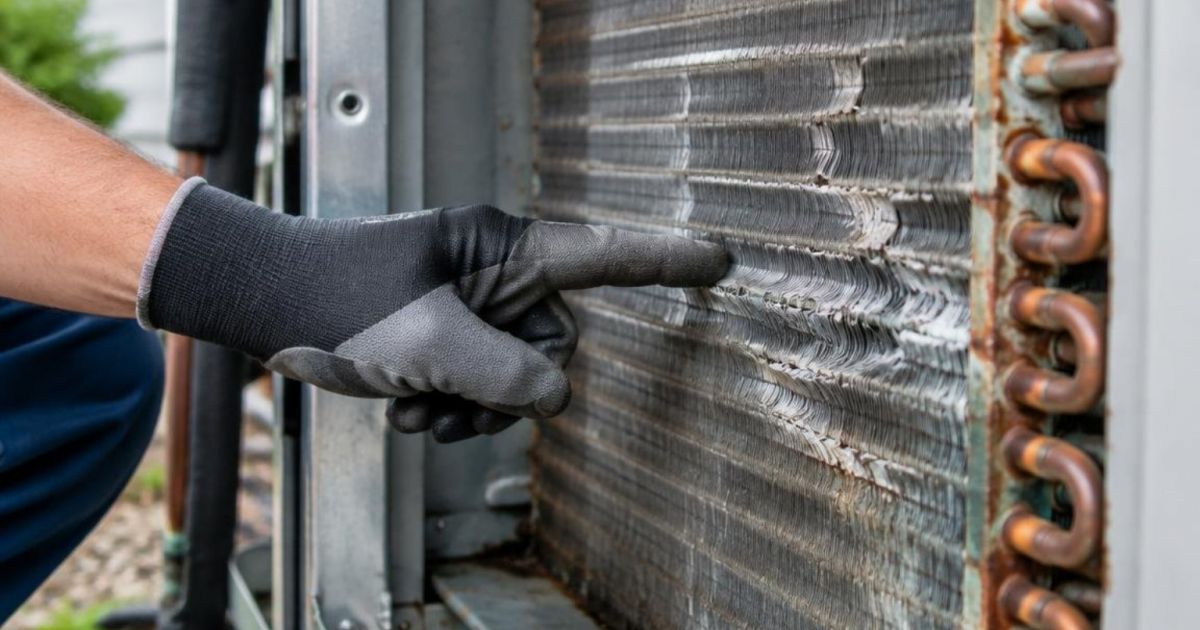
- Frozen coils – Ice buildup can prevent the outdoor unit from operating safely
- Disconnect switch left off – The outdoor shutoff box near the unit may simply be in the off position
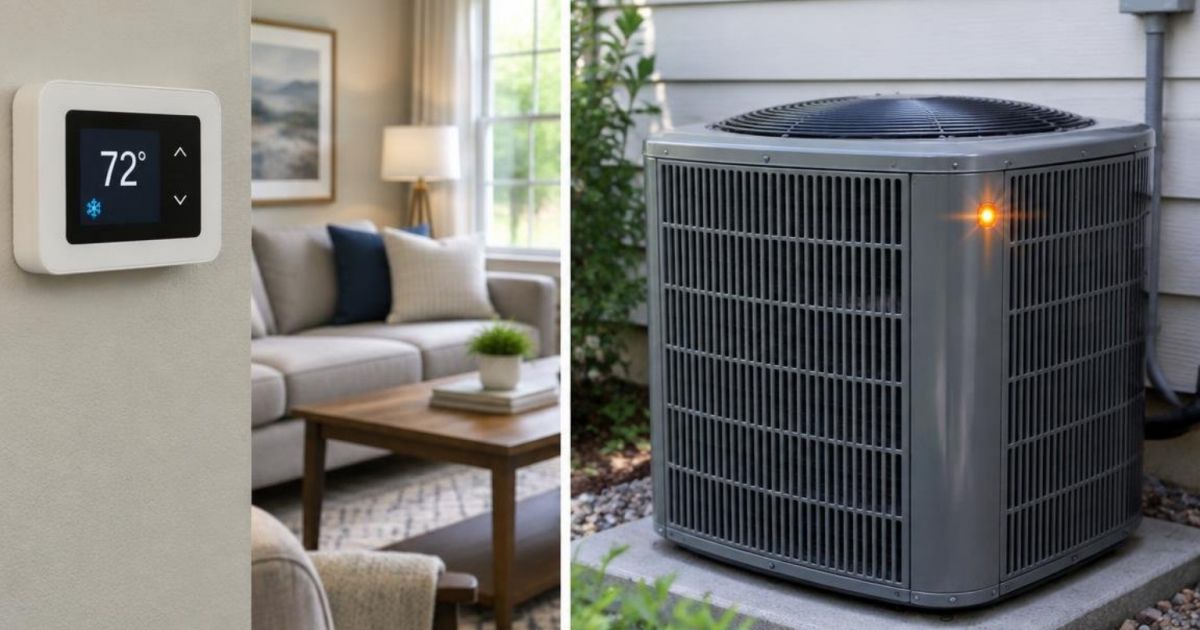
Picture this: it’s a sweltering summer afternoon in North Florida, and you walk outside expecting to hear your condenser humming away. Instead, you’re met with complete silence. The indoor unit is running, air is moving through the vents, but nothing coming out feels cold. Something is clearly wrong outside.
This situation is more common than most homeowners realize, and the good news is that many of the causes are diagnosable before you ever pick up the phone. That said, some causes are serious enough that ignoring them for even a few hours can turn a simple repair into a costly one.
This guide walks you through every likely reason your outdoor AC unit has gone quiet, what you can safely check yourself, and exactly when it’s time to call in a professional.
I’m Dustin Caison, President and CEO of Southern Air Cooling & Heating, a State Certified Air Conditioning Contractor with more than two decades of hands-on HVAC experience serving North Florida. In that time, I’ve diagnosed more silent condensers than I can count, and the patterns behind an AC unit not kicking on outside are almost always traceable to a handful of common causes.
Why Your AC Unit Not Kicking On Outside Is a Major Problem
When your indoor blower fan is running but the outdoor condenser remains silent, your home is not actually being cooled. Instead, the system is simply circulating room-temperature air. This is because a split-system AC relies on two distinct voltage circuits to complete the cooling cycle. The indoor air handler typically runs on a standard 110-volt circuit, whereas the outdoor condenser requires a dedicated 220-volt to 240-volt circuit to power the heavy-duty compressor and condenser fan motor.
This voltage difference explains why one half of your system can operate perfectly while the other half sits completely dead. However, letting the indoor unit run while the outdoor unit is offline is a recipe for system damage. Without the outdoor unit active, heat exchange cannot take place. This lack of heat exchange can cause the indoor evaporator coil to drop below freezing, leading to ice buildup that blocks airflow completely.
Furthermore, running the system under these conditions can cause liquid refrigerant to flood back into the compressor. Compressors are designed to pump gas, not liquid, and liquid slugging can destroy the compressor motor entirely. Protecting your compressor is paramount because it is the most expensive component in your HVAC system. Ignoring a silent outdoor unit can quickly escalate a minor electrical issue into a complete system replacement. Understanding these risks is crucial, which is why we always emphasize the risks of putting off AC repair services to our neighbors throughout North Florida.
Common Electrical, Mechanical, and Airflow Causes for a Silent Condenser
To help you understand what might be happening with your system, we have compiled a quick reference guide comparing common symptoms with their most likely root causes.
| Symptom | Likely Root Cause | Recommended Action |
|---|---|---|
| Indoor fan runs, outdoor unit is completely silent with no sound | Tripped breaker or open disconnect switch | Check the main electrical panel and outdoor disconnect box. |
| Outdoor unit makes a faint humming sound but the fan does not spin | Failed dual capacitor | Turn off the system immediately and call for professional service. |
| The condenser clicks repeatedly when trying to start | Defective or pitted contactor switch | Schedule an HVAC technician to inspect and replace the contactor. |
| System runs for a few minutes then shuts down completely | Tripped float switch due to water backup | Inspect and clear the condensate drain line. |
| Ice is visible on the copper lines leading to the outdoor unit | Restricted airflow or low refrigerant levels | Turn off the AC, replace the air filter, and allow the coils to thaw. |
Thermostat Communication Issues and Your AC Unit Not Kicking On Outside
The thermostat is the brain of your home comfort system, regulating temperature by sending low-voltage signals to control boards indoors and outdoors. If your AC unit not kicking on outside is the primary issue, the problem might actually start on your living room wall.
A thermostat requires a steady supply of power to communicate with the outdoor unit. If the batteries are weak, the display might still light up, but the device may lack the voltage required to close the cooling relay and send a 24-volt signal to the outdoor contactor. Additionally, loose low-voltage control wiring or a malfunctioning thermostat control board can prevent this signal from ever reaching the condenser.
Before assuming you have a major mechanical failure, it is always wise to verify your settings. Ensure the thermostat is firmly set to COOL and that the target temperature is set at least three to five degrees below the current room temperature. For a deeper dive into control and power issues, you can review our practical troubleshooting tips for AC systems that won’t turn on.
Tripped Circuit Breakers and Power Supply Failures
Because your outdoor condenser draws a significant amount of electricity, it is protected by a dedicated double-pole circuit breaker inside your home’s main electrical panel. If a power surge occurs, or if a component inside the unit draws too much current, this breaker will trip to protect your home’s electrical wiring from overheating.
Additionally, local building codes require an outdoor disconnect box to be mounted on the exterior wall near the condenser. This box contains a pull-out switch or a dedicated set of cartridge fuses. If a fuse blows inside this disconnect box, the outdoor unit will lose all power while the indoor unit continues to run on its separate 110-volt circuit.
If you find a tripped breaker, you can reset it once. However, if the breaker trips again immediately, do not attempt to reset it a second time. Repeatedly forcing a tripped breaker to close can cause severe electrical damage or lead to an electrical fire. We discuss these electrical power supply failures in detail in our guide on 8 reasons your AC won’t turn on and what to do next.
Failed Capacitors and Contactors Preventing Startup
When it comes to the physical components inside your outdoor unit, capacitors and contactors are the most common culprits behind a silent system. In fact, industry data shows that approximately 90% of all AC issues stem from bad capacitors and contactor switches.
A dual capacitor acts like a temporary battery, storing electrical energy and releasing it in a powerful burst to help start both the compressor and the condenser fan motor. Over time, extreme summer heat and voltage fluctuations cause these capacitors to degrade, bulge, or leak oil. When a capacitor fails, the compressor or fan motor will try to start but will not have the electrical torque to do so, often resulting in a distinct buzzing or humming noise.
The contactor switch is an electrical relay that physically closes when the thermostat calls for cooling, allowing high-voltage electricity to flow into the compressor and fan. If the contactor’s electrical contacts become pitted, dirty, or infested with small insects, the connection will fail. You can read more about how these electrical components interact by visiting the official manufacturer guide on outdoor AC unit not turning on Lennox.com, which details how vital it is to address capacitor issues before they damage your compressor motor.
Clogged Condensate Lines and Tripped Float Switches
Your AC system does more than just cool the air, it also acts as a powerful dehumidifier. As warm, humid air passes over the cold indoor evaporator coil, moisture condenses on the metal fins and drips into a drain pan. This water is then carried out of your home through a condensate drain line.
In humid regions like Palatka, FL, and Saint Augustine, FL, algae, mold, and debris can easily build up inside this narrow drain pipe, causing a complete clog. To prevent water from overflowing and ruining your ceilings or floors, HVAC systems are equipped with a condensate safety float switch. When water backs up in the drain pan or line, the float rises, opening the control circuit and immediately shutting down the outdoor unit to stop the production of more moisture.
If your system has suddenly stopped running and you notice water pooling around your indoor furnace or air handler, a clogged drain line is the highly likely cause. If you find yourself in this situation during a period of extreme heat, you may wonder, can I call emergency maintenance for an AC that isn’t working? Yes, quick action can prevent both water damage to your home and prolonged discomfort.
Frozen Coils and Low Refrigerant Levels
A properly functioning AC system relies on a precise charge of refrigerant to absorb heat from inside your home and release it outdoors. If your system develops a refrigerant leak, the drop in pressure will cause the indoor evaporator coil to become extremely cold, freezing any moisture that condenses on it.
As ice builds up on the indoor coil, it acts as an insulator, blocking heat transfer and causing the entire system to freeze up. To protect the compressor from being damaged by low pressures or liquid refrigerant floodback, your outdoor unit is equipped with a low-pressure safety switch. Once refrigerant levels drop below a safe threshold, this switch trips and cuts power to the compressor.
It is important to remember that an AC system does not consume refrigerant, it simply circulates it in a closed loop. If your system is low on refrigerant, it means there is a physical leak in the copper lines or coils that must be located and repaired by a certified technician. Running a system with low refrigerant will eventually destroy the compressor. If you are noticing ice on your lines or vents blowing warm air, read our helpful article explaining why your AC is not blowing cold air.
Safe DIY Troubleshooting Steps for Homeowners
Step-by-Step Checks for Your AC Unit Not Kicking On Outside
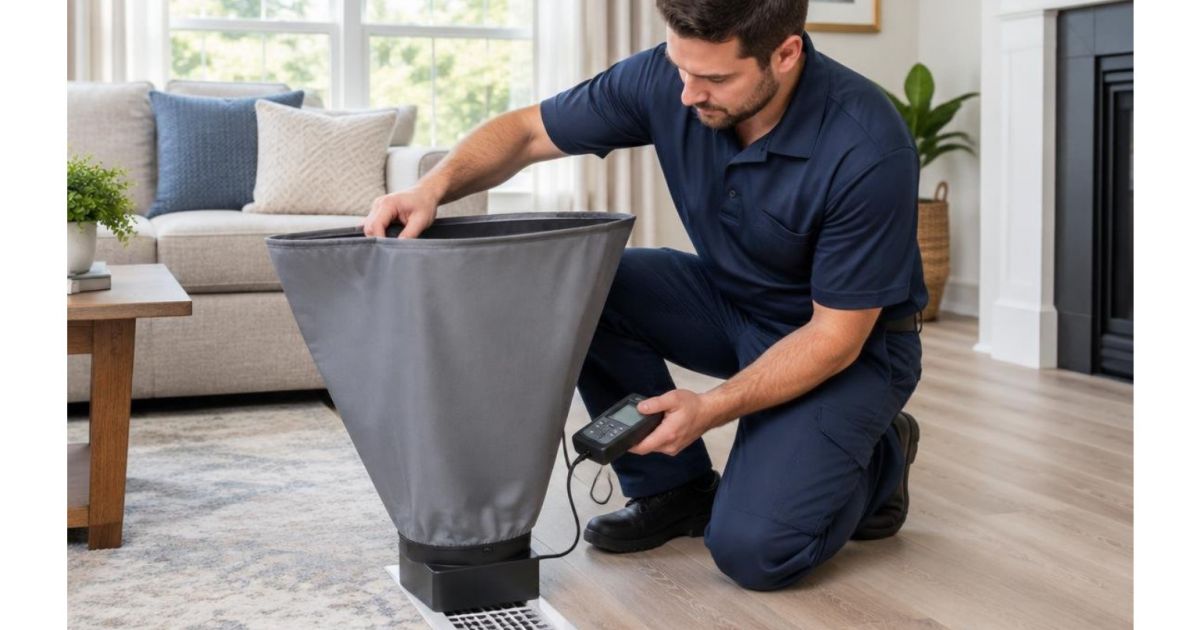
Before calling for professional repairs, there are several safe, simple steps you can take to rule out minor issues. Always prioritize safety and never open up electrical panels or touch internal wiring yourself.

- Verify the Thermostat Settings: Ensure your thermostat is set to COOL and the temperature is set at least three to five degrees below the current indoor temperature. If the screen is blank, replace the batteries with fresh ones.
- Check the Air Filter: A heavily clogged air filter restricts airflow, which can freeze the indoor coil and trip safety switches. If the filter is dirty, replace it immediately and let the system rest.
- Inspect the Outdoor Disconnect Switch: Locate the metal disconnect box mounted on the wall near your outdoor unit. Ensure the switch is fully in the ON position or that the pull-out plug is securely inserted.
- Check the Main Electrical Panel: Find your home’s main breaker panel and look for the breaker labeled AC or Condenser. If it has tripped, it will be sitting in the middle position. Flip it completely to the OFF position first, then flip it back to the ON position.
- Clear Debris Around the Condenser: Walk outside and ensure there are at least two feet of clear space around your outdoor unit. Clear away leaves, tall grass, weeds, or mulch that could block airflow and cause the system to overheat.
- Check the Condensate Drain and Float Switch: Inspect your indoor drain line and safety switch. If you see standing water in the drain pan, you can use a wet/dry vacuum to clear the clog from the outdoor end of the drain line.
- Perform a System Reset: Turn the system completely off at the thermostat. Switch off the breakers for both the indoor and outdoor units. Wait five to ten minutes to allow the system’s internal safety timers to reset, then turn the breakers back on and set the thermostat to COOL.
When to Stop DIY and Call a Professional
While basic troubleshooting is safe and highly recommended, there is a clear line where DIY efforts must stop for your own safety and the health of your equipment. HVAC systems contain high-voltage electricity and pressurized chemicals that require specialized training and tools to handle safely.
You should immediately stop troubleshooting and contact a professional technician if:
- The Circuit Breaker Trips Repeatedly: If you reset the breaker once and it trips again as soon as the unit tries to start, there is a direct electrical short, a grounded compressor, or a failed motor. Forcing it to run can cause severe damage.
- You Hear Unusual Noises: Loud screeching, grinding, or heavy metal-on-metal clanking indicates mechanical failure inside the compressor or fan motor.
- You Notice a Burning Smell: A distinct electrical burning odor coming from either the indoor air handler or the outdoor unit indicates overheating wires, a burned-out motor, or a fried control board.
- You Suspect a Refrigerant Leak: Handling refrigerant requires specialized EPA Section 608 certification. It is illegal and unsafe for unlicensed individuals to handle, charge, or discharge refrigerant.
- The Compressor Is Humming but Not Starting: This is a classic sign of a failed capacitor or a locked compressor rotor, both of which require professional electrical diagnostic tools to resolve safely.
Important Safety Warning for Homeowners: While basic checks like replacing an air filter or resetting a circuit breaker are safe, you should never attempt to service internal electrical components, refrigerant lines, or complex mechanical parts yourself. If safety concerns arise, if specialized tools are required, or if you are dealing with intricate HVAC, electrical, or plumbing systems, it is vital to contact a licensed professional. If you are ever unsure about performing any troubleshooting task correctly, stop immediately and let a certified technician handle the job safely.
Frequently Asked Questions About Silent AC Condensers
Why is my outdoor AC unit not turning on but the indoor fan is running?
Your indoor and outdoor units operate on separate electrical circuits. While your indoor fan runs on a standard 110-volt circuit, the outdoor unit requires a dedicated 220-volt to 240-volt circuit. Common causes for this mismatch include a tripped outdoor circuit breaker, a blown disconnect fuse, a failed capacitor, a faulty contactor, or a tripped condensate safety float switch that has cut power to the condenser.
How do I reset my outdoor AC unit?
To safely reset your system, start by turning your thermostat completely to the OFF position. Next, head to your main electrical panel and flip the AC circuit breaker to the OFF position. Wait approximately five to ten minutes to allow the system’s internal safety delays to clear. Flip the breaker back to the ON position, return to your thermostat, set it to COOL, and select a temperature below the current room temperature.
Can a bad capacitor prevent the outdoor AC unit from starting?
Yes, a failed capacitor is one of the most common reasons an outdoor unit will not start. The capacitor acts like a battery to deliver the high-voltage electrical boost required to start the compressor and fan motor. If the capacitor is weak, bulged, or blown, the motors will not have enough starting torque to spin, leaving the outdoor unit completely silent or making a faint humming sound.
Why does my AC compressor hum but not start?
A humming compressor that fails to start usually indicates a bad capacitor, a locked rotor, or low voltage supply. The humming sound is the electrical current flowing through the motor windings as it attempts to turn over without the necessary mechanical force. If you hear this sound, turn the system off immediately at the thermostat to prevent the compressor motor from overheating and burning out.
Will low refrigerant stop my outside AC unit from kicking on?
Yes. Modern AC systems are equipped with low-pressure safety switches designed to protect the compressor. If a refrigerant leak causes system pressure to drop below a safe operating level, the safety switch will open the electrical control circuit, preventing the outdoor unit from starting up and running dry.
How long do outdoor AC condensing units typically last?
With proper annual maintenance and timely repairs, an outdoor condensing unit typically lasts between 15 and 20 years. However, individual electrical components like capacitors and contactors may need to be replaced every five to ten years due to normal wear and tear and exposure to extreme summer heat.
What does it mean if my AC clicks but doesn’t turn on outside?
A clicking sound coming from your outdoor unit usually indicates that the thermostat is successfully sending the 24-volt signal to the contactor relay, but the high-voltage power is not reaching the compressor or fan. This is often caused by a failed contactor switch with dirty or pitted contacts, a tripped main circuit breaker, or a blown fuse in the outdoor disconnect box.
Is it safe to replace an AC capacitor myself?
No, it is not recommended. Capacitors are designed to store a high-voltage electrical charge even when the power to the system is completely turned off. Touching the terminals of a charged capacitor can result in a severe, potentially life-threatening electrical shock. Replacing a capacitor should always be left to a licensed professional with the proper safety equipment.
Why does my AC breaker trip immediately after resetting it?
If your circuit breaker trips immediately after you reset it, there is a direct electrical short circuit within the system. This is commonly caused by burned or touching wires, a shorted fan motor, or a grounded compressor where the internal electrical windings have failed. Do not continue to reset the breaker, as this poses a serious electrical fire hazard.
How often should I schedule professional AC maintenance in Palatka, FL?
You should schedule professional AC maintenance at least once a year, preferably in the spring before the heavy summer cooling season begins. Regular preventative maintenance can reduce emergency repair costs by up to 40% over your system’s lifetime and ensures that components like capacitors and contactors are tested and replaced before they fail.
Conclusion
A silent outdoor AC unit on a hot day is always a cause for concern, but understanding the common causes can help you react calmly and safely. From simple thermostat settings and tripped breakers to more complex electrical issues like failed capacitors and contactors, taking a systematic approach to troubleshooting is key.
Whether you need fast AC repairs, seasonal HVAC maintenance, or a complete system replacement, the team at Southern Air Cooling & Heating is ready to help. Our family-owned business has provided 5-star service and honest home comfort solutions to our neighbors in Palatka, FL, and surrounding areas like Crescent City, FL, and Satsuma, FL, for more than 43 years. Don’t let a broken system leave you in the heat. Contact us today to schedule professional AC repair services and keep your home cool and comfortable all year long.
Request Service
Please fill out the form below to request an estimate or schedule service.
"*" indicates required fields