What to Do When Your AC Is Not Kicking On in House
If your AC is not kicking on in house, here are the most common causes and what to check first:
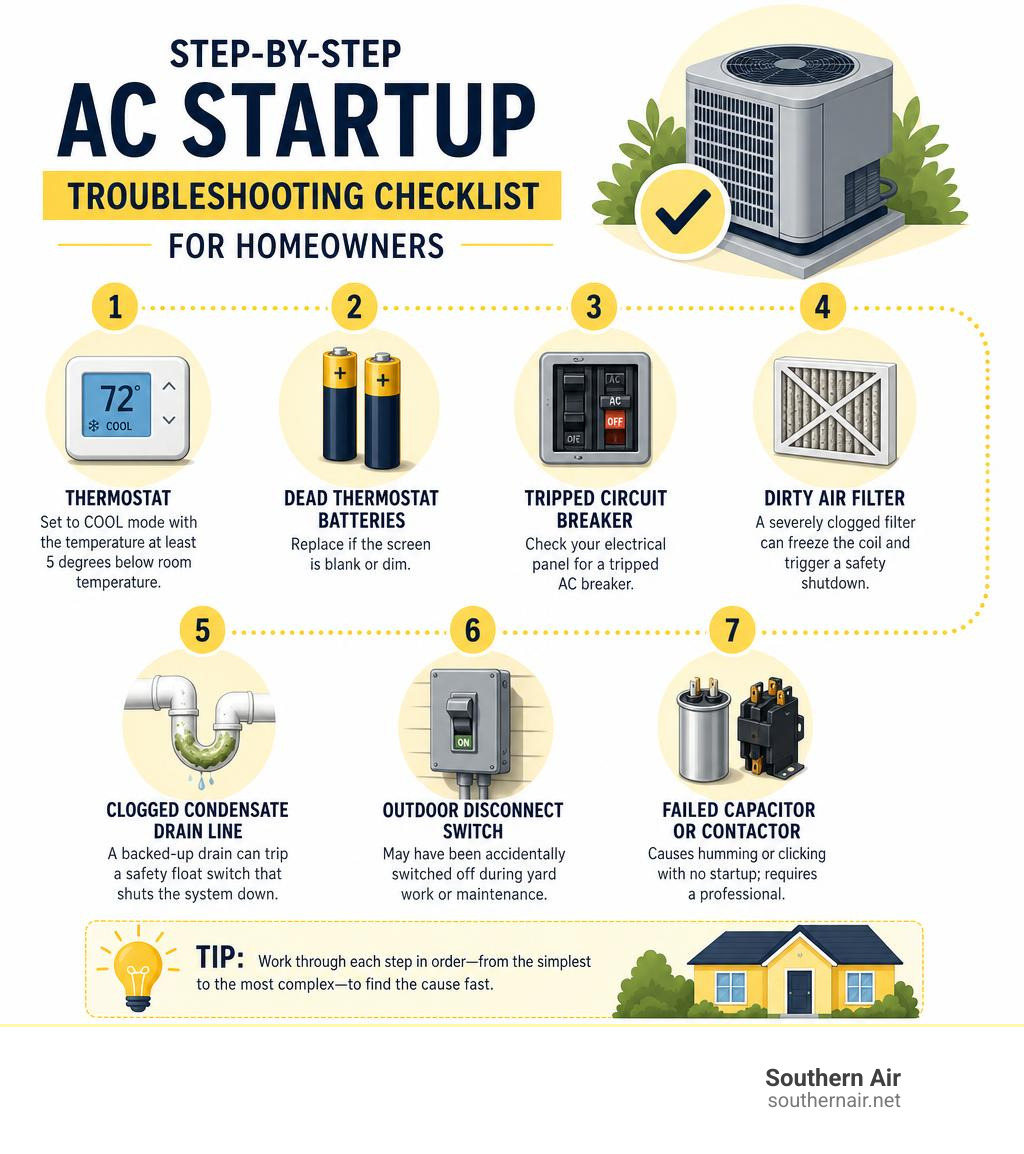
- Thermostat – Set to COOL mode with the temperature at least 5 degrees below room temperature
- Dead thermostat batteries – Replace if the screen is blank or dim
- Tripped circuit breaker – Check your electrical panel for a tripped AC breaker
- Dirty air filter – A severely clogged filter can freeze the coil and trigger a safety shutdown
- Clogged condensate drain line – A backed-up drain can trip a safety float switch that shuts the system down
- Outdoor disconnect switch – May have been accidentally switched off during yard work or maintenance
- Failed capacitor or contactor – Causes humming or clicking with no startup; requires a professional
About 30% of AC service calls turn out to be simple issues homeowners can fix themselves in minutes.
Coming home to a hot, stuffy house when the AC refuses to start is one of the most frustrating things a Florida homeowner can face. In North Florida’s brutal summer heat, a home without air conditioning can become dangerously uncomfortable within just a few hours. Before you assume the worst, and picture a massive repair bill, it helps to know that many no-start problems have simple causes. A wrong thermostat setting, a tripped breaker, or a clogged air filter are responsible for a surprising number of service calls that could have been avoided with a quick DIY check.
This guide walks you through every likely cause in order from simplest to most complex, so you can identify the problem fast and decide whether it is something you can handle yourself or a job for a licensed technician.
I’m Dustin Caison, President and CEO of Southern Air Cooling & Heating, a State Certified Air Conditioning Contractor with more than two decades of hands-on HVAC experience serving North Florida. Over the years, my team and I have responded to countless calls from homeowners dealing with an AC not kicking on in house, and we have seen how the right troubleshooting steps can save you both time and money.
Easy AC not kicking on in house word list:
- AC not switching on
- AC unit not kicking on outside
Thermostat and Control Issues: Why Your AC Is Not Kicking On in House
The thermostat is the brain of your entire heating and cooling system. When you want cool air, the thermostat sends a low-voltage electrical signal to your indoor air handler and your outdoor condenser unit to start the cooling cycle. If there is a breakdown in this communication, your system will remain completely silent.
Before looking at complex mechanical failures, we always recommend starting with the thermostat. It is the easiest component to check and often the cheapest to fix. If you want to dive deeper into these initial steps, you can read our troubleshooting tips for AC systems that won’t turn on to help narrow down the problem.
Checking Thermostat Settings When the AC Is Not Kicking On in House
It might sound overly simple, but you would be surprised how often a system is “broken” simply because of an incorrect setting. A family member, a cleaning crew, or an accidental bump can easily change the system mode or program schedules.
First, verify that the thermostat is set to COOL mode. If it was accidentally switched to HEAT or turned to the OFF position, the system will not run. Next, look at the temperature setpoint. The programmed temperature must be set at least 5 degrees below the current indoor room temperature to trigger a call for cooling.
If you just adjusted the settings and nothing happened, do not panic. Most modern digital thermostats have a built-in compressor protection delay. This delay lasts anywhere from 3 to 5 minutes to prevent the compressor from short-cycling, which can cause severe mechanical wear. Wait a few minutes to see if the outdoor unit clicks and starts up.
Replacing Dead Batteries and Verifying Power
If your thermostat screen is completely blank or very dim, the unit cannot send signals to your HVAC system. Many homeowners do not realize that even if their thermostat is hardwired to the home’s electrical system, it may still rely on AA or AAA batteries as a backup or primary power source.
Slide the thermostat off its wall mount and inspect the back or the side compartment for batteries. Replace them with fresh, high-quality alkaline batteries. If the screen remains blank after a battery replacement, your thermostat may have lost its 24V low-voltage power supply from the indoor air handler. This can happen if a safety switch has opened or if there is a loose control wire behind the thermostat faceplate. If you suspect a deeper issue with how your system is communicating, you can explore the 8 reasons your AC won’t turn on and what to do next for a complete breakdown of control wiring faults.
Electrical Power Supply Problems and Tripped Breakers
Your central air conditioner consumes more electricity than almost any other appliance in your home. Because of this high power demand, the system is designed with multiple electrical safety devices, including circuit breakers, fuses, and disconnect switches. If any of these devices detect an electrical spike, overload, or short circuit, they will immediately cut power to protect your equipment and your home from electrical fires.
Inspecting the Circuit Breaker and Fuses
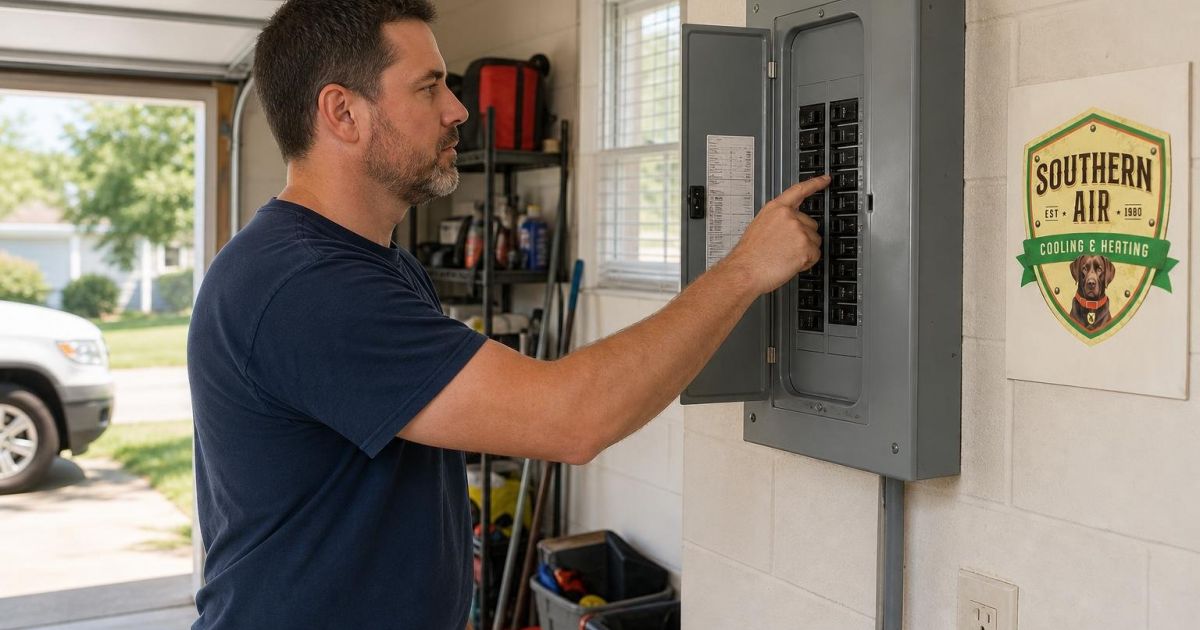
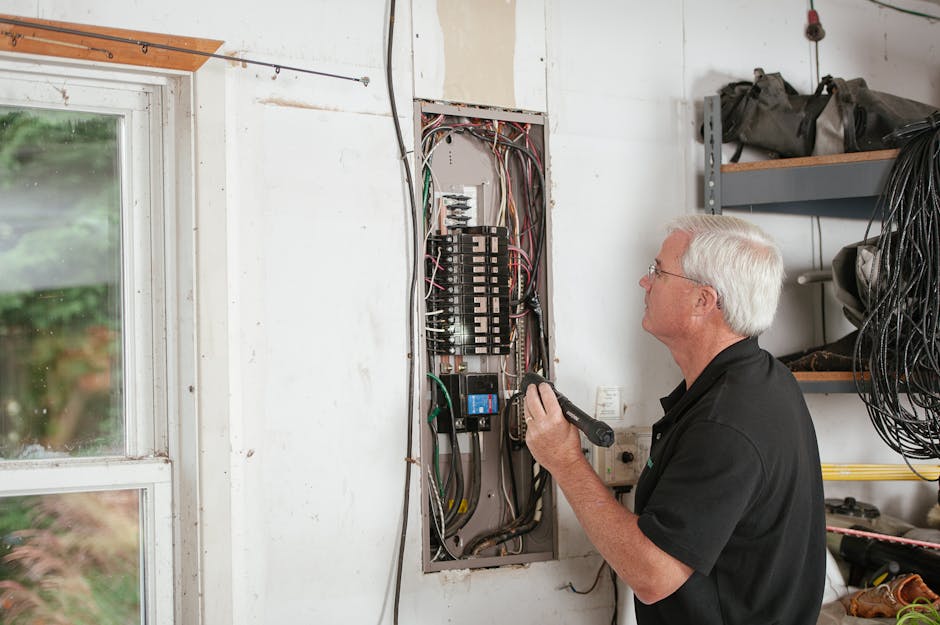
When your AC not kicking on in house is caused by an electrical interruption, the first place to look is your main home electrical panel. Your central AC system actually uses two separate circuit breakers: one for the indoor blower motor (labeled “Air Handler” or “Furnace”) and a larger double-pole breaker for the outdoor condenser unit (labeled “AC” or “Condenser”).
Locate your electrical panel and look for any breakers that are not fully in the ON position. A tripped breaker will usually be resting in the middle position, or it may show a red indicator window. To reset a tripped breaker:
- Turn the switch completely to the OFF position first.
- Push it firmly until you hear a distinct click.
- Switch it back to the ON position.
If the breaker instantly trips again, do not try to reset it a second time. A breaker that trips repeatedly is a clear warning sign of a serious electrical issue, such as a shorted wire, a failed compressor, or a bad capacitor. Forcing a tripped breaker to stay on can cause permanent damage to your system or create an electrical hazard.
Locating the Indoor and Outdoor Disconnect Switches
In addition to the main electrical panel, your air conditioning system has local disconnect switches designed for safety during maintenance.
The indoor unit disconnect is usually a standard toggle switch (resembling a light switch) located on or directly next to your furnace or air handler in your garage, closet, or attic. It is remarkably easy to accidentally flip this switch off when retrieving items from a closet or garage. Ensure this switch is turned to the ON position.
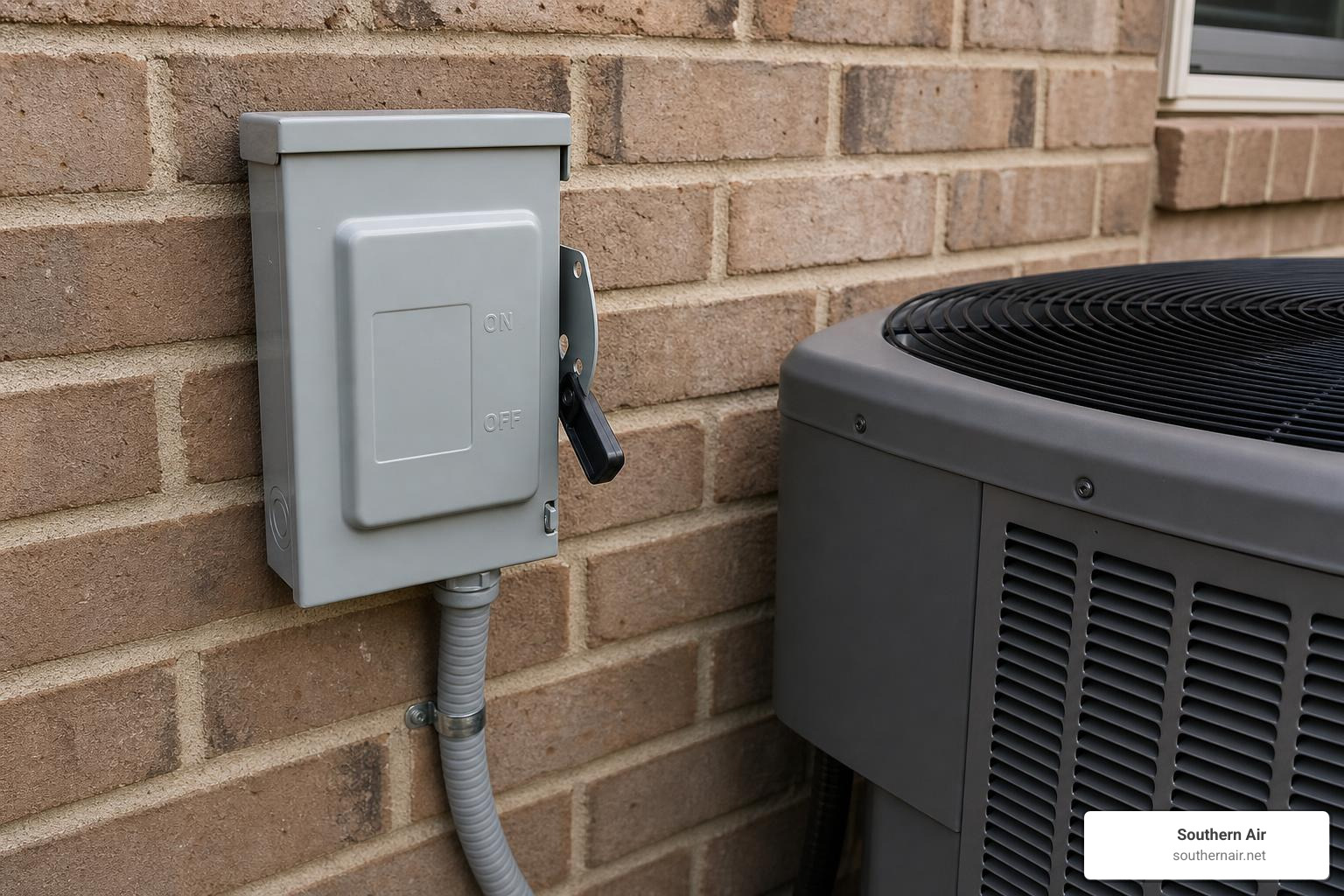
The outdoor disconnect box is mounted on the exterior wall of your home, right next to your condenser unit. Inside this weather-resistant box, you will find either a pull-out fuse block or a traditional switch. Sometimes, lawn care professionals or painters will pull this disconnect to safely work around the unit and forget to reinsert it. Visually inspect this box to ensure the pull-out block is firmly pushed into place or the switch is set to ON. Do not attempt to open or dismantle the internal wiring of this box yourself, as it carries high-voltage electricity.
Airflow Restrictions and Frozen Evaporator Coils
Proper airflow is the lifeblood of your air conditioning system. Your AC works by pulling warm, humid air from your home, passing it over a freezing-cold evaporator coil to absorb the heat, and blowing the cooled air back into your living spaces. If anything blocks this airflow, the temperature around the evaporator coil will drop rapidly, causing the moisture on the coil to freeze solid.
How a Clogged Air Filter Prevents Your AC From Starting
A dirty or clogged air filter is the single most common cause of cooling system failures. When a filter becomes heavily loaded with dust, pet dander, and debris, it chokes off the airflow entering your system.
When airflow is restricted, your system has to work twice as hard to pull air. This causes the blower motor to overheat, which can trip an internal thermal overload switch and shut down the indoor unit entirely. Furthermore, modern high-efficiency systems feature pressure sensors and safety switches that will completely disable the system if they detect that airflow has dropped below a safe operating threshold. We recommend checking your air filter every 30 to 90 days. If you hold your filter up to a light and cannot see any light passing through the fibers, it is time for a replacement.
Identifying and Thawing a Frozen Evaporator Coil
If your air filter was clogged for an extended period, or if your system is low on refrigerant, your indoor evaporator coil will likely freeze. You can diagnose a frozen coil by looking for these telltale signs:
- Ice visible on the copper refrigerant lines leading into your indoor unit
- A layer of frost or solid ice coating the evaporator coil itself
- Water pooling around the base of your indoor air handler as the ice slowly melts
- Warm air blowing from your vents before the system finally shuts down completely
If your system has frozen, you must thaw it completely before attempting to run it again. Turn your thermostat from COOL to OFF, and switch the fan setting from AUTO to ON. This keeps the indoor fan running to blow warm air over the frozen coil, speeding up the thawing process. Be prepared to wait up to 24 hours for a heavily frozen coil to melt completely. Keep some towels handy to catch any water overflow. If you are wondering why your system stopped cooling in the first place, our guide on why is my AC not blowing cold air covers the primary causes of ice buildup and airflow blockages.
Drainage Issues and Safety Switch Activations
As your air conditioner cools your home, it also acts as a powerful dehumidifier. As warm air passes over the cold evaporator coil, moisture condenses on the metal fins and drips down into a drain pan. This water is then directed out of your home through a PVC pipe called the condensate drain line.
In humid climates like Palatka, FL, an AC system can produce several gallons of water every single day. If this water cannot drain properly, it can quickly back up and cause major water damage to your ceilings, walls, and floors.
Clearing a Clogged Condensate Drain Line
Because the condensate drain line is constantly wet and warm, it is a breeding ground for algae, mold, and slime. Over time, these organic materials build up inside the PVC pipe, creating a thick clog that prevents water from flowing out of your home.
You can safely clear a clogged drain line using a common wet/dry shop vacuum. Go outside to the location where your drain line exits your home (usually near the outdoor condenser unit). Fit the vacuum hose tightly over the end of the PVC pipe and run the vacuum for 2 to 3 minutes to suck out any accumulated algae and standing water. To prevent future clogs, we recommend pouring a cup of plain white vinegar down your indoor condensate T-pipe once a month to kill any organic growth before it can form a blockage.
Understanding the Condensate Safety Float Switch
To protect your home from devastating water damage, modern building codes require the installation of a condensate safety float switch. This switch is installed in your primary drain pan or directly along the PVC drain line.
The safety switch contains a small plastic float. If the drain line clogs and water begins to back up, the float rises. Once the water reaches a critical level, the float switch opens the low-voltage control circuit, instantly cutting power to your outdoor condenser unit and sometimes your entire thermostat.
If your thermostat is blank or your AC unit not kicking on outside is silent, check your indoor drain pan. If you see standing water, a tripped safety switch is almost certainly the culprit. Once you clear the clog and the water drains away, the float will drop back down, closing the circuit and allowing your system to start up normally.
Mechanical Failures and Component Issues
If you have verified that your thermostat is working, your breakers are on, your filter is clean, and your drain line is clear, but your system still refuses to start, you are likely dealing with a mechanical or electrical component failure. These issues occur within the high-voltage sections of your outdoor unit and require specialized diagnostic tools to repair safely. If you suspect an internal component has failed, look for the 4 signs your HVAC unit may need AC service to confirm your suspicions before calling a technician.
Diagnosing a Bad AC Capacitor or Contactor
The outdoor condenser unit contains two small but critical electrical components: the capacitor and the contactor.
The capacitor acts like a heavy-duty battery that stores electrical energy. It provides the massive electrical boost needed to start up the compressor and the outdoor fan motor. Because of North Florida’s intense summer heat, capacitors are the single most common component to fail. When a capacitor goes bad, you will often hear a loud clicking or a continuous humming noise coming from your outdoor unit, but the fan and compressor will not spin. Visually, a failed capacitor will often appear swollen, bulged, or may even leak oil.
The contactor is a heavy-duty relay switch that physically closes to allow high-voltage electricity to flow to the compressor and fan motor when the thermostat calls for cooling. Over time, the silver contacts on the contactor can become pitted, burned, or even welded together, or ants may crawl inside and block the electrical connection.
When Internal Components Prevent the AC From Kicking On in House
In more severe cases, the issue may lie with the heart of your system: the compressor or the outdoor fan motor.
The compressor is responsible for pumping refrigerant through your system. If the compressor overheats or suffers a mechanical failure, it may seize up entirely. A seized compressor will often trip your circuit breaker the second your system tries to start.
Additionally, a failed control board inside either your indoor air handler or your outdoor condenser can prevent the system from operating. The control board acts as the central routing station for all electrical signals; if a relay on this board burns out, the communication loop is broken. Diagnosing these advanced electrical components requires a digital multimeter, an understanding of electrical schematics, and strict adherence to electrical safety protocols.
Frequently Asked Questions About AC Startup Issues
To help you quickly diagnose your system, we have compiled a comparison table of common symptoms, followed by detailed answers to the most frequent troubleshooting questions we receive from homeowners.
| Symptom | Likely Cause | Recommended Action |
|---|---|---|
| Thermostat is working, but nothing happens | Tripped safety float switch or indoor power switch is OFF | Check drain pan for water; verify indoor toggle switch is ON |
| Indoor fan runs, but outdoor unit is silent | Tripped outdoor breaker or failed capacitor/contactor | Check main electrical panel; call an HVAC professional |
| Outdoor unit hums or clicks but does not start | Failed start or run capacitor | Turn off power immediately; call for professional repair |
| System starts up but trips the breaker instantly | Grounded compressor or severe electrical short | Do not reset breaker; call for emergency HVAC service |
| System runs briefly then shuts down | Clogged air filter or low refrigerant charge | Replace air filter; monitor for ice; schedule a technician |
Why is my AC not kicking on in house but the thermostat is on?
If your thermostat screen is lit and shows that it is actively calling for cooling, but your system remains completely silent, the problem is usually a safety shutoff or an electrical interruption down the line. The thermostat is sending the signal, but a tripped circuit breaker, a flipped indoor power switch, or a triggered condensate safety float switch is preventing that signal from reaching the actual heating and cooling components. Check your drain pan for standing water and inspect your home’s electrical panel.
Can a dirty air filter cause my AC to not turn on at all?
Yes. A severely clogged air filter can absolutely cause your system to shut down completely. When airflow is choked off, the indoor blower motor has to work significantly harder, which can cause it to overheat and trip its internal thermal safety switch. Additionally, the lack of airflow will cause your evaporator coil to freeze solid, which can trigger low-pressure safety switches that shut down the entire system to protect the compressor from damage.
How do I reset my AC unit safely?
To perform a safe hard reset of your air conditioning system, follow these steps:
- Turn your thermostat completely to the OFF position.
- Go to your main electrical panel and flip both the indoor and outdoor AC circuit breakers to OFF.
- Wait at least 10 minutes to allow the system’s internal pressures to equalize and the control boards to fully power down.
- Flip both circuit breakers back to the ON position.
- Set your thermostat back to COOL and select a temperature at least 5 degrees below the room temperature.
- Wait 5 minutes for the system’s built-in start delay to clear.
What does it mean if the indoor fan runs but the outdoor unit does not?
When your indoor blower fan is running but your outdoor condenser unit is completely silent, it means your indoor unit has power and is responding to the thermostat, but the outdoor unit is not receiving electricity or has suffered a component failure. This is commonly caused by a tripped outdoor circuit breaker, a blown fuse in the outdoor disconnect box, a failed start capacitor, or a broken low-voltage control wire running between the indoor and outdoor units.
Is it safe to keep resetting a tripped AC breaker?
No, it is highly unsafe to repeatedly reset a tripped breaker. A circuit breaker only trips when it detects an electrical current that exceeds safe limits. If you reset the breaker and it immediately trips again, this indicates a direct electrical short, a seized motor, or a failing compressor. Forcing the breaker to reset repeatedly can cause the electrical wiring to overheat, presenting a severe fire hazard and causing permanent, expensive damage to your system’s compressor.
How do I know if my AC capacitor is bad?
The most common signs of a failed capacitor include a loud clicking or humming noise coming from your outdoor condenser unit when it tries to start, a fan blade that will not spin on its own but will spin if gently nudged with a stick, or a system that repeatedly trips the breaker. Visually, a bad capacitor will often have a bulged or domed top instead of being perfectly flat, and you may see oily residue leaking from its terminals.
How long should a typical central air conditioner last?
A typical central air conditioning system in North Florida has an average lifespan of 10 to 15 years. With excellent preventative maintenance, some systems can last up to 20 years. However, our local climate features high humidity, intense summer heat, and salt air in coastal areas, which can cause components to wear out faster than they would in milder regions. Regular professional maintenance is key to maximizing your system’s operational lifespan.
What should I do if I see ice on my AC unit?
If you see ice on your indoor evaporator coil or the copper refrigerant lines outside, you should immediately turn your thermostat to the OFF position and switch the fan setting to ON. This stops the cooling cycle to prevent compressor damage while keeping the fan running to melt the ice. Do not run the system in COOL mode while ice is present. Check your air filter and replace it if it is dirty. If the ice returns after the system has fully thawed and the filter is clean, you likely have a refrigerant leak and need to call a professional.
Can I call emergency maintenance for an AC that is not working?
Yes, you can and should call for emergency maintenance if your air conditioning fails during periods of extreme summer heat, especially if your household includes elderly family members, infants, or individuals with chronic health conditions. In North Florida, indoor temperatures can quickly reach dangerous levels without cooling. If you are unsure whether your situation warrants immediate dispatch, read our guide on when to call emergency maintenance for an AC that isn’t working for more details.
When should I call an HVAC professional instead of trying DIY fixes?
While basic troubleshooting like replacing batteries, changing filters, and clearing a drain line is safe for homeowners, you should always call a professional HVAC technician if:
- Your circuit breaker trips repeatedly
- You hear loud buzzing, screaming, or grinding noises from your outdoor unit
- You suspect a refrigerant leak (indicated by persistent ice or hissing sounds)
- You are uncomfortable working around high-voltage electrical components
- Your system is still under warranty, as DIY electrical repairs can void your coverage
Conclusion
Dealing with an AC is not kicking on in house can be stressful, but taking a systematic approach to troubleshooting can help you identify the issue quickly. By starting with the simplest checks, including your thermostat settings, power switches, circuit breakers, and air filters, you can resolve about 30% of no-start issues entirely on your own without spending a dime.
However, when simple fixes do not get the cool air flowing again, it is important to recognize the limit of DIY repairs. Ignoring a persistent issue or repeatedly resetting a tripped breaker can turn a simple component replacement into a much larger, more expensive repair. To learn more about the consequences of waiting, check out our article on the risks of putting off AC repair services.
At Southern Air Cooling & Heating, we have spent more than 43 years providing family-owned excellence and 5-star service to homeowners across North Florida, including Palatka, FL, Crescent City, FL, Florahome, FL, and Green Cove Springs, FL. The best way to prevent surprise breakdowns and keep your system running at peak efficiency is through regular preventative maintenance. We invite you to join our priority Comfort Club plan to receive seasonal tune-ups, exclusive discounts, and peace of mind all year long.
Whether you need fast AC repairs, seasonal HVAC maintenance, or a complete system replacement, the team at Southern Air Cooling & Heating is ready to help. Schedule your professional AC repair services today.
Request Service
Please fill out the form below to request an estimate or schedule service.
"*" indicates required fields