Why Air Duct Sealing Is the Most Overlooked Energy Fix in Your Home
Air duct sealing is the process of closing gaps, cracks, and loose connections in your home’s ductwork so that conditioned air reaches every room as intended, instead of leaking out into attics, crawlspaces, or wall cavities.
Here is what you need to know at a glance:
- What it is: Sealing leaks and gaps in your HVAC duct system using mastic, foil tape, or aerosol-based sealants
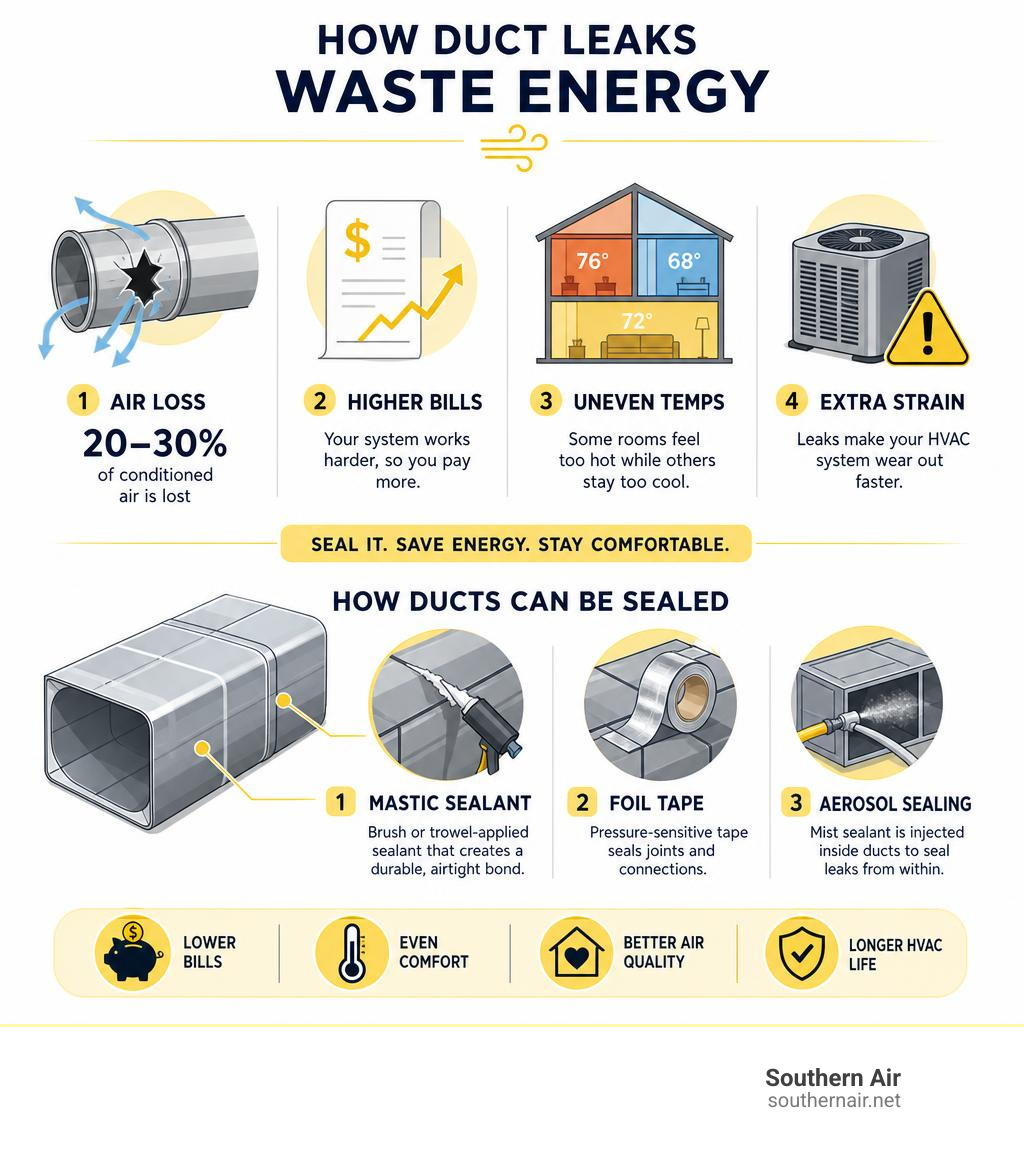
- Why it matters: The U.S. Department of Energy estimates that a typical home loses 20 to 30 percent of conditioned air through leaky ducts
- Main benefits: Lower energy bills, more even temperatures, better indoor air quality, and less strain on your HVAC system
- Key methods: Manual sealing with mastic or foil tape, and aerosol injection technology that seals ducts from the inside out
- Who should do it: A licensed HVAC contractor for most homes, especially where ducts run through unconditioned spaces
That air loss is not a small problem. If nearly a third of the air your system produces never reaches its destination, your equipment works harder, your bills go up, and some rooms stay stuffy no matter what you set the thermostat to. In Florida’s brutal summer heat, that kind of inefficiency hits especially hard. When your AC system has to run constantly to make up for lost air, you pay the price in both comfort and high utility bills.
This guide walks you through every method, material, and decision point so you can understand exactly what duct sealing involves and whether your home needs it. By addressing these hidden leaks, you can transform your home’s efficiency and enjoy a cleaner, more comfortable living environment.
I’m Dustin Caison, President and CEO of Southern Air Cooling & Heating, a State Certified Air Conditioning Contractor with more than two decades of hands-on HVAC experience serving North Florida homeowners who deal with air duct sealing challenges every season. With that background, I’ll give you straightforward, practical guidance you can actually use.
What is Air Duct Sealing and Why Does It Matter?
At its core, your HVAC system is a closed loop. The indoor unit conditions the air, the blower fan pushes it through the supply ducts into your living spaces, and the return grilles pull that air back to be reconditioned. When this loop has holes, the entire cycle breaks down. The balance of pressure within your home is disrupted, which forces your system to work much harder than it was designed to.
In North Florida locations like Palatka, FL and Saint Augustine, FL, our ductwork is typically routed through unconditioned spaces, such as hot attics, dusty crawlspaces, or dark wall cavities. When these metal or flexible tubes leak, two major problems occur simultaneously. First, expensive, cooled air escapes into your attic where it does absolutely no good. Second, the system pulls hot, dirty, humid air from those unconditioned spaces directly into your breathing air.
This is why understanding how leaky ductwork raises humidity levels inside Florida homes is so critical. When unconditioned attic air is sucked into your return ducts, it introduces massive amounts of moisture. Your AC unit has to work twice as hard to dehumidify this extra moisture, leading to rapid wear and tear, high utility bills, and a clammy indoor environment. Properly sealing these ducts restores the pressure balance of your home, ensuring your system functions exactly as the manufacturer intended. By securing these pathways, you protect your indoor air quality and keep your energy costs manageable.
Common Signs of Leaky or Poorly Performing Ductwork
Because your duct system is largely hidden behind drywall or buried under attic insulation, you cannot always see a loose connection or a torn flexible duct. However, your home will drop plenty of hints that it is time to look closer. Recognizing these signs early can save you from expensive repairs down the road.
- Spiking Utility Bills: If your energy costs are rising but your utility company has not raised rates and your heating or cooling habits have not changed, your ducts are likely losing conditioned air.
- Uneven Temperatures: Do you have one bedroom that feels like a sauna while the living room is freezing? When ducts leak, the rooms furthest from the air handler often suffer from weak airflow and poor climate control.
- Excessive Dust and Allergens: If you find yourself dusting your furniture every few days, your return ducts might be drawing in attic insulation, dirt, and outdoor pollen through cracks.
- Musty Odors When the System Starts: A damp, earthy smell coming from your registers is a strong indicator that humid crawlspace or attic air is entering your ductwork.
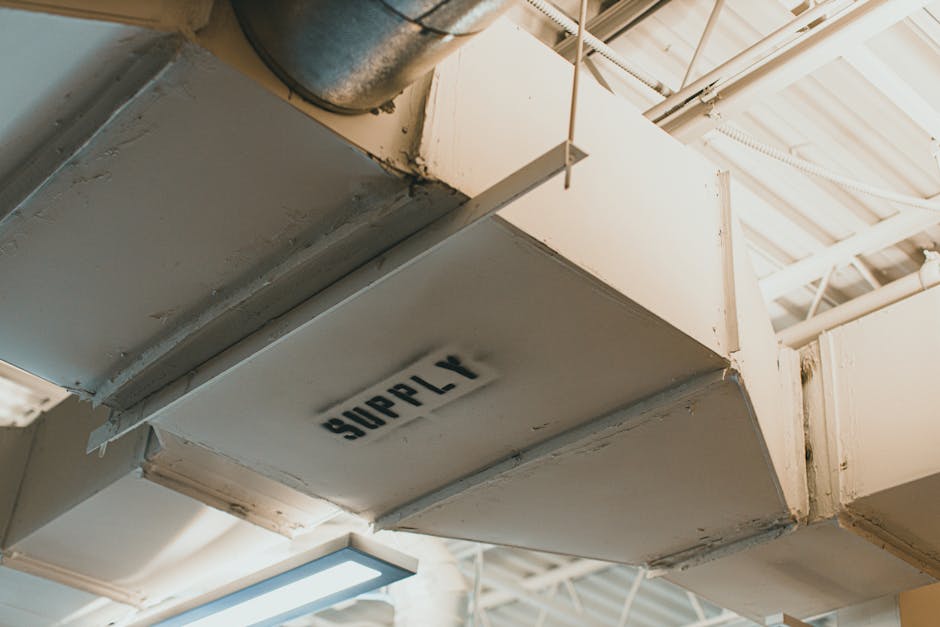
If you notice dirty streaks around your supply registers, this is a classic sign of duct leakage. The high velocity of air blowing through loose boot connections creates a venturi effect, pulling dusty attic air into the room and depositing it on your ceiling. Exploring how air duct repair can improve your homes air quality will help you understand how keeping these systems sealed prevents airborne particles from circulating through your bedrooms. Regular inspections of these connection points can help you catch minor issues before they turn into major system failures.
Traditional Sealing Methods vs. Aerosol-Based Technology
When it comes to fixing these issues, HVAC professionals use two primary approaches: traditional manual sealing and advanced aerosol-based sealing. Both methods are highly effective, but they serve different purposes and are used in different parts of a home’s ventilation system.
| Feature | Manual Duct Sealing (Mastic & Foil Tape) | Aerosol-Based Sealing (Internal Spray) |
|---|---|---|
| Primary Materials | Liquid mastic paste, fiberglass mesh, UL 181 foil tape | Aerosolized vinyl polymer particles |
| Application Area | Accessible ducts (attics, basements, mechanical closets) | Entire system, including hidden and inaccessible ducts |
| How It Works | Applied externally by hand to visible joints and seams | Injected under pressure to seal leaks from the inside out |
| Leak Size Capability | Excellent for large gaps, holes, and major disconnections | Best for small to medium leaks (up to 5/8 of an inch) |
| Diagnostic Feedback | Visual inspection only | Real-time computer monitoring of duct leakage rates |
Manual Air Duct Sealing with Mastic and Foil Tape
Manual sealing is the time-tested foundation of duct repair. Technicians physically crawl into your attic or crawlspace, inspect the joints, and apply sealing materials to the exterior of the ducts. This hands-on approach allows for a thorough physical inspection of the entire accessible run.
To do this correctly, we follow strict industry standards. Any tape used must be specifically rated for HVAC applications, carrying the UL 181A or UL 181B certification. Standard, multi-purpose utility duct tape should never be used, as its adhesive dries out, becomes brittle, and fails within a few months under attic temperatures.
For a long-lasting seal, professionals rely on liquid mastic sealant. This is a thick, paste-like material applied with a brush, trowel, or gloved hand. For gaps wider than 1/4 of an inch, technicians embed fiberglass mesh tape into a first layer of mastic, then apply a second layer over the top, extending at least one inch past the edges of the joint. This creates a flexible, durable, and completely airtight seal that can withstand the constant expansion and contraction of your duct system. You can read more about these step-by-step procedures in the official Job Aid 19-1: Seal Ducts With Mastic guide.
Innovative Aerosol Air Duct Sealing Technology
While manual sealing is perfect for ducts you can easily reach, many homes have ductwork buried behind beautiful drywall ceilings, tucked inside finished walls, or covered under thick layers of blown-in insulation. Tearing down walls to seal these leaks is expensive and messy. This is where aerosol-based duct sealing technology comes in.
This process begins by temporarily blocking off all your supply and return registers with foam or plastic covers. The technician then isolates the air handler and furnace to protect sensitive components. Next, a specialized machine is connected to the duct system to blow a pressurized mist of non-toxic, vinyl polymer particles through the ductwork.
As the pressurized air escapes through cracks and holes, the suspended particles are drawn directly to the leak sites. They collide with the edges of the gaps, stick, and gradually build up to plug holes up to 5/8 of an inch wide. This computer-controlled process measures the exact leakage rate before, during, and after the application, providing homeowners with a verified certificate of performance. To learn more about how this technology is applied in residential retrofits, check out the comprehensive resource on injected spray sealant for existing HVAC ducts.
The Major Benefits of Properly Sealed Ducts
Investing in professional duct sealing delivers immediate, tangible improvements to your daily comfort and your monthly household budget. When your system does not have to fight against constant air loss, your entire home benefits.
- Substantial Energy Savings: Because you are no longer paying to cool your attic or crawlspace, your HVAC system runs shorter, more efficient cycles. This can reduce your heating and cooling bills by up to 40 percent depending on the initial condition of your ductwork.
- Consistent Indoor Comfort: By ensuring that all conditioned air actually reaches your living spaces, duct sealing eliminates drafty spots and hot rooms, keeping your indoor temperatures perfectly balanced.
- Lower Indoor Humidity: For homeowners in humid climates like Green Cove Springs, FL and Fleming Island, FL, sealed ducts prevent outdoor moisture from creeping into your home, keeping your indoor air crisp and dry.
- Extended HVAC Equipment Lifespan: When your system does not have to work overtime to compensate for lost air, its compressor, blower motor, and electrical components experience far less wear and tear, saving you from premature replacement costs.
To keep your home running at peak efficiency, it is important to pair duct sealing with other vital maintenance tasks. If you suspect your system is struggling, exploring our specialized services for professional ductwork repair can help restore your climate control system to factory-spec performance. Taking a proactive approach to your ductwork ensures long-term reliability and comfort.
Professional vs. DIY: When to Call an HVAC Expert
Many homeowners enjoy tackling home improvement projects on their own. If you have easily accessible ducts in an open attic or basement, you can certainly perform basic maintenance. Armed with a bucket of mastic, some fiberglass mesh, and a roll of UL 181 foil tape, you can seal visible joints and seams around your air handler or exposed plenums.
However, duct sealing quickly becomes a job for professionals when safety, accessibility, and specialized tools are involved.
 [Is your ductwork easily accessible in an open area?]
 / \
 YES NO
 / \
 [Do you have basic tools?] [Call a Professional]
 / \
 YES NO
 / \
 [DIY Sealing Allowed]   [Call a Professional]
Professionals use advanced diagnostic equipment, such as duct blasters and pressure pans, to pinpoint hidden leaks and measure exact airflow restrictions. Additionally, crawling through tight, hot attics poses safety risks, including exposure to loose insulation fibers, extreme heat, and electrical wiring.
Homeowners who try to patch their own systems often run into trouble by using the wrong materials or sealing off critical ventilation pathways. Reviewing these 8 common duct repair mistakes homeowners make will help you avoid costly errors that can restrict system airflow and damage your compressor.
Furthermore, if your ducts are coated in years of dust, pollen, or pet dander, applying sealant over the dirt will prevent it from adhering properly. In these cases, it is highly recommended to schedule professional duct cleaning services first to ensure a clean, stable surface for a permanent seal.
Important DIY Safety and Professional Guidance: If you encounter safety concerns, lack the specialized tools required, or are dealing with complex HVAC, plumbing, electrical, or structural systems, always contact a licensed professional. If you are ever unsure about performing a task correctly, it is best to leave it to the experts to avoid damaging your expensive equipment or compromising your home’s safety.
Frequently Asked Questions About Sealing Ducts
What is the process of sealing air ducts?
The process begins with a comprehensive inspection and pressure test to locate leaks. Technicians then clean the outer surfaces of accessible ducts and apply liquid mastic and fiberglass mesh tape to joints. For hard-to-reach areas, an aerosol sealing machine is connected to inject a pressurized mist that seals cracks from the inside out. Finally, a post-seal pressure test is conducted to verify the reduction in air leakage.
How do I know if my home needs ductwork repair?
Common warning signs include unusually high monthly utility bills, rooms that are difficult to keep cool or warm, excessive dust accumulation on furniture, and musty smells coming from vents when the system turns on. If your home has flexible ductwork that is kinked, tangled, or older than 15 years, it is highly likely that your system needs professional attention.
Can I seal my own AC ducts?
You can seal easily accessible ducts, such as those in an open utility closet, using UL-approved foil tape or paint-on mastic sealant. However, DIY methods cannot address leaks hidden behind walls, under floors, or buried beneath thick attic insulation. For a complete, whole-home seal, specialized diagnostic tools and professional aerosol application are required.
How much energy can I save by sealing my HVAC ducts?
Properly sealing leaky ductwork can save homeowners up to 40 percent on heating and cooling costs. Because heating and cooling make up the largest portion of a home’s energy use, fixing a system that is losing 20 to 30 percent of its air to unconditioned spaces results in immediate, noticeable utility savings.
How does aerosol technology seal ducts from the inside?
Aerosol duct sealing works by temporarily blocking off all registers and pressurizing the ductwork with a mist of vinyl polymer particles. As air escapes through leaks, the suspended particles are drawn to the cracks, where they stick to the edges and accumulate to seal holes up to 5/8 of an inch wide.
What is the best sealant for HVAC ductwork?
Water-based mastic sealant is widely considered the industry standard because of its durability, flexibility, and strong adhesion. When paired with fiberglass mesh tape, it creates a permanent seal. For tape applications, only use premium foil tape stamped with the UL 181 certification, as standard utility tape will quickly fail under typical attic temperatures.
How long does professional duct sealing last?
A professional application of mastic sealant or aerosol-based polymer sealants is designed to last for the lifetime of your ductwork, often exceeding 20 to 25 years. These materials are formulated to withstand extreme temperature fluctuations and continuous airflow without drying out, cracking, or losing adhesion.
Will sealing my ducts reduce dust and allergens in my home?
Yes. When return ducts have leaks, they pull in dusty, dirty air from your attic, crawlspace, or walls and distribute it throughout your living spaces. Sealing these gaps prevents pollutants, insulation fibers, and outdoor allergens from entering your breathing air, resulting in a cleaner, healthier indoor environment.
How does leaky ductwork affect indoor humidity in Florida?
Leaky return ducts pull hot, humid air from unconditioned attics and crawlspaces directly into your home. This extra moisture overwhelms your AC unit, making it difficult to maintain comfortable humidity levels and creating a sticky, uncomfortable indoor climate that encourages mold growth.
Should I get my ducts cleaned before they are sealed?
Yes, duct cleaning is highly recommended before sealing. If the interior walls of your ducts are covered in dust, soot, or debris, sealants may not adhere properly. Cleaning your ducts first ensures a clean, stable surface for a long-lasting seal and prevents existing dust from being trapped or blown back into your home.
Conclusion
Taking care of your ductwork is one of the most effective ways to lower your energy bills, improve your indoor air quality, and keep your home comfortable all year round. Whether you need a simple manual patch or an advanced whole-home aerosol seal, getting your ducts professionally inspected is the first step toward a more efficient home.
Whether you need fast AC repairs, seasonal HVAC maintenance, or a complete system replacement, the team at Southern Air Cooling & Heating is ready to help. With more than 43 years of family-owned excellence serving homeowners in Palatka, FL, Crescent City, FL, and Saint Augustine, FL, we provide the honest, high-quality service you deserve. Contact us today to schedule professional ductwork services and learn how our Comfort Club plans can keep your HVAC system running perfectly for years to come.
Request Service
Please fill out the form below to request an estimate or schedule service.
"*" indicates required fields