What to Do When Your AC Is Not Coming On in House
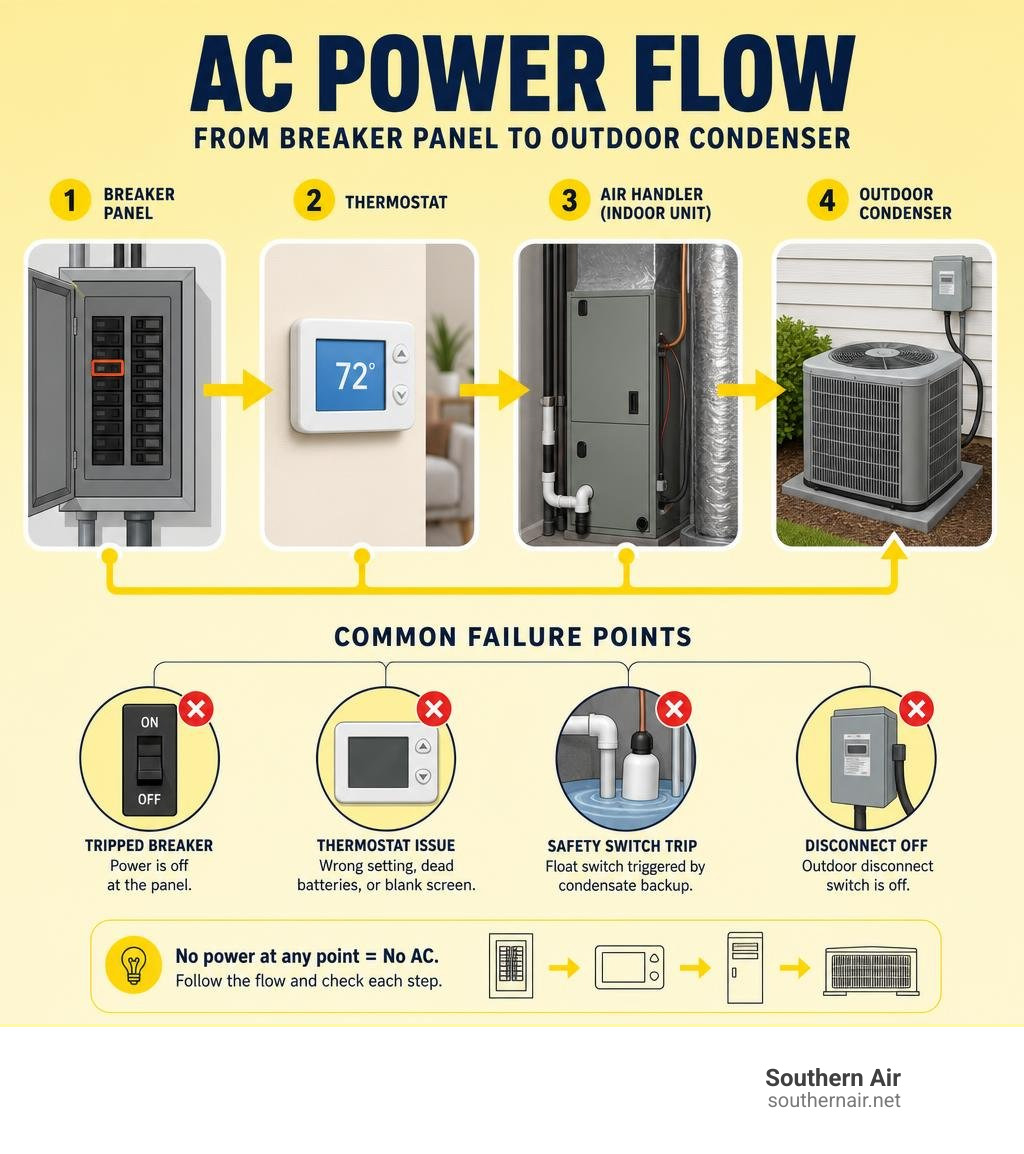
If your AC is not coming on in house, the fix is often simpler than you think. Before you call a technician, check these common causes:
- Thermostat, wrong setting, dead batteries, or blank screen
- Circuit breaker, tripped breaker at the main panel
- Air filter, clogged filter triggering a safety shutdown
- Float switch, condensate drain backup tripping the safety switch
- Outdoor disconnect, switch accidentally turned off
- Capacitor, failed start capacitor that requires a pro
Most no-start AC calls come down to one of the first four items on that list, and you can check all of them yourself in under 15 minutes.
It’s a familiar scenario for Florida homeowners: you walk over to the thermostat on a sweltering afternoon, press cool, and nothing happens. No hum from the air handler. No click from the outdoor unit. Just silence, and a house that’s already starting to warm up.
The good news? An AC that won’t turn on is almost always a power issue, not a major mechanical failure. That means there’s a good chance you can get your system running again without waiting for a service call.
This guide walks you through every likely cause, from simple thermostat fixes to signs that it’s time to call a professional, so you can act fast and stay cool.
I’m Dustin Caison, President and CEO of Southern Air Cooling & Heating, a family-owned HVAC company serving North Florida since 1980, and I’ve spent more than two decades diagnosing exactly why an AC stops coming on in house, from a tripped breaker to a failed capacitor. In the sections below, I’ll share what our technicians check first so you can troubleshoot with confidence.
AC not coming on in house glossary:
- AC not kicking on in house
- AC not switching on
- AC unit not kicking on outside
Common Reasons for an AC Not Coming On in House
When you realize your AC is not coming on in house, your mind might immediately jump to the worst-case scenario: a costly, full-system replacement. However, after serving our neighbors in Palatka, Crescent City, and Fleming Island for over 43 years, we can confidently tell you that most summer no-starts are caused by simple, preventable issues.
An air conditioning system is a complex network of high-voltage electrical circuits, low-voltage control lines, and safety switches. If any single part of this chain loses power or detects an unsafe condition, the entire system shuts down to protect itself.
One of the most frequent culprits behind a complete system shutdown is restricted airflow. When air cannot flow freely through your system, it puts immense strain on the components, leading to overheating or freezing. This is why keeping up with basic filter changes is so critical.
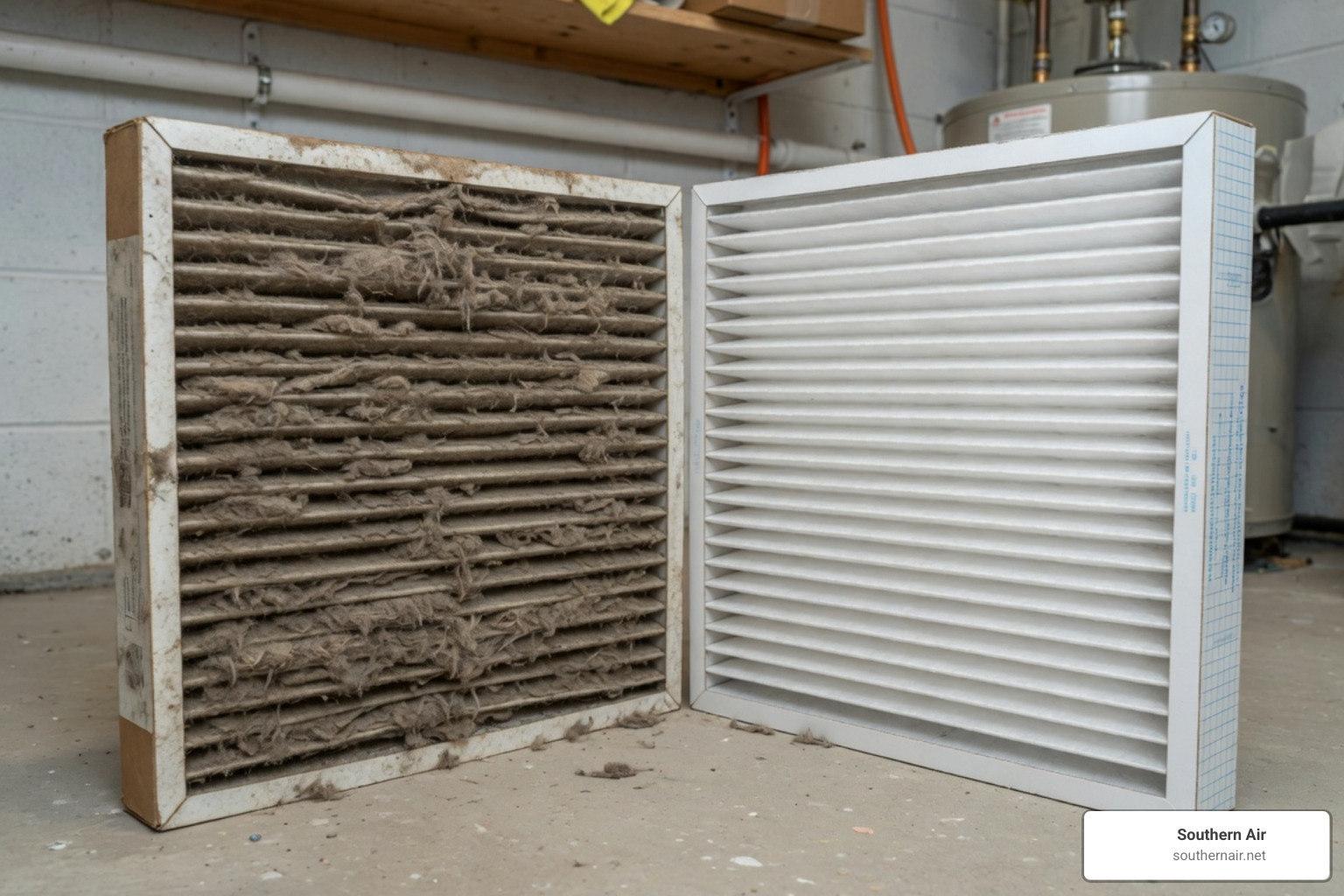
A dirty air filter is one of the most common preventable causes of AC issues. When a filter becomes completely clogged with dust, pet dander, and hair, the indoor blower fan has to work harder. This restriction can cause the evaporator coil to freeze over, which may eventually trigger a safety shutdown. To understand how these common issues progress, you can read more about the 8 reasons your AC won’t turn on and what to do next.
Troubleshooting a Thermostat When the AC Is Not Coming On in House
Your thermostat is the brain of your heating and cooling system. If the brain isn’t communicating with the rest of the body, nothing is going to run. When troubleshooting an AC not coming on in house, the thermostat is always our very first stop.
First, take a close look at the thermostat display screen. Is it completely blank? If so, your thermostat has likely lost power. Many homeowners don’t realize that even hardwired thermostats often rely on backup batteries, usually AA or AAA alkaline batteries, to retain programming and send signals to the indoor control board. We recommend replacing these batteries annually at the start of the cooling season.
If the screen is active, check the settings:
- Ensure the system mode is explicitly set to COOL, not HEAT, OFF, or FAN ONLY.
- Verify that the temperature setpoint is set at least 5 degrees below the current indoor room temperature.
- Make sure there are no active hold settings or smart schedules overriding your manual commands.
Sometimes, a simple system reset is all it takes to clear a glitch in a digital or smart thermostat.
Safety Switches and Why Your AC Is Not Coming On in House
Modern air conditioners are equipped with built-in safety devices designed to protect your home from catastrophic water damage and electrical fires. In Florida’s humid climate, the indoor air handler removes a significant amount of moisture from the air during regular cooling cycles.
This water drains into a condensate pan and flows out through a PVC drain line. Over time, algae, mold, and dust can build up inside this dark, wet pipe, forming a thick clog. When the water can no longer drain outside, it backs up into the indoor drain pan.
To prevent this water from overflowing and ruining your ceilings or flooring, HVAC installers mount a safety device called a float switch, also called a condensate overflow switch, on the drain line. When the water level rises, the float floats upward, instantly breaking the low-voltage electrical circuit to your thermostat. This immediately cuts power to your entire system. If your thermostat screen is completely blank and changing the batteries didn’t help, a tripped float switch is a highly probable cause.
Tripped Circuit Breakers and Blown Fuses
Because air conditioners draw a significant amount of electrical current, they operate on dedicated high-voltage circuits. Your system actually uses two separate electrical circuits: one for the indoor air handler or furnace and another for the outdoor condenser unit.
During periods of extreme Florida heat, or after a summer thunderstorm rolls through Putnam County, power surges can occur. If the electrical current spikes, your home’s electrical panel will trip the circuit breaker to prevent the wiring from overheating.
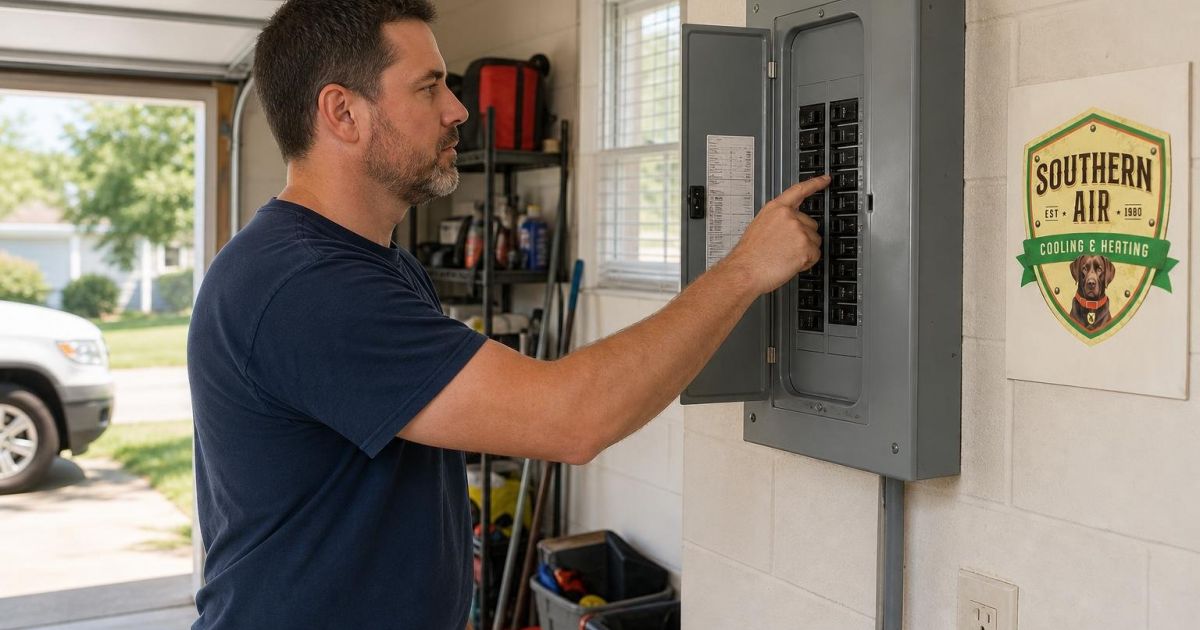
If your AC is not coming on in house, head to your main electrical panel and look for the breakers labeled “AC,” “Air Conditioner,” “Furnace,” or “HP.” A tripped breaker won’t always be completely in the “OFF” position. It often hangs somewhere in the middle or shows a small red indicator.
Additionally, older homes may have an outdoor disconnect box near the condenser unit that contains physical cartridge fuses. If one of these fuses blows, the outdoor unit will remain completely silent, even if the indoor unit is blowing warm air. For more on how electrical issues disrupt home cooling systems, you can read the common air conditioner problems resource page from the Department of Energy.
Safe DIY Troubleshooting Steps Before Calling a Pro
Before you pick up the phone to schedule an emergency service call, there are several safe, basic diagnostic checks you can perform. Taking these steps can save you time and money, as many “broken” air conditioners simply require a quick flip of a switch or a new filter.
When performing any DIY troubleshooting, your personal safety must always come first. Never attempt to open the electrical compartments of either your indoor or outdoor units. These systems contain capacitors that store dangerous, high-voltage electrical charges even when the main power is turned off.
For the safe checks listed below, you won’t need complex tools. Just keep a flashlight, a fresh air filter, and a set of new batteries on hand as we head into the hot 2026 cooling season.

To help you understand what you can handle safely on your own versus what requires our specialized training, we have put together this comparison table:
| DIY Check or Action, Safe for Homeowners | Professional Diagnostic or Repair, Call Southern Air Cooling & Heating |
|---|---|
| Replacing thermostat batteries and checking settings | Replacing a faulty thermostat or repairing control wiring |
| Inspecting and replacing a clogged air filter | Thawing and cleaning a heavily frozen evaporator coil |
| Resetting a tripped circuit breaker once | Diagnosing why a breaker keeps repeatedly tripping |
| Pouring vinegar down the condensate drain line | Clearing a stubborn, compacted drain line clog with a vacuum |
| Clearing leaves, weeds, and debris from the outdoor unit | Replacing a failed start/run capacitor or contactor |
| Verifying the outdoor disconnect switch is ON | Repairing refrigerant leaks and recharging the system |
Checking the Air Filter and Vents
As mentioned earlier, airflow is the lifeblood of your air conditioning system. When airflow is severely restricted, the temperature of your evaporator coil drops below freezing. The moisture pulling out of your indoor air will collect on the coil and turn to solid ice.
Once your evaporator coil freezes, it acts as a thermal barrier, blocking all heat transfer. Your home will quickly become warm, and the system may shut down entirely due to thermal overload.
If you suspect this has happened:
- Turn your thermostat completely to OFF.
- Switch the system fan setting from AUTO to ON. This runs the indoor blower motor without running the outdoor compressor, helping to safely thaw the ice over the next 2 to 4 hours.
- Locate your air filter slot, pull out the old filter, and replace it if it is gray or caked in dust.
- Ensure that at least 90% of the supply registers and return vents throughout your home are completely open and unblocked by furniture or drapes.
If your system is running but only blowing warm air, you can read our guide on why your AC is not blowing cold air for more specific troubleshooting steps.
Inspecting the Outdoor Condenser Unit
Next, step outside and inspect your outdoor condenser unit. This unit is responsible for releasing the heat collected from inside your home into the outdoor air. If it is choked by debris, it cannot do its job.
First, check the physical space around the unit. We recommend maintaining at least 24 inches of clear space on all sides of the outdoor cabinet. Cut back any overgrown bushes, tall grass, or weeds, and clear away any fallen leaves or twigs.
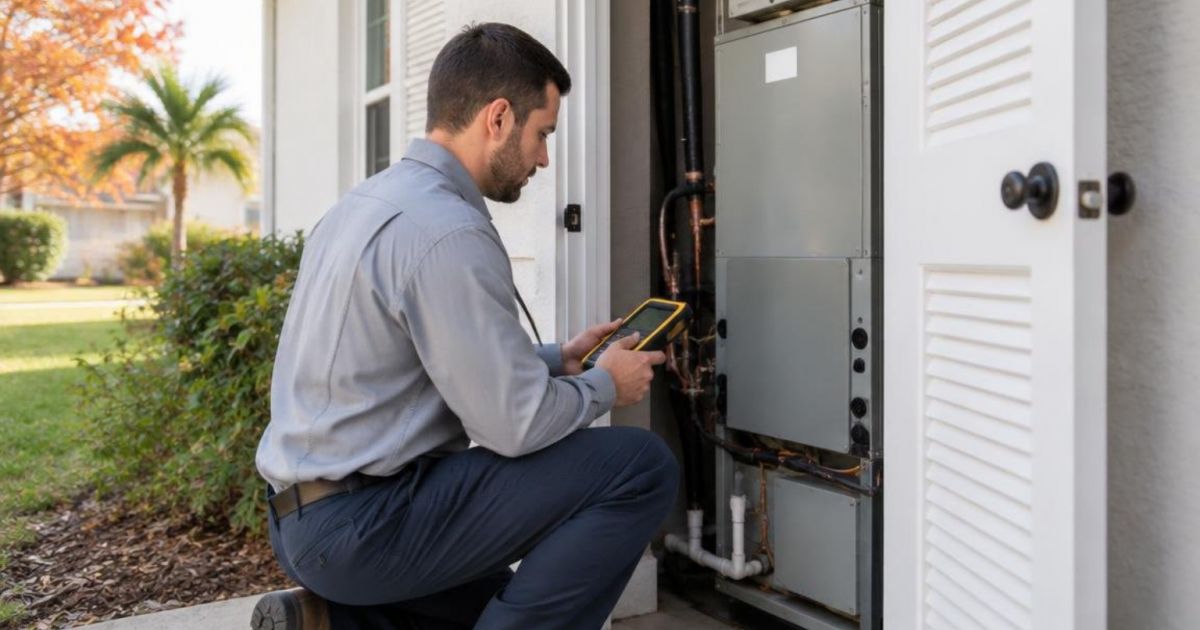
Next, look for the outdoor disconnect box, which is usually mounted on the exterior wall of your home near the unit. This box contains a switch, pull-out plug, or breaker used by technicians to cut power during maintenance. Ensure this switch hasn’t been accidentally flipped to the “OFF” position by yard work or a passing storm. If you live in Fleming Island, FL, and need local professional assistance, you can visit our primary service page for professional AC repair in Fleming Island, FL.
When to Call a Professional HVAC Technician
If you have gone through the basic checklist, verified your thermostat settings, replaced the batteries, checked the air filter, reset the breaker once, and ensured the drain line isn’t backed up, and your system still refuses to budge, it is time to call in the professionals.
There are several advanced components inside your air conditioner that require professional diagnostic tools and training to repair safely. For example, a failed capacitor is one of the most common reasons an outdoor unit won’t start. Capacitors act like temporary batteries, providing the high-voltage electrical boost needed to start up the compressor and fan motors.
Another common point of failure is the contactor, which is essentially an electrical switch that closes when the thermostat calls for cooling, allowing power to flow to the compressor. If the contactor contacts get pitted or burned, or if ants crawl inside them, a very common Florida issue, the outdoor unit will not turn on. If you are wondering whether your current situation qualifies as an urgent issue, read more here: can I call emergency maintenance for an AC that isn’t working?.
Signs of Deeper Electrical or Mechanical Failure
While a silent AC unit is frustrating, some symptoms indicate a much more serious underlying electrical or mechanical issue. If you notice any of the following warning signs, turn your system off immediately at the thermostat and breaker panel, and call us right away:
- A burning metallic or electrical smell: This indicates overheating wires, a burned-out motor winding, or a failing control board.
- Loud, unusual noises: Screeching, banging, clanking, or heavy buzzing noises when the system tries to start indicate mechanical failure in the compressor or blower motor.
- A rapidly tripping breaker: If you reset your AC circuit breaker once and it immediately trips again, do not reset it a second time. This is a direct sign of a short circuit or a grounded compressor, and attempting to force it to run can cause an electrical fire.
Recognizing these warnings early can save your system from total failure. For more details, explore the 4 signs your HVAC unit may need AC service.
The Risks of Delaying Professional Repairs
When your AC is not coming on in house, putting off the repair is never a good idea. In North Florida’s intense summer heat, indoor temperatures can easily climb past 85°F in a matter of hours. This isn’t just uncomfortable. High indoor humidity above 60% can lead to rapid mold growth within 48 hours, damaging your drywall, furniture, and indoor air quality.
Furthermore, running a struggling system with failing components can turn a minor, inexpensive repair into a catastrophic breakdown. For instance, a weak capacitor that is ignored will eventually cause the compressor motor to overheat and burn out. Replacing a capacitor is a quick, mid-range repair. Replacing a compressor can cost thousands of dollars and often requires a complete system replacement. To learn more about the consequences of waiting, check out the risks of putting off AC repair services.
Frequently Asked Questions About AC Failures
Dealing with a broken air conditioner can bring up a lot of questions. Here are some of the most common questions we hear from homeowners in Palatka, Green Cove Springs, and surrounding communities.
Why is my AC running but not blowing cold air?
If you can hear your indoor blower fan running, but the air coming out of your vents is lukewarm or warm, your system has a different issue than a power failure. This symptom usually points to a refrigeration loop problem or an airflow restriction.
Common culprits include a heavy layer of dirt on your outdoor condenser coils, a frozen indoor evaporator coil, or a refrigerant leak. Because refrigerant runs in a completely closed loop, a low refrigerant charge always indicates a physical leak that must be found and repaired by an EPA-certified technician. For a deeper look into this specific issue, check out the cold hard truth about why your AC is blowing heat.
How long does a typical central air conditioner last?
On average, a central air conditioner lasts 10 to 15 years. In our coastal North Florida climate, factors like salt air corrosion, high humidity, and heavy summer workloads can shorten that lifespan closer to 10 to 12 years.
However, with regular professional maintenance and timely repairs, many high-quality units can last up to 20 years. If your system is over 12 to 15 years old and requires frequent, expensive repairs, it may be more cost-effective to upgrade to a modern, ENERGY STAR-rated system. If you are budgeting for a potential visit, you can read our article: is emergency AC repair in Palatka FL expensive?.
Can a dirty air filter completely stop my AC from turning on?
Yes, absolutely. A severely clogged air filter blocks the essential airflow needed to keep your system operating within safe temperature limits. Without proper airflow, the evaporator coil will freeze, or the blower motor will overheat, triggering the system’s thermal overload safety switch to shut down the unit completely to prevent permanent damage. Changing your air filters every 30 to 90 days is the easiest way to prevent this from happening.
Conclusion
When your AC is not coming on in house, remember to take a deep breath and run through the basic checks first. Verify your thermostat settings, swap out old batteries, check your air filter, and take a quick look at your main breaker panel.
The best way to prevent unexpected summer breakdowns is through regular, proactive maintenance. Regular HVAC maintenance helps your system run more reliably and can catch small issues before they lead to a no-cool emergency.
At Southern Air Cooling & Heating, we have been keeping North Florida families comfortable for over 43 years. As a family-owned and operated business, we pride ourselves on providing honest, 5-star service to our neighbors in Palatka, Crescent City, Interlachen, Green Cove Springs, and beyond. If you want year-round peace of mind, consider joining our priority Comfort Club plan, which includes seasonal tune-ups, priority scheduling, and exclusive discounts on repairs.
If your troubleshooting steps didn’t get your system running, don’t sweat through another hot day. We are here to help. Whether you need professional assistance in Green Cove Springs, Palatka, or any of our other North Florida service areas, our experienced technicians are ready to restore your comfort.
To schedule your service or take advantage of our current specials, including $50 off repairs, contact us today at air conditioning repair services!
Request Service
Please fill out the form below to request an estimate or schedule service.
"*" indicates required fields