Understanding the Air Conditioner Condenser Replacement Cost
Air conditioner condenser replacement cost is one of the bigger repair bills a Florida homeowner can face, and knowing what to expect upfront makes all the difference.
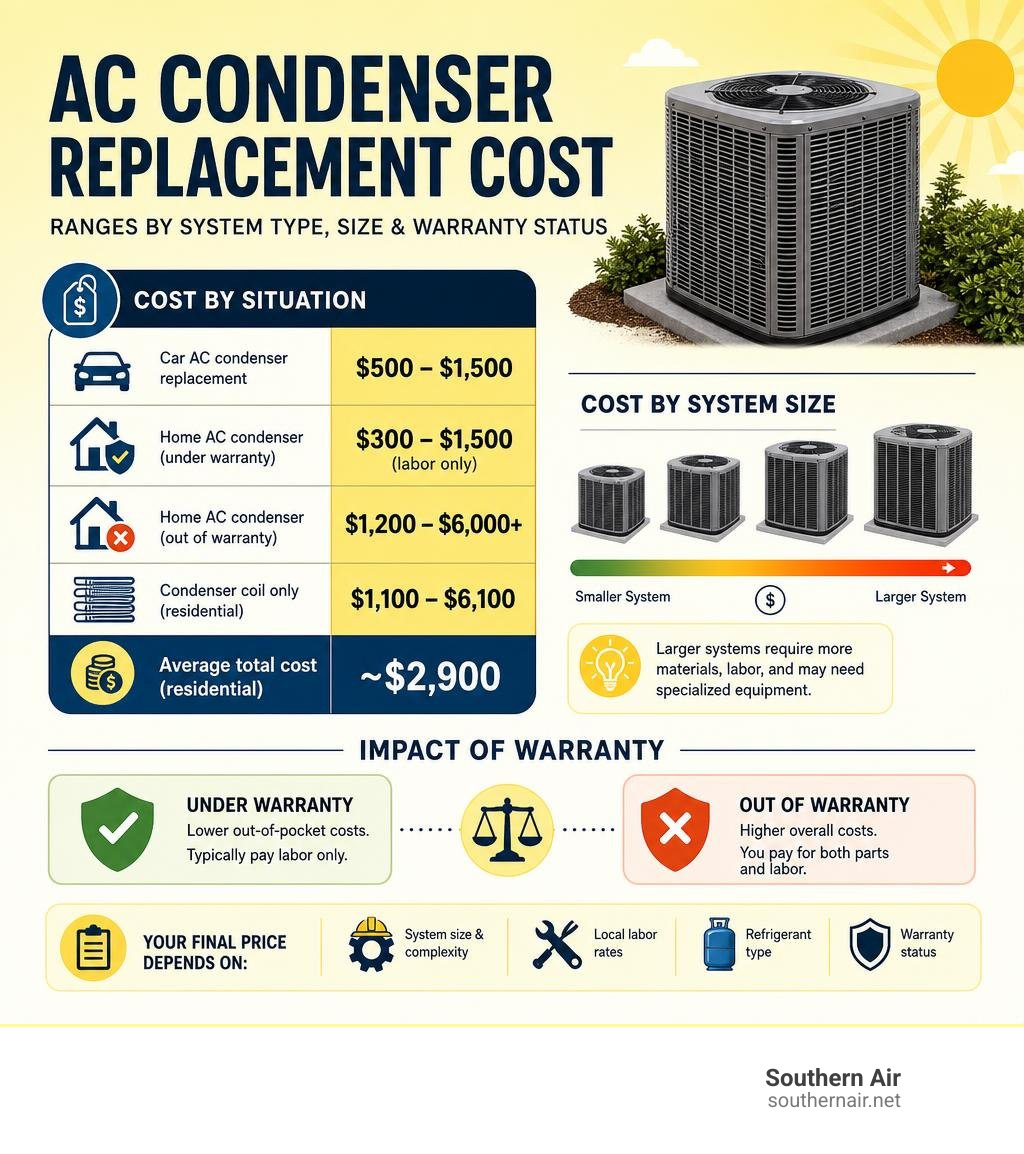
Here’s a quick look at typical home AC costs:
| Situation | Typical Cost Range |
|---|---|
| Home AC condenser under warranty | $300 – $1,500 labor only |
| Home AC condenser out of warranty | $1,200 – $6,000+ |
| Condenser coil only, residential | $1,100 – $6,100 |
| Average total cost, residential | About $2,900 |
These numbers shift based on your system size, local labor rates, refrigerant type, and whether you’re still under warranty. In North Florida especially, a failing condenser in July isn’t just uncomfortable. It’s urgent.
The good news: once you understand what drives the price, you can make a smarter decision about whether to repair, replace, or upgrade.
I’m Dustin Caison, President and CEO of Southern Air Cooling & Heating, a State Certified Air Conditioning Contractor with over two decades of hands-on HVAC experience in North Florida. I’ve seen how air conditioner condenser replacement cost surprises homeowners who weren’t prepared. Let’s break down exactly what you’re looking at so you can go into this with confidence.
To make sense of the bills, it helps to understand what the condenser actually does. Air conditioners don’t magically create cold air. Instead, they act as heat sponges. The indoor evaporator coil absorbs heat from inside your living space, and the outdoor condenser releases that heat into the great outdoors.
Because the condenser lives outside, it is exposed to harsh weather, dirt, debris, and in our coastal and humid North Florida climate, salty air that can accelerate corrosion. When a condenser fails, your entire cooling cycle grinds to a halt.
For a home HVAC system, replacing the outdoor condenser is a significant project because it involves large equipment, high-voltage electrical connections, refrigerant handling, and careful matching with the indoor evaporator coil. A residential condenser replacement typically ranges from $1,200 to $4,200, with a national average of around $2,900. If the system is completely out of warranty or requires high-efficiency equipment, the cost can climb to $6,000 or more.
Residential Air Conditioner Condenser Replacement Cost by System Size
In the residential world, size is everything. Air conditioners are sized in “tons,” which refers to cooling capacity, not physical weight. Most residential homes require systems ranging from 1.5 tons to 5 tons. The larger your home, the larger the condenser you need, and the higher the equipment cost will be.
Energy efficiency also plays a major role. Systems with higher SEER2 ratings use advanced, multi-stage compressors and larger coils, which increases the upfront purchase price.
Additionally, the type of coil inside the condenser affects the price:
- Standard Copper/Aluminum Fin-and-Tube Coils: The traditional, widely used choice.
- Spine Fin Coils: Highly durable with excellent heat transfer, but slightly more expensive.
- Micro-Channel Coils: Built entirely of aluminum, these are highly corrosion-resistant and use less refrigerant, though they carry a premium price tag.
The table below breaks down the typical residential replacement costs by system size:
| System Size | Average Equipment Cost | Average Labor Cost | Total Installed Cost Range |
|---|---|---|---|
| 1.5 tons | $900 – $1,400 | $300 – $800 | $1,200 – $2,200 |
| 2.0 tons | $1,100 – $1,700 | $400 – $900 | $1,500 – $2,600 |
| 3.0 tons | $1,400 – $2,200 | $500 – $1,100 | $1,900 – $3,300 |
| 4.0 tons | $1,800 – $2,900 | $600 – $1,300 | $2,400 – $4,200 |
| 5.0 tons | $2,200 – $3,800 | $700 – $1,500 | $2,900 – $5,300+ |
For a deeper dive into how these averages are calculated across different regions, you can consult Angi’s 2026 AC condenser cost guide.
Key Factors That Influence Your Total Replacement Bill
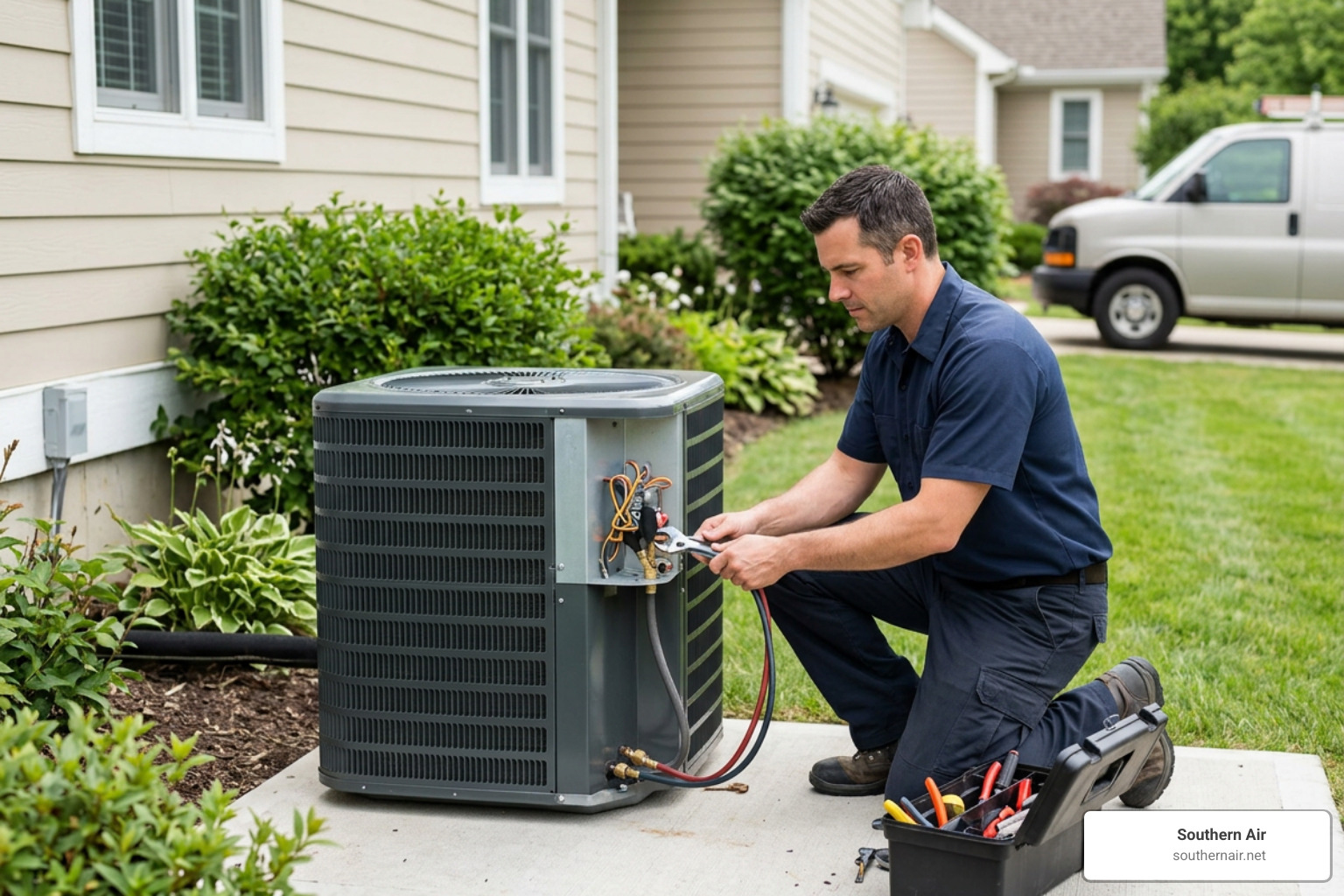
When an HVAC technician hands you a quote for a home condenser replacement, that final number isn’t pulled out of thin air. It is a carefully calculated combination of several distinct factors:
- Labor Rates: HVAC technicians typically charge between $75 and $250 per hour. Complex installations or tight workspaces require more man-hours, which directly drives up the labor portion of your bill.
- Geographic Location: Labor and operating costs vary by region. If you live in a high-cost-of-living metro area, you will likely pay more than homeowners in rural areas. Local service rates in places like Fleming Island, FL can also differ slightly from more rural North Florida communities.
- Refrigerant Transition: The HVAC industry is undergoing a major environmental transition. Federal regulations phased out R-22 years ago, and starting in January 2025, the industry began transitioning away from R-410A to lower-GWP refrigerants like R-454B. If you have an older system, retrofitting or replacing components to match these new refrigerant standards can add significant complexity and cost to your project.
Labor vs. Parts Breakdown
To understand where your hard-earned money is going, let’s look at how a typical $2,900 residential condenser replacement bill is split between materials and professional labor:
- The Equipment (Parts): The physical condenser unit represents about 50% to 60% of the total cost. If you are replacing the entire outdoor condensing unit, the equipment itself will cost anywhere from $900 to $4,000. If you are only replacing individual components within the unit:
- The Compressor: Often called the “heart” of the AC system, a replacement compressor costs between $800 and $2,300.
- The Condenser Coil: The copper or aluminum tubing grid costs between $850 and $2,700 to replace out of warranty.
- The Labor: Professional installation typically makes up 30% to 35% of the bill, ranging from $300 to $1,500+. A standard condenser replacement takes a two-person crew about 3 to 6 hours to complete. This involves recovering the old refrigerant, cutting and brazing copper lines, wiring electrical connections, pulling a deep vacuum to remove moisture, and charging the system with fresh refrigerant.
If your system is still under a manufacturer’s parts warranty, you won’t have to pay for the expensive equipment. However, most standard warranties do not cover labor or refrigerant. This means even a “free” warranty replacement can still cost you $1,500+ in labor and refrigerant recharge fees.
Additional and Hidden HVAC Costs
A simple “swap” is rarely as simple as unplugging the old unit and sliding a new one onto the pad. There are several common add-on costs that can sneak up on homeowners:
- Line Sets: The copper lines that carry refrigerant between your indoor and outdoor units can degrade or leak. Replacing a standard line set costs between $150 and $500.
- Electrical Upgrades: Newer, high-efficiency condensers may require different electrical loads. Upgrading your outdoor disconnect box, whip, or even your home’s main electrical panel can add $1,500 to $3,500 to the project.
- Permits and Fees: Local building codes in Florida require permits for HVAC replacements to ensure safety and compliance. These typically cost $145 to $400.
- Refrigerant Recovery: By law, old refrigerant cannot be vented into the atmosphere. Technicians must use specialized recovery machines to capture the gas, which carries a disposal and recovery fee of $50 to $200.
If your outdoor unit is completely silent and refusing to turn on, the problem might not even be the condenser itself. It could be a simple electrical failure. Before assuming the worst, take a look at our guide on troubleshooting your silent AC condenser to rule out minor issues.
Practical Ways to Save Money on Your AC Condenser
Paying for a new condenser is never fun, but there are several proven strategies you can use to keep more money in your pocket:
- Schedule in the Off-Season: HVAC companies are busiest during the scorching summer months. If you can plan your replacement during the milder spring or fall months, you may benefit from off-season discounts and more flexible scheduling.
- Leverage Manufacturer Warranties: Always check your system’s registration. Most major brands offer a 5- to 10-year parts warranty. If you are the original owner and the system was registered properly, your parts might be completely covered.
- Invest in Regular Maintenance: The absolute best way to save money on a replacement is to avoid needing one in the first place. Keeping your condenser coils clean, trimming back bushes to allow at least two feet of clear airflow, and changing your indoor air filters every 30 to 90 days prevents the compressor from overheating and failing prematurely.
- Get Multiple Quotes: Don’t settle for the first estimate you receive. Compare at least three written bids from reputable local contractors to ensure you are getting a fair price for quality work.
Repair vs. Replace: When to Swap the Condenser or the Whole System
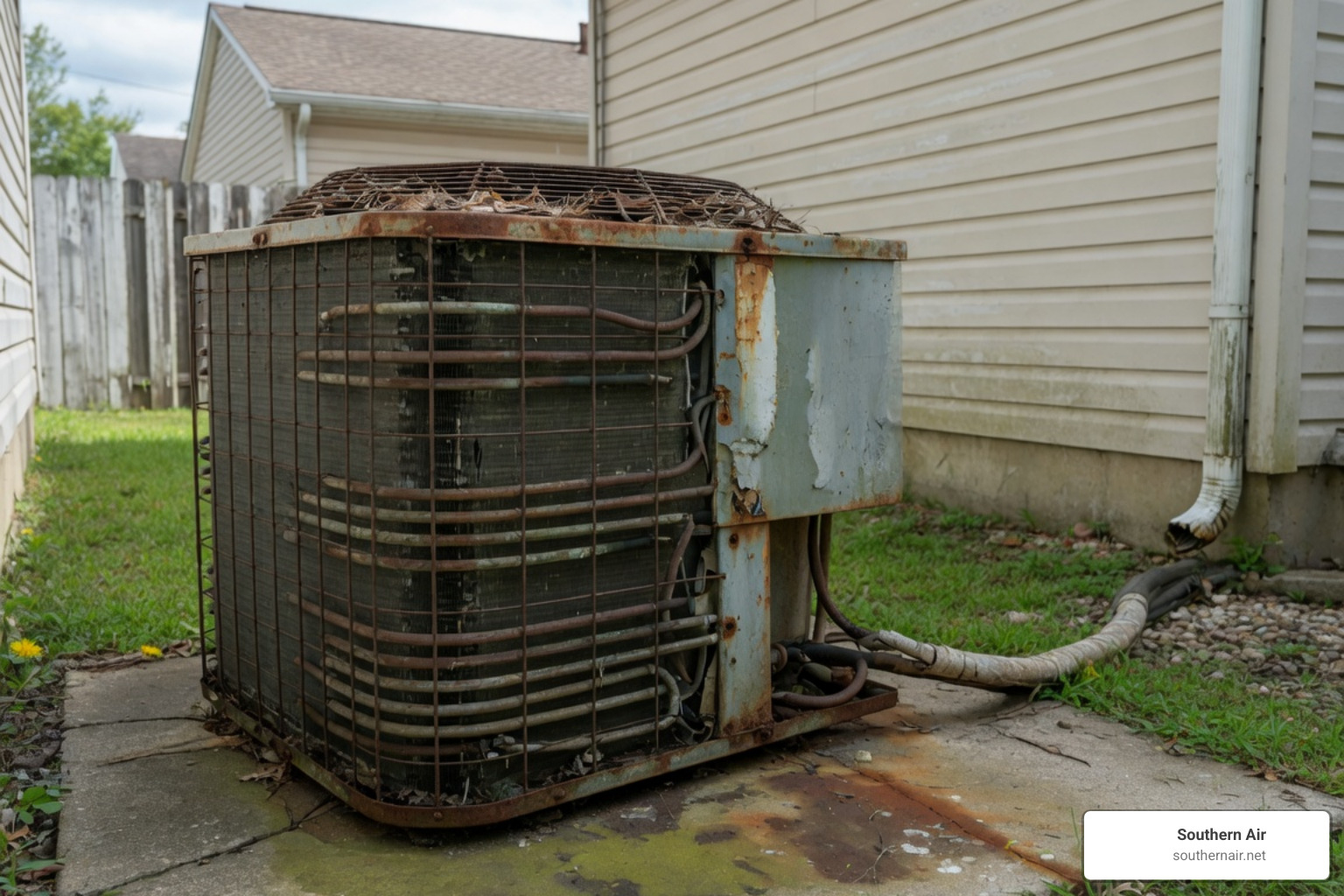
When your outdoor unit fails, you face a major crossroads: do you repair the broken component, replace just the outdoor condenser, or bite the bullet and replace the entire indoor/outdoor HVAC system?
To make the right choice, professional HVAC technicians use the 50% Rule: If the cost of repairing your current unit is more than 50% of the cost of a brand-new system, replacement is almost always the smarter financial move.
You should also look closely at the age of your system. Residential air conditioners typically last 12 to 15 years in Florida’s demanding climate. If your unit is over 10 years old and has a major component failure, like a burnt-out compressor or a leaking condenser coil, investing thousands of dollars into a repair is like putting a brand-new transmission into a car with 250,000 miles. Other parts will likely fail soon after, and you’ll still be stuck with an inefficient, out-of-warranty system.
Compatibility is another major hurdle. If your older system runs on a refrigerant that is being phased down or no longer supported, you may not be able to pair it easily with a new outdoor unit designed for newer refrigerants. Attempting to mix mismatched indoor and outdoor components can ruin your system’s efficiency, void your manufacturer’s warranty, and lead to premature system failure.
Signs Your AC Condenser Needs Immediate Attention
Catching a problem early can mean the difference between a simple electrical repair and a total system replacement. Keep an eye and ear out for these common warning signs:
- Refrigerant Leaks: If you notice oily puddles around the base of your outdoor unit or find that your system constantly needs “topped off” with refrigerant, you have a leak.
- Unusual Noises: Screeching, clanging, or loud rattling noises coming from the outdoor cabinet usually point to a failing compressor motor or a damaged fan blade.
- Blowing Warm Air: If your indoor vents are blowing lukewarm or hot air, your condenser is likely failing to release heat. For a step-by-step diagnostic checklist, read why your AC is blowing heat.
- Limited Airflow: Reduced air pressure coming from your vents can mean your condenser coils are completely clogged with dirt, leaves, or pet hair, choking the system’s airflow.
If your system has shut down completely and refuses to turn on at all, don’t panic just yet. Walk through the steps in our guide on why your AC won’t turn on to see if a tripped breaker or a clogged drain line is the real culprit.
The Benefits of Upgrading to a High-Efficiency System
While the upfront cost of a full system upgrade can seem daunting, replacing an old, inefficient AC with a modern SEER2-compliant system offers meaningful long-term paybacks:
- Lower Energy Bills: Modern high-efficiency systems are more efficient than systems built just a decade ago, which can help reduce monthly utility bills.
- Increased Home Value: A brand-new, professionally installed HVAC system is a major selling point for buyers.
- Unmatched Reliability: A new system comes with a fresh manufacturer’s warranty, giving you greater peace of mind through the hottest summer heatwaves.
Why Professional Installation Beats DIY Every Time
In the era of internet tutorials, it can be tempting to try to buy a condenser online and install it yourself. However, replacing an AC condenser is not a DIY job.
First and foremost, handling refrigerant requires an EPA Section 608 certification. It is a federal crime to purchase, handle, or vent chemical refrigerants without this license, and refrigerant under high pressure can cause severe injury if handled incorrectly.
Furthermore, proper installation requires specialized tools, including recovery machines, vacuum pumps, micron gauges, and brazing equipment for copper lines. If a DIYer fails to pull a deep enough vacuum, moisture can remain inside the lines. This moisture mixes with the system’s oil to create destructive acid that can eat through your brand-new compressor from the inside out. Finally, almost all major HVAC manufacturers can void your equipment warranty if the system is not installed by a licensed, certified professional.
If you are currently staring at a broken system and trying to figure out your next steps, take a deep breath and read our guide on troubleshooting an AC that won’t turn on to help you make a safe, informed decision.
Frequently Asked Questions about AC Condensers
Can I replace just the AC condenser coil instead of the whole unit?
Technically, yes, you can replace just the leaking condenser coil. However, unless the part is fully covered under a manufacturer’s warranty, it is rarely recommended. Out-of-warranty coil replacements cost between $1,100 and $6,100 because of the intense labor required to cut out the old coil, weld in the new one, and recharge the system. For just a few hundred dollars more, you can usually replace the entire outdoor unit, giving you a brand-new compressor, fan motor, and coil with a fresh warranty.
How long does it take to replace an AC condenser?
A straightforward residential condenser replacement typically takes a professional two-person crew between 3 and 6 hours. If the job requires running new line sets, upgrading electrical panels, or modifying ductwork, the installation can take a full day.
Does homeowners insurance cover AC condenser replacement?
Standard homeowners insurance policies only cover HVAC systems if they are damaged by a “covered peril,” such as a fallen tree during a storm, a lightning strike, or a house fire. Insurance will not pay to replace a condenser that failed due to normal wear and tear, age, or lack of proper maintenance. For everyday breakdowns, a home warranty plan or a dedicated HVAC maintenance agreement is your best line of defense.
Conclusion
Facing an air conditioner condenser replacement cost can feel overwhelming, but you don’t have to navigate it alone. At Southern Air Cooling & Heating, we have spent over 43 years delivering family-owned excellence and 5-star service to our neighbors throughout North Florida.
Whether you need a quick repair to get your system back up and running or a complete high-efficiency system upgrade, our team of certified, highly trained technicians is here to help. We are proud to serve families across Putnam, St. Johns, and Clay counties, including:
- Palatka, FL
- Crescent City, FL
- East Palatka, FL
- Elkton, FL
- Florahome, FL
- Fleming Island, FL
- Georgetown, FL
- Green Cove Springs, FL
- Hawthorne, FL
- Interlachen, FL
- Keystone Heights, FL
- Pomona Park, FL
- Saint Augustine, FL
- San Mateo, FL
- Satsuma, FL
- Welaka, FL
We believe in making professional home comfort affordable. That is why we offer our priority Comfort Club maintenance plans to keep your system running efficiently, along with money-saving specials like $50 off repairs.
If you are trying to find the best local help for your system, check out our comprehensive heating AC repair near me guide for expert tips on choosing the right team. Ready to get your home cool and comfortable again? Contact Southern Air Cooling & Heating today, and let us take the sweat out of your AC worries!
Request Service
Please fill out the form below to request an estimate or schedule service.
"*" indicates required fields